TLDR;
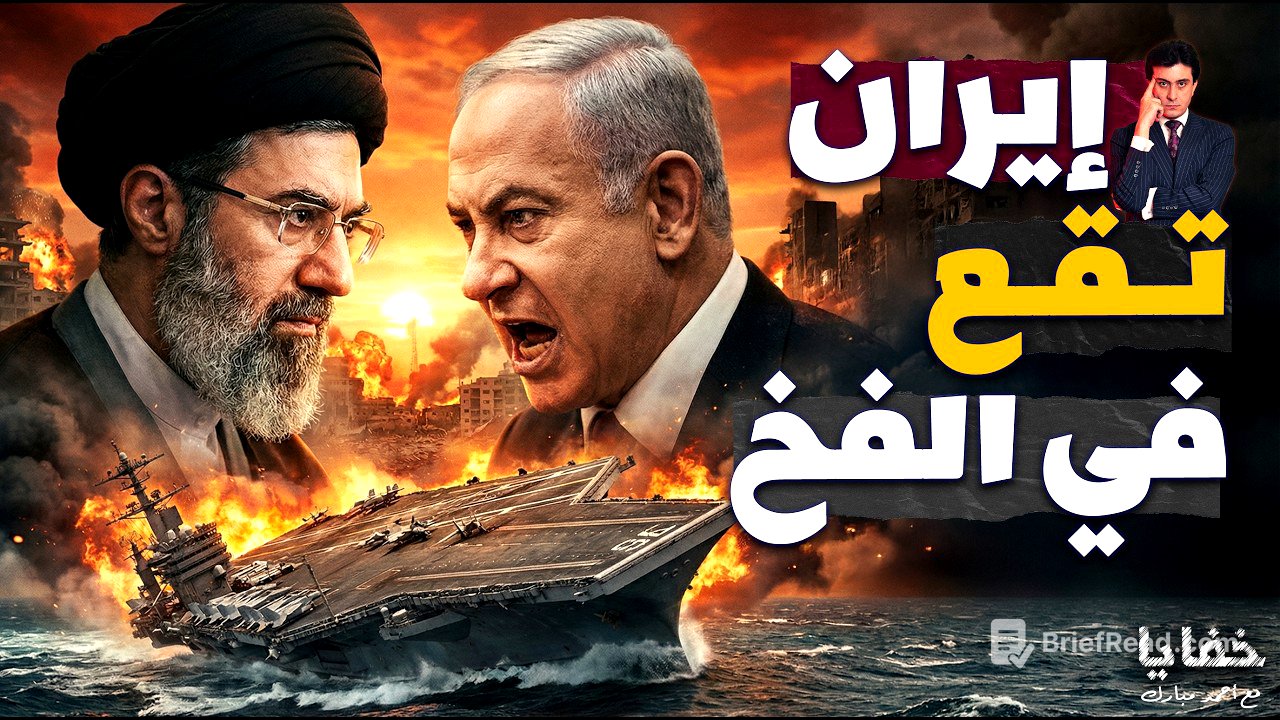
This video discusses the escalating conflict between the US/Israel and Iran, marked by strategic military actions and significant political fallout. Key events include the withdrawal of the USS Gerald Ford, targeted assassinations of Iranian leaders, retaliatory missile strikes by Iran, and the resignation of a high-ranking US intelligence official. The conflict reveals a shift in military tactics, focusing on internal security forces within Iran, and exposes deep divisions within the US government regarding the justification and goals of the war.
- Withdrawal of USS Gerald Ford from the Red Sea.
- Assassination of key Iranian figures, including Ali Larijani and Gen. Gholam Reza Soleimani.
- Iranian retaliatory missile strikes targeting Tel Aviv.
- Resignation of US counter-terrorism director Joe Kent over the war's justification.
⚡ المقدمة — من السيطرة إلى الفوضى [0:00]
The video introduces the complex and rapidly evolving military and geopolitical landscape, highlighting the withdrawal of the USS Gerald Ford for urgent repairs, Iran's confirmation of the assassination of Ali Larijani and Gholam Reza Soleimani, and Israel's shift in military strategy to target Iran's internal security apparatus. It also mentions Iran's retaliatory ballistic missile strikes and the resulting political divisions within the US intelligence community, leading to the resignation of Joe Kent. The intro poses questions about the reasons behind these events, including the significance of Larijani's assassination, the focus on targeting the Basij forces, and the implications of Kent's resignation.
🚢 جيرالد فورد — انسحاب ولا إعادة تمركز؟ [2:30]
This section details the conflicting narratives surrounding the USS Gerald Ford's movements. According to a Russian source, a fire broke out on the carrier due to sabotage by American sailors protesting their extended deployment. Iranian sources claimed the carrier fled to Jeddah, Saudi Arabia, after the fire, warning that any logistical support for the carrier would be considered a legitimate target. The US Central Command stated that a fire occurred in a ventilation duct of the main laundry room, which was quickly contained and did not affect operations. News reports suggested the carrier might seek temporary repairs at a port. The core point of contention is whether the fire caused structural damage requiring port repairs, suggesting a potential move to Crete after Saudi Arabia allegedly declined to host the vessel.
🔥 رواية الحريق — حادث عرضي أم تمرد داخلي؟ [6:00]
This chapter discusses the strategic strike against Iran's political and security leadership, specifically the assassinations of Ali Larijani, Secretary of the Supreme National Security Council, and General Gholam Reza Soleimani, commander of the Basij forces. Ali Larijani, a veteran politician with 40 years of experience, became a key figure after the reported death of Supreme Leader Ali Khamenei. An Israeli airstrike targeted Larijani in Tehran, resulting in his death along with his son, office manager, and bodyguards. Israeli officials declared Larijani's death and claimed that other leaders of the "axis of evil" would follow.
🎯 اغتيال لاريجاني — كسر العمود السياسي [9:30]
Following the assassination of Ali Larijani, conflicting narratives emerged regarding the location and circumstances of his death. Israeli sources claimed the assassination occurred in a secret apartment used by Larijani to evade detection, which was targeted with heavy explosives. Iranian sources stated that Larijani was visiting his daughter's home in Tehran when the attack occurred. The conflicting stories reflect a battle for psychological warfare, with Israel aiming to project intelligence superiority and Iran seeking to portray Israel as an aggressor targeting civilians.
🕵️ صراع الروايات — شقة سرية أم بيت عائلي؟ [13:30]
In conjunction with the assassination of Ali Larijani, General Gholam Reza Soleimani, commander of the Basij forces, was also targeted. Despite the destruction of the organization's permanent headquarters, Soleimani was located and killed in a Basij camp used as a temporary center. The strike also killed the deputy commander and several field officials, causing a structural blow to the internal security forces' leadership.
💣 اغتيال قائد الباسيج — تفكيك الأمن الداخلي [16:30]
The assassinations of Larijani and Soleimani represent a strategic shift by Israeli intelligence and forces to dismantle Iran's internal security apparatus, particularly the Basij paramilitary forces. The Basij, officially the Organization for the Mobilization of the Oppressed, is a grassroots militia responsible for enforcing public morality laws, suppressing internal dissent, and maintaining control over the streets. Its decentralized structure, operating from mosques and local schools, makes it deeply embedded within Iran's civilian infrastructure and the first line of defense against internal revolt.
🔥 تغيير العقيدة — من ضرب المنشآت لضرب الشارع [19:30]
The failure to destabilize the Iranian regime through strategic airstrikes and leadership assassinations led to a shift in military doctrine. US intelligence reports indicated that the Iranian regime would likely remain structurally intact, possibly emerging more ideologically hardened. Recognizing the Basij's control over the streets as a barrier to popular uprising, the Israeli military adopted a new military doctrine focused on targeting the Basij at the local level, moving the conflict from remote areas to the streets of Tehran and other major cities.
🎯 ضربات طهران — 300 هدف في يوم واحد [22:00]
On March 17, Israeli airstrikes targeted Basij checkpoints and bases throughout Tehran, including key locations in various districts. These strikes reportedly killed over 300 Basij commanders and field officials in a single day. While weakening internal security could theoretically open the door for internal opposition and demonstrations, analysts believe a large-scale popular revolution is unlikely in the short term due to economic hardships, fear of government reprisal, and a sense of national unity against foreign occupation.
💥 الرد الإيراني — صواريخ عنقودية تضرب تل أبيب [25:00]
In response to the assassinations and strikes on Basij forces, the Iranian Revolutionary Guard vowed retaliation against Israel. Iran launched a large-scale retaliatory attack using ballistic missiles, targeting the commercial and civilian heartland of Israel. This attack demonstrated Iran's continued capacity for deep-strike capabilities and exposed vulnerabilities in Israel's multi-layered missile defense systems.
🌆 مشهد الرعب — مدن تحت الشظايا [28:30]
The Iranian Revolutionary Guard announced the use of ballistic missiles of the "Khorramshahr 4" type, equipped with multiple warheads and cluster munitions. Cluster munitions are designed to explode in the air, dispersing numerous small bombs over a wide geographical area, complicating civil defense efforts and increasing the likelihood of collateral damage. As the missiles struck, sirens blared across central Israel, sending millions of civilians fleeing to shelters. Despite the activation of air defense systems, strikes hit densely populated areas, causing widespread damage to property, igniting fires, and leaving craters in residential streets.
🇺🇸 استقالة جو كينت — انقسام داخل واشنطن [31:00]
Amidst the escalating conflict, Joe Kent, Director of the National Counterterrorism Center, announced his sudden resignation. Kent, a highly decorated military veteran and former intelligence officer, publicly opposed the "Operation Epic Wrath," stating that Iran did not pose an imminent threat to the US. He accused the Israeli lobby and American media figures of misleading the Trump administration into the war, drawing parallels to the lead-up to the Iraq War.
⏳ سيناريو القادم — هل نحن أمام مرحلة كسر النظام؟ [34:00]
Kent's resignation exposed deep divisions within the Trump administration and its conservative base. While the White House dismissed Kent's claims, his resignation received significant support from influential figures in conservative media, reflecting growing concern within the American military community about the costs of the war. The events highlight a historic battle transforming the Middle East, with the US and Israel facing a resilient Iranian regime. The political turmoil in Washington reveals that the true challenge for the US administration lies in its political will and endurance.