TLDR;
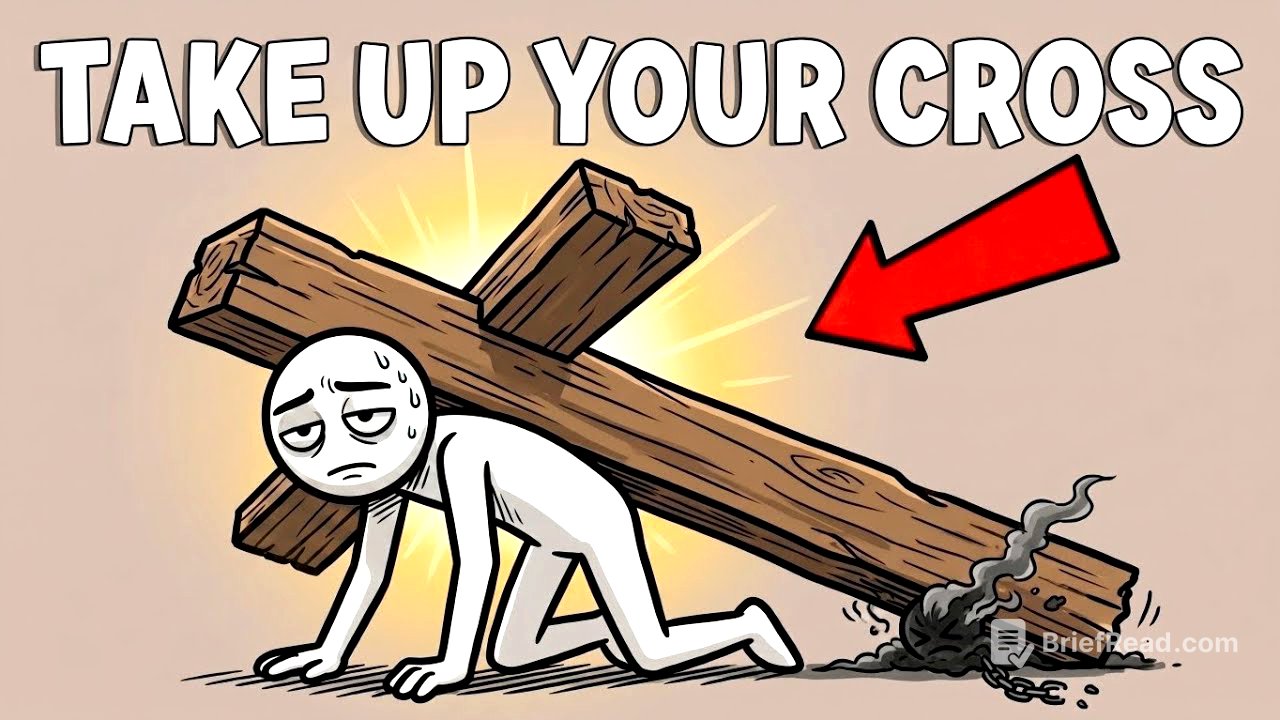
This video challenges the common understanding of "taking up your cross daily," asserting it's not about passively enduring hardships but actively choosing to let the self die so that Christ's life can rise within. It emphasizes that the cross is not a symbol of suffering but an instrument of killing the self-life, leading to resurrection power and a deeper relationship with Jesus.
- The cross is an instrument of execution of the self-life, not a badge of suffering.
- Dying to self daily leads to resurrection power and a more profound connection with Christ.
- The abundant life is found in letting Christ's life flow through us by denying our own desires and ambitions.
Introduction: Rethinking "Take Up Your Cross" [0:00]
The speaker challenges the conventional understanding of "taking up your cross," suggesting that it's often misinterpreted as passively enduring life's hardships. This interpretation turns Jesus' powerful statement into a spiritual painkiller, causing believers to strain under burdens God never intended while neglecting the essential act of following Him. The speaker encourages listeners to reconsider their assumptions and explore the true meaning behind Jesus' call to take up the cross daily.
The True Meaning of the Cross in Jesus' Time [1:03]
The passage from Luke 9:23, where Jesus instructs his followers to deny themselves, take up their cross daily, and follow Him, is examined. The significance of the word "daily" is highlighted. In first-century Judea, the cross was a brutal instrument of execution, symbolizing the complete end of a person's life. Therefore, Jesus' call to take up the cross was not an invitation to a slightly harder life, but a call to die daily, embracing a life beyond the grave.
Taking Up the Cross: An Active Choice, Not Passive Endurance [2:58]
The common misconception of taking up the cross as passively accepting painful circumstances is addressed. The speaker emphasizes that "taking up" is an active choice, not a passive acceptance. The cross is not the suffering itself but the instrument upon which the self dies daily. This involves denying the self, treating the "kingdom of me" with its demands, fears, ambitions, and rights as something no longer known or governed by.
The Self-Life vs. Christ's Life [5:11]
The speaker addresses the question of real pain and suffering, clarifying that the cross is not the pain itself but the place where the right to a pain-free life dies. The circumstance is the furnace, and the cross is the choice to let self-will be crucified so that Christ's resurrection life can rise. This reframes suffering, giving it a purpose greater than passive endurance. Paul's words in Galatians 2:20 are presented as a commentary on taking up the cross, emphasizing the ongoing results of being crucified with Christ.
The Daily Rhythm of Discipleship [7:00]
The daily struggle between the self-life and Christ's call is explored. The self-life awakens with demands for affirmation, protection, and comfort, while Jesus calls for denial of that voice and a walk toward death to self. This daily rhythm of genuine discipleship is why many mature believers hit a wall, as the self-life remains unchallenged in certain areas of their hearts. The abundant life feels distant because they are dying too little, embracing the cross as a symbol of hardship rather than an instrument of death.
Resurrection Power Through Death [8:30]
Philippians 3:10 is referenced, where Paul expresses his longing to know Christ and the power of His resurrection through sharing in His sufferings and becoming like Him in His death. Resurrection power flows through a life that has become like Christ in death. The speaker emphasizes that one cannot experience Easter morning without Good Friday, or the power of Christ's indestructible life without willingly taking their place in His death daily.
The Freedom in Dying to Self [9:52]
The speaker addresses those who feel worn thin, emphasizing that the cross is not a heavier load but a grave for the part of them that was never meant to live. This is the beginning of freedom, as the things that once controlled them begin to lose their grip. Taking up the cross daily means handing the steering wheel of existence back to Jesus and surrendering to His will.
The Cross: An Invitation to Abundant Life [11:45]
An example of how to apply this concept in everyday life is given, such as in response to a critical email. The cross is not God's explanation for why life is hard but His invitation to die to the self that makes life hard. This allows Christ's resurrection life to carry one through every storm with inexplicable peace. Difficult circumstances become the ground where the self-life is planted into Christ's death, allowing something supernatural to grow.
Intimacy with Jesus Through the Cross [13:28]
The daily taking up of the cross is not a joyless ritual but the doorway into the deepest intimacy with Jesus. By consenting to the death of one's own kingdom, one begins to see His kingdom break in everywhere, loving without needing reciprocation, serving without recognition, and waiting without demanding answers. This leads to becoming a person through whom the very life of Christ flows, which is the abundant life.
A Sacred Daily Invitation [14:14]
The speaker concludes by extending a sacred daily invitation, encouraging listeners to recognize any weights they've been carrying that God never asked them to carry. The real cross is the place where those things are put to death. The call is not to try harder but to die daily, embracing the promise that death with Christ is always the pathway to life with Christ. A prayer is offered as a guide for surrendering to Christ and allowing His life to live freely within.