TLDR;
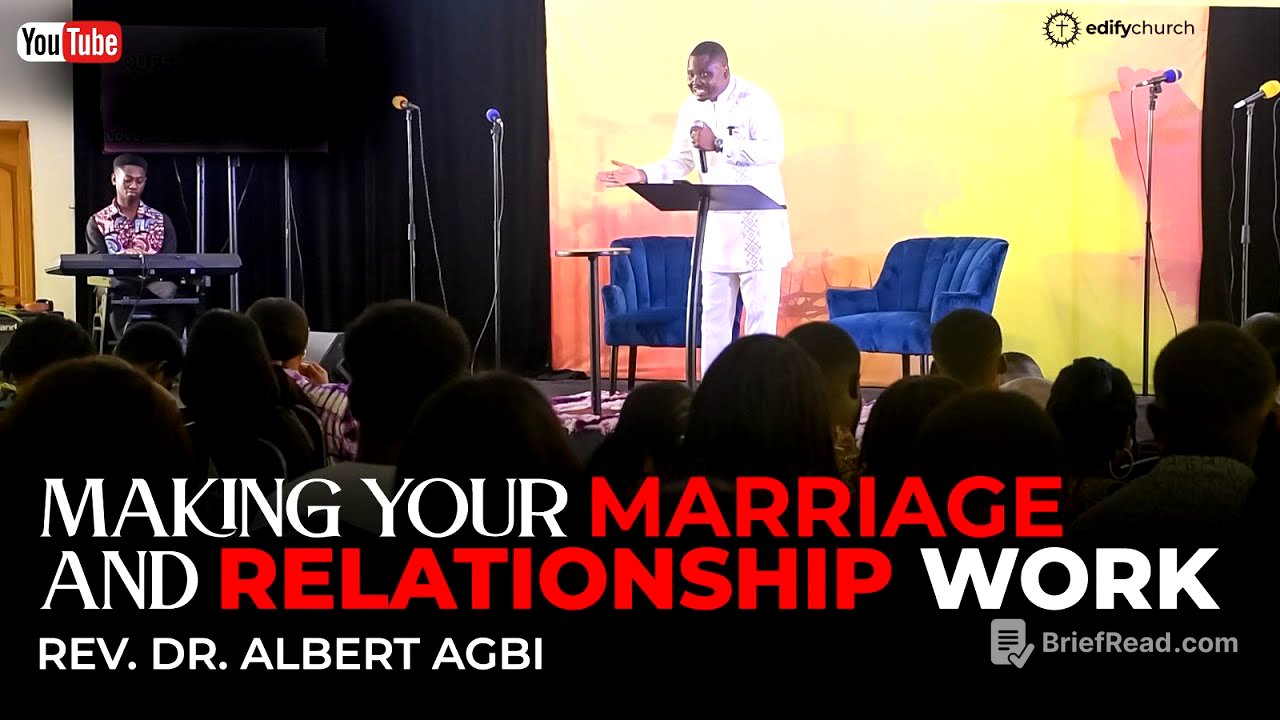
This video discusses the high divorce rates among Christian marriages and the importance of safeguarding relationships through discernment, respect, and personal growth. It emphasizes the need for individuals to address their character flaws, choose partners wisely, and cultivate environments that foster positive thoughts and emotions. The sermon highlights that marriage is as good as the people in it, and continuous effort is required to build and maintain a godly union.
- High divorce rates in Christian marriages
- Importance of discernment and foresight
- Foundation of respect in relationships
- Character formation and personal growth
- Readiness for marriage beyond timelines
Introduction: Divorce Rates and Unhappy Marriages [0:00]
The video starts by addressing the alarming statistic that approximately 35% of Christian marriages end in divorce, with some studies suggesting rates as high as 50%. Additionally, another 30-40% of marriages remain intact but are unhappy, often characterized by loveless relationships where couples stay together solely for the sake of their children. The speaker points out that divorce is often downplayed in Christian circles, leading many to feel compelled to stay in unhappy marriages, becoming like "tenants" in their own homes, merely sharing the same roof without genuine connection.
The Importance of Guarding Relationships [1:02]
The speaker emphasizes that any good thing, including marriage, will spoil if it is not guarded, tended to, and nurtured. Just as Adam was tasked with keeping the Garden of Eden, couples must actively maintain their relationships. The speaker notes that spiritual teachings are not always translating into better marriages, even though marriage was designed to be executed by two Christians. Interestingly, divorce rates in worldly marriages are similar to those in Christian marriages (35-40%), highlighting that even non-Christians can find compatible partners who are a "best fit" for each other.
Foreseeing Danger and the Need for Discernment [4:53]
Drawing from Proverbs 22:3, the speaker underscores the importance of foreseeing danger and taking precautions in relationships. Many people suffer consequences because they fail to discern potential issues before committing to a marriage. The speaker stresses that discernment is crucial because things are not always as they appear. Even with years of dating, one cannot fully know another person, making it essential to seek God's guidance. The speaker cautions against relying solely on superficial qualities like virginity, as character flaws can still surface after marriage.
The Role of Prayer and Avoiding Deception [8:08]
The speaker warns against prayerlessness and choosing a life partner based solely on "vibes" or how well you "click." He advises seeking discernment to foresee potential problems, as some people who appear rich now may soon be poor. The speaker notes that some individuals need a partner who complements their character, and not everyone is compatible. It is crucial to recognize that some people, though nice, are simply not a good fit.
Dealing with Anger and Personal Responsibility [10:35]
The speaker stresses the importance of dealing with personal issues, particularly anger. Anger is presented as a choice, with different people responding differently to the same situation. While it is essential not to excuse bad behavior in others, one can only work on oneself. Complaining does not change anyone; only God and willing individuals can change. The speaker urges listeners to sort out their relationship with God and address character flaws.
The Foundation of Godly Relationships: Respect [12:37]
The foundation of every godly relationship or marriage is respect. The speaker defines respect as a deliberate act of recognizing value, dignity, and the God-given worth of another person, and treating them accordingly. Young people should never marry someone who does not value them. The speaker emphasizes that the problem is not getting married but staying married, which requires deliberately recognizing the value in one's partner. Even when a respected person does something wrong, anger should be measured.
Recognizing Value and Acting with Respect [15:10]
The speaker elaborates on respect, defining it as a deliberate act of recognizing value, dignity, and god-given worth, and treating others accordingly. Disagreements are inevitable, but respect ensures they are handled with care. The speaker shares personal anecdotes to illustrate how respect is demonstrated through actions, even in difficult situations. He emphasizes that respect should be mutual, not just expected from one partner.
Practical Examples of Respect in Action [18:04]
The speaker provides practical examples of how respect is demonstrated through actions, such as his assistant running to buy him medicine and apologizing for not having it immediately. He contrasts this with scenarios where respect is lacking, highlighting the importance of honoring and valuing one's partner even in everyday situations. The speaker emphasizes that respect should be evident in how one speaks and acts, even during disagreements.
The Currency of Godly Marriages: Respect and Love [22:45]
The speaker reiterates that for godly marriages and relationships to stand, there must be a currency, and that currency is respect. Referencing Ephesians 5:33, he notes that men are called to love their wives as themselves, and wives should respect their husbands. Love is considered superior because it involves giving one's life for another, implying that if one can die for someone, they can certainly respect them.
The Role of Individuals in Marriage and Character Formation [23:25]
A marriage is only as good as the two people in it. The speaker emphasizes that the concept of marriage is sound; the problem lies with the individuals involved. Choosing a partner wisely is crucial, as different partners will result in different experiences. The speaker stresses that when both individuals improve, the marriage improves. He then discusses the character formation process, highlighting the influence of environment, thoughts, and emotions.
The Character Formation Process: Environment and Thoughts [25:04]
The speaker explains that character formation begins with one's environment, which includes what one sees, hears, and reads. He emphasizes that bad company corrupts good character (1 Corinthians 15:33). To change a bad habit or character trait, one must create a new environment. The speaker encourages listeners to consciously read books and listen to sermons to introduce new information and break old patterns. He stresses that what one surrounds oneself with influences them.
The Impact of Thoughts and Emotions on Character [29:23]
The speaker emphasizes that environment triggers thoughts, and what one thinks becomes who they are (Proverbs 23:7). Actions are always preceded by thoughts, and it is essential to watch one's thoughts. The speaker warns against wicked thoughts, as they can lead to wicked actions. He advises listeners to guard their hearts with all diligence, as the issues of life come from it. Thoughts produce emotions, which in turn influence behavior, habits, and ultimately, character.
The Cycle of Character Formation and the Importance of Learning [35:38]
The speaker summarizes the cycle of character formation: environment influences thoughts, thoughts produce emotions, emotions determine behavior, behavior forms habits, and habits shape character. To change character, one must start with the environment. He stresses the importance of guarding the environment and being mindful of who one is listening to. The speaker concludes by emphasizing the need to be ready to learn, unlearn, and relearn, as well as to accept the need for change.
Readiness to Learn and the Importance of Respect [37:36]
The speaker emphasizes the importance of being ready to learn, unlearn, and relearn. He notes that traits like kindness and self-control can be learned. One should not expect others to accept them as they are but should be willing to change injurious conduct. The speaker stresses that if one's core actions do not make for good relationships, they must be willing to learn new traits. He uses examples like laziness and emotional immaturity to illustrate the need for personal growth.
The Necessity of Change and the Power of Respect [39:49]
The speaker argues against the notion of seeking someone who will accept you as you are, stating that personal growth is essential for healthy relationships. Just as one makes efforts to look presentable, they should be willing to work on their character. The speaker emphasizes that people cannot change what they do not accept as a problem. He highlights how anger can destroy good relationships and urges listeners to seek God's help in controlling their reactions.
Reiterating the Importance of Respect and Communication [42:17]
The speaker reiterates the importance of respect and urges listeners to seek partners who honor them. He encourages married couples to actively respect each other by recognizing their value and worth. Communication is essential, but it is the way one communicates that matters. The speaker advises couples to establish shared values and work towards them, emphasizing that effort should be put into relationships.
Final Thoughts on Nakedness and Avoiding Difficult People [43:34]
The speaker advises listeners to be open and honest in relationships, likening it to being "naked and unashamed." If one cannot be fully vulnerable with someone, they should not marry them. Additionally, the speaker suggests avoiding people who are difficult to respect to prevent potential problems.
Q&A: Education Levels and Non-Negotiables [44:14]
In the Q&A session, the speaker addresses questions about education levels in relationships and the concept of non-negotiables. He notes that while education level may not always be a problem, it depends on the individuals involved and their insecurities. Regarding non-negotiables, the speaker advises caution, as life is unpredictable, and one may find themselves in a situation where they violate their own non-negotiable. He suggests having principles but being flexible and examining situations on their own merits.
Q&A: Abuse and the Right Time to Start a Relationship [51:20]
The speaker addresses the issue of abuse, emphasizing that it takes many forms, including verbal and emotional abuse, which can be precursors to physical abuse. He stresses the importance of addressing abuse from the verbal and emotional levels and involving professionals and the law when necessary. Finally, the speaker answers a question about the right time to start a relationship, stating that there is no specific timeline. Readiness depends on emotional and financial maturity, as well as the ability to love and respect someone even in disagreement. He advises Christians not to date if they do not see marriage in sight within a reasonable timeframe.




![Roller Coaster the Series EP 5 [1/4] Loft won Pure's love รัก ขบวนนี้หัวใจเกือบวาย | EP.5](https://wm-img.halpindev.com/p-briefread_c-10_b-10/urlb/aHR0cDovL2ltZy55b3V0dWJlLmNvbS92aS9vTl93MTd0VHdSOC9ocWRlZmF1bHQuanBn.jpg)