TLDR;
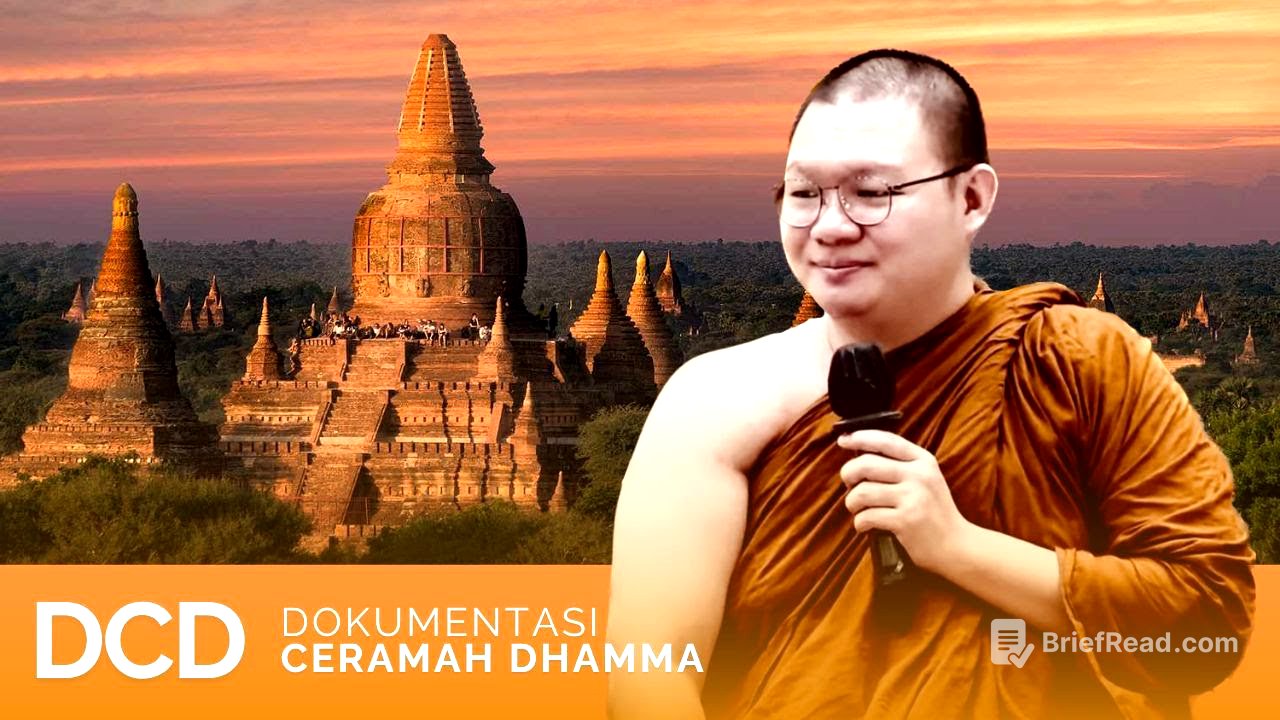
This video summarizes a teaching on living in the present moment, drawing from the book "Living in the Present" by Bhante Buddha Dasa. It emphasizes how dwelling on the past leads to regret and focusing on the future causes anxiety, both of which hinder inner peace. The key is to learn from the past without dwelling on its negativity and to plan for the future without excessive worry. The video introduces the concept of "mindful breathing" as a practical technique to anchor oneself in the present, offering a way to reduce stress and enhance daily life.
- Living in the present is essential for inner peace.
- Regret (past) and anxiety (future) can negatively impact well-being.
- Mindful breathing is a practical technique to stay grounded in the present.
Introduction [0:00]
The speaker begins by sharing an anecdote about his friend Bhante Kambalo in Thailand, which leads him to discuss Bhante Buddha Dasa, a renowned monk in Thailand. He mentions being told that his teachings resemble those of Bhante Buddha Dasa. This prompts him to read Bhante Buddha Dasa's book, "Living in the Present," which inspires the talk.
The Core Message: Living in the Present [7:49]
The core message of the book is that not living in the present leads to a lack of peace, as one is constantly disturbed by the past and future. The speaker elaborates that regrets stem from the past, while worries originate from the future. He explains that these can "bite" us if we are not mindful.
Dealing with Regret [9:11]
The speaker acknowledges that everyone experiences regret. To prevent regret from becoming a burden, one should learn from past experiences without dwelling on the associated suffering. He emphasizes the importance of extracting lessons from the past rather than carrying its negativity. He also notes that even the Buddha reflected on his past lives to teach valuable lessons. The speaker warns that excessive regret can lead to stress, mental health issues, and even suicide, highlighting the extreme case of depression causing bodily paralysis.
Managing Worry [15:20]
The speaker discusses how the future can "bite" us through worry. He contrasts two students preparing for an exam: one focuses on studying and seeking help, while the other excessively worries and seeks divine intervention without action. He emphasizes that while some worry is normal, excessive worry is unhelpful.
The Best Way to Live: The Bade Karata Sutta [18:51]
The speaker introduces the concept of "Bade Karata," which means "one night of good fortune," explaining that in ancient India, "night" symbolized a whole day. He quotes a sutta stating that wise individuals do not long for the past or become anxious about the future. He clarifies that this doesn't mean we shouldn't think about the past or plan for the future, but rather that we should learn from the past and plan without excessive worry. He uses the analogy of climbing a mountain: planning to reach the peak is necessary, but each step should be taken mindfully in the present.
Mindful Breathing Technique [24:13]
The speaker shares a story about a Malaysian student in America who overcame stress and dependence on medication through "mindful breathing." This technique involves relaxed, calm, and deep breathing. He leads a brief exercise, noting that even a few seconds of mindful breathing can bring a sense of calm. The speaker explains that mindful breathing anchors our thoughts in the present moment, freeing us from the burdens of the past and future.
Practical Application of Mindful Breathing [31:06]
The speaker suggests incorporating mindful breathing into daily routines. He recommends practicing it first thing in the morning and during moments of waiting. He emphasizes that even short periods of mindful breathing can be effective and that it can be practiced with eyes open or closed. He shares his personal experience of using mindful breathing at traffic lights to transform a frustrating situation into an opportunity for relaxation.
Conclusion and Encouragement [38:33]
The speaker summarizes the teaching, reiterating that we can be "bitten" by the past and future, and the remedies are mindful reflection and mindful breathing. He encourages the audience to practice the breathing technique and to read the Bade Karata Parita (page 133 in the Parita Biru book) for inspiration. He concludes by sharing a story of someone who successfully used the technique to manage anger and encourages everyone to practice these teachings for a happier life.