TLDR;
This video provides an in-depth overview of life insurance, including concepts such as mortality rates, premiums, and different types of life insurance policies. Key points include the financial implications of life insurance for families, various risk management strategies, and specific types of plans such as term insurance, whole life insurance, and universal life insurance.
- Understanding mortality rates and how insurance companies calculate premiums.
- The financial importance of life insurance for families, covering lost income and debts.
- Different types of insurance policies: term, whole life, and universal life, along with their benefits, structures, and potential drawbacks.
Understanding Life Insurance Basics [0:00]
The video begins by defining a mortality rate and explaining how it affects the premium that an insurance company charges. Life insurance acts as financial security for families in case of unexpected deaths; it helps address income loss, caregiver needs, and outstanding debts. The necessity for life insurance is highlighted with scenarios demonstrating financial hardships families face upon a person’s death.
Risk Management Strategies [4:00]
Different strategies for managing risk are discussed. Risk avoidance, reduction, retention, and transfer are essential strategies for individuals. Insurance functions primarily as a risk transfer mechanism, wherein individuals pay a premium to the insurance company to transfer the financial risk associated with potential future losses.
Term Insurance Explained [6:40]
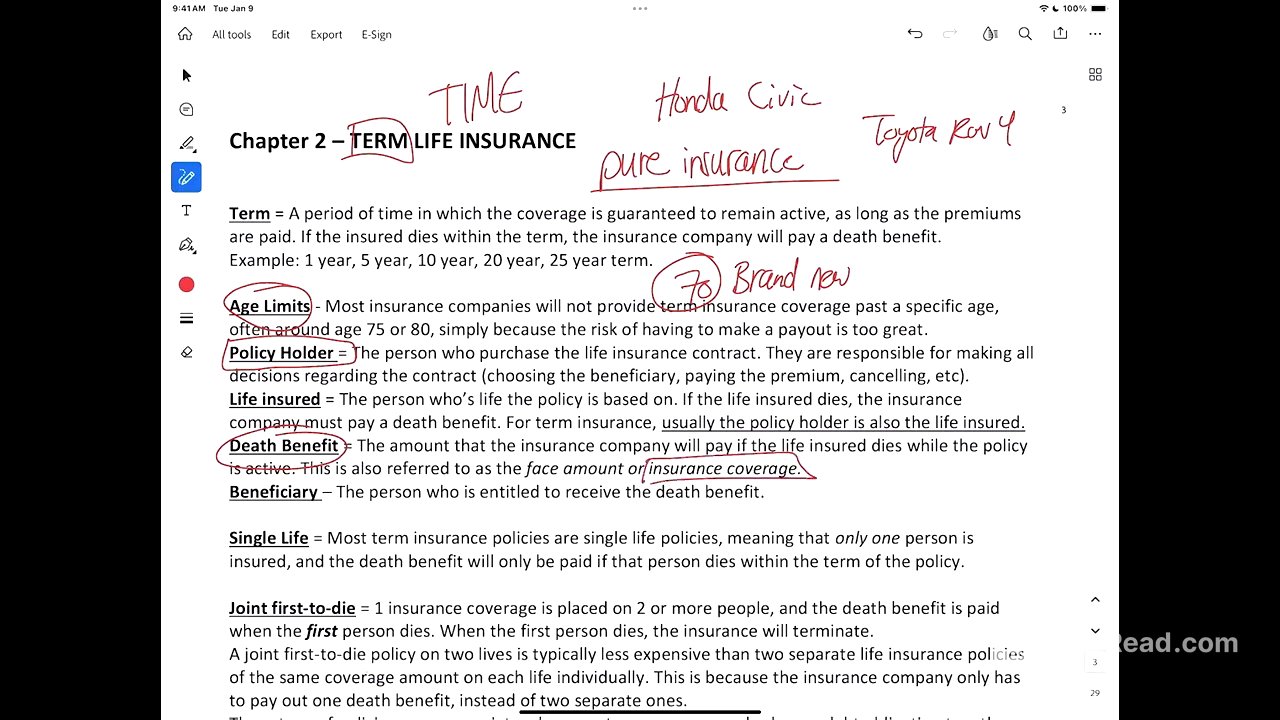
Term insurance provides coverage for a specific duration, such as 10, 20, or 30 years. It offers the straightforward benefit of a death benefit without cash value accumulation. In contrast, term policies can become unavailable after a certain age, typically around 70-75. Key terms such as policyholder and life insured are defined, and the video explains how death benefits and beneficiaries operate within term policies.
Whole Life Insurance Overview [19:40]
Whole life insurance combines the benefits of insurance with cash value accumulation. Premiums remain level but include amounts saved to fund future insurance costs. The policy reserve allows insurance companies to keep coverage effective even as a policyholder ages. The structure separates into two buckets: insurance coverage and cash value.
Universal Life Insurance Essentials [40:00]
Universal life insurance introduces a flexible premium structure where policyholders can adjust how much they pay. Unlike whole life, funds initially go to an investment account, from which insurance costs are deducted. The taxation implications of withdrawals and how investment performance affects policy viability are discussed, underscoring the complexity of these policies.
Tax Implications and Surrender of Policies [47:00]
Tax ramifications on life insurance policies are explained, notably for withdrawals and partial surrenders, which can be liable for capital gains taxes. The concept of adjusted cost basis plays a crucial role in determining taxable gains upon surrendering or withdrawing from a policy.
Group and Creditor Insurance [48:50]
The video briefly touches upon group life insurance available through employers, which typically covers one to two years of salary. Creditor insurance, offered by financial institutions, protects against the inability to pay off debts due to death, illustrating the business models around life insurance across different contexts.
Conclusion on Life Insurance Basics [51:50]
The closing segment reiterates essential concepts and frameworks discussed throughout the video, encouraging vigilance concerning policy details and emphasizing the importance of financial education in choosing life insurance products. Different types of insurance can have varied implications, making understanding and choice critical for potential policyholders.