TLDR;
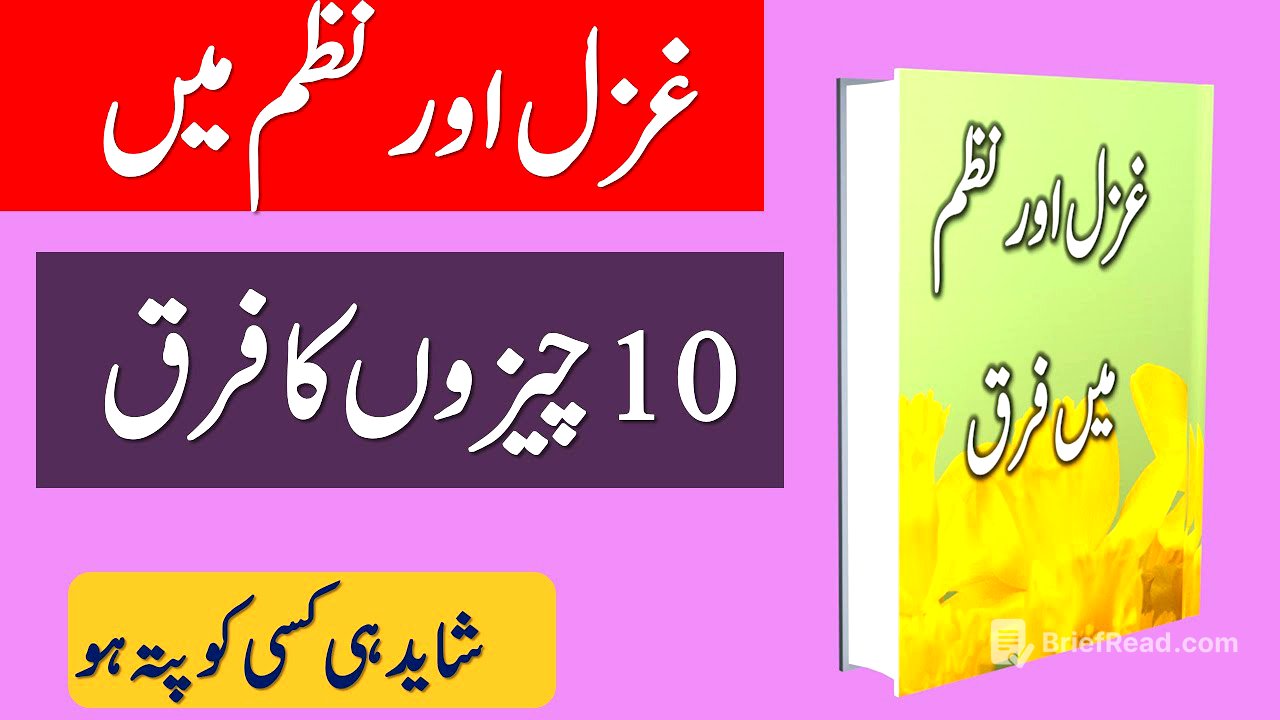
This video from Urdu Teacher explains the ten key differences between Urdu poetry forms, Ghazal and Nazm. While both are forms of Urdu poetry, they differ significantly in theme, structure, and style. Ghazals focus on love and often feature distinct themes in each verse, while Nazms can cover a wide range of subjects with a unified theme.
- Nazm has a title, Ghazal doesn't.
- Ghazal focuses on love, Nazm on other topics.
- Ghazal has an element of sorrow, Nazm doesn't.
Introduction [0:00]
The video introduces the topic of distinguishing between Ghazal and Nazm, two forms of Urdu poetry. While many students know the basic differences, the video aims to explore ten specific aspects that set them apart. The discussion promises to provide a deeper understanding of these poetic forms.
Unified Theme vs. Diverse Themes [0:41]
The first key difference lies in the thematic structure. In a Nazm, all verses typically revolve around a single, unified theme, creating a cohesive narrative or exploration of a subject. Conversely, each verse (sher) in a Ghazal often explores a different theme or idea, offering a collection of diverse thoughts and emotions within the same poem. A Nazm presents one world, while a Ghazal presents multiple worlds.
Title vs. No Title [1:06]
Ghazals do not have titles, while Nazms always have a specific title. Nazms are often known and recognized by their titles, such as Allama Iqbal's "Shikwa" and "Jawab-e-Shikwa."
Verse Independence vs. Interdependence [1:35]
Each verse in a Ghazal is complete in itself and doesn't rely on other verses for meaning. In contrast, verses in a Nazm often depend on each other, with some verses feeling incomplete or less meaningful without the context provided by others.
Fixed vs. Variable Verse Count [2:06]
Ghazals have a limited number of verses, often around five. Nazms do not have a set limit, and can extend to thousands of verses.
Minimum Verse Count [2:27]
A Ghazal must have at least five verses, while a Nazm can consist of as few as two verses.
Figurative vs. Direct Language [2:45]
Ghazals often employ figurative language, using metaphors and allusions. Nazms tend to use more straightforward and clear language.
Love vs. Diverse Subjects [3:05]
Ghazals are traditionally associated with themes of love and romance, often involving conversations with or about a beloved. Nazms, on the other hand, can explore a wider range of subjects beyond love. The term "Ghazal" itself is defined as "talking to women or talking about women".
Internal vs. External Focus [3:39]
Ghazals often have an internal or personal focus, exploring individual emotions and experiences. Nazms tend to have a more external focus, dealing with broader social, political, or philosophical themes.
No Types vs. Multiple Types [3:50]
Nazms have various types based on their form and structure, while Ghazals do not have different categories or types.
Sorrow vs. Varied Emotions [4:04]
Ghazals often contain an element of sorrow and emotional intensity, with successful Ghazals frequently centered on themes of grief and suffering. Nazms generally do not emphasize sorrow to the same extent, allowing for a broader range of emotional expression.
Conclusion [4:29]
The video concludes by encouraging viewers to subscribe to the channel if they found the information helpful.

![TECHNICAL TUESDAY!! [LIVE]](https://wm-img.halpindev.com/p-briefread_c-10_b-10/urlb/aHR0cDovL2ltZy55b3V0dWJlLmNvbS92aS9VVTRmTmNidi1XSS9ocWRlZmF1bHQuanBn.jpg)