TLDR;
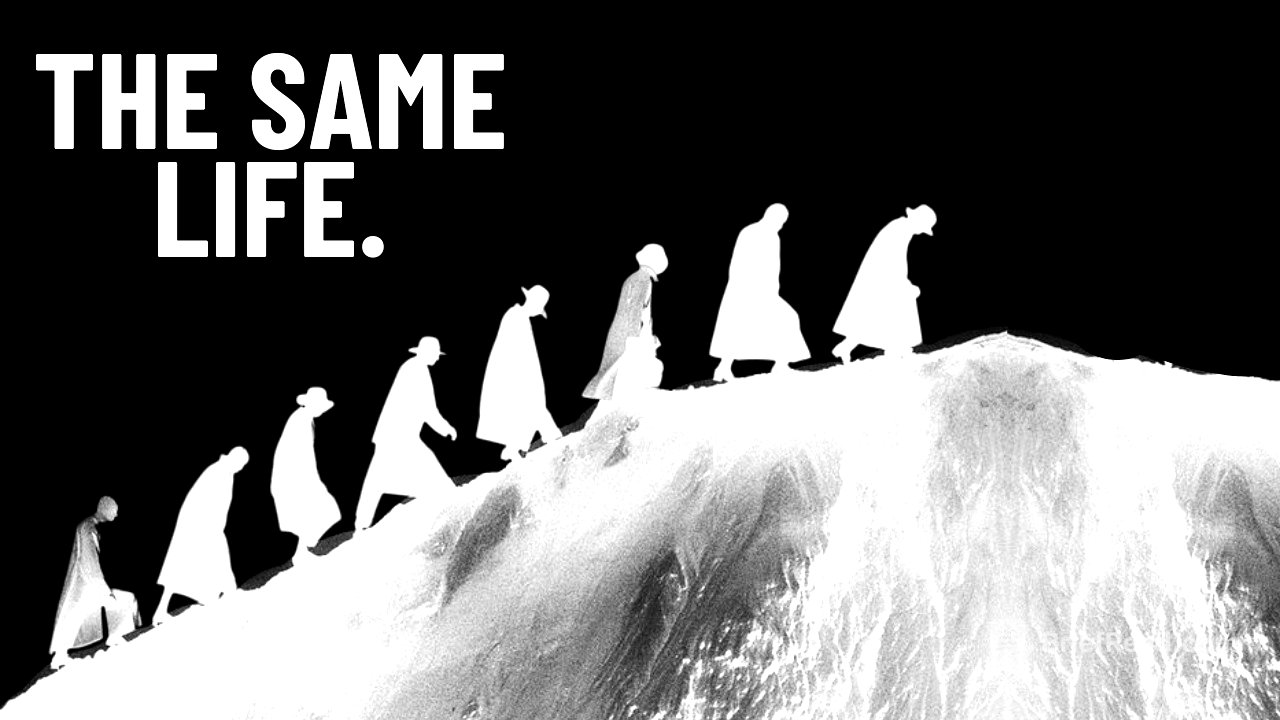
This video explores the repetitive nature of life and the struggle to find meaning within it. It highlights the disconnect between the life people expect and the life they experience, emphasizing the importance of being present in one’s actual existence rather than chasing future promises or ideals.
- The majority of life is spent in repetitive routines without conscious awareness.
- People often escape into changes that ultimately lead back to the same internal experiences.
- Embracing and loving one’s current life, including its mundane aspects, is essential for personal fulfillment.
95% of You Is Already Decided [0:00]
The chapter begins by emphasizing the predictability of our daily lives, illustrating how people often mindlessly engage in the same activities repeatedly, such as checking their phones and having the same conversations. It reflects on how these patterns can go unnoticed for years, leading to a life that feels stagnant. Friedrich Nietzsche's concept of eternal recurrence is introduced, questioning whether one could endure living their exact life again, prompting viewers to consider what changes they might need to make in their current existence.
The Loop Nobody Admits To [1:46]
This chapter discusses the societal tendency to avoid acknowledging the repetitive loops of life. Instead of confronting this reality, individuals often perform or project versions of themselves that appear more dynamic to mask internal dissatisfaction. Various examples illustrate how people falsely equate busyness with a fulfilling life, while the underlying restlessness often remains.
Hannah Arendt and the Work That Never Ends [3:33]
The focus shifts to philosopher Hannah Arendt's ideas about labor, which she viewed as essential but never complete. Daily tasks are juxtaposed with meaningful achievements, demonstrating that most human life occurs in the mundane, repetitive routines that sustain existence. This historical perspective shows that the struggle with routine is not a modern problem but a fundamental aspect of human life throughout history.
The Life You Were Promised vs. the Life You Got [5:19]
This chapter tackles the disparity between the life people believed they would have and the reality they face. Alain de Botton’s commentary highlights the emotional toll of unmet expectations and societal promises about careers, relationships, and personal fulfillment. The ongoing comparison people make between their lives and societal ideals fuels internal conflict and dissatisfaction.
Why You Can't Remember Most of Your Own Life [7:06]
Here, the discussion turns to memory and how routine affects recall. Research is presented, explaining that the human brain does not register repetitive experiences, leading to the feeling that time has passed quickly without meaningful memories being formed. The chapter emphasizes the need for novelty to create strong memories, explaining how repetitive living can cause significant portions of life to fade from memory.
Henri Bergson and Erased Time [8:52]
Henri Bergson's theory on time and consciousness is examined, asserting that people only fully experience what is new and novel. As familiarity increases, experiences become less vivid and more likely to be forgotten. This phenomenon illustrates the essence of living on autopilot and highlights the urgency to actively engage with the present moment.
The Parking Lot at the End of the Map [10:38]
The chapter describes the feeling of reaching life milestones only to be met with an empty sensation. Alain de Botton’s ideas about the gap between perceived success and true fulfillment are discussed, revealing that achieving societal markers does not guarantee emotional or existential satisfaction, leading to a common narrative of disappointment and disillusionment.
Why Escape Never Works [12:25]
This portion analyzes the behavior of those who constantly seek change as a solution to their dissatisfaction. While new experiences produce a temporary sense of excitement, the chapter argues that this change is often superficial. Ultimately, individuals bring their internal struggles with them, reinforcing the notion that true fulfillment requires addressing the state of one’s mind rather than simply changing external circumstances.
Nietzsche, Amor Fati, and the Only Honest Answer [14:11]
The video concludes with Nietzsche’s concept of "amor fati," or the love of one’s fate. This perspective encourages individuals to accept and love their current lives and experiences, including mundane moments, rather than constantly seeking something greater. By fully embracing the present, one can find meaning and happiness, fostering a healthier relationship with one's own existence regardless of external conditions.




![STOCK Market Hits ALARMING $1 Trillion Margin Debt [What's Next?]](https://wm-img.halpindev.com/p-briefread_c-10_b-10/urlb/aHR0cDovL2ltZy55b3V0dWJlLmNvbS92aS8wRDBpUk0wdnVjNC9ocWRlZmF1bHQuanBn.jpg)