TLDR;
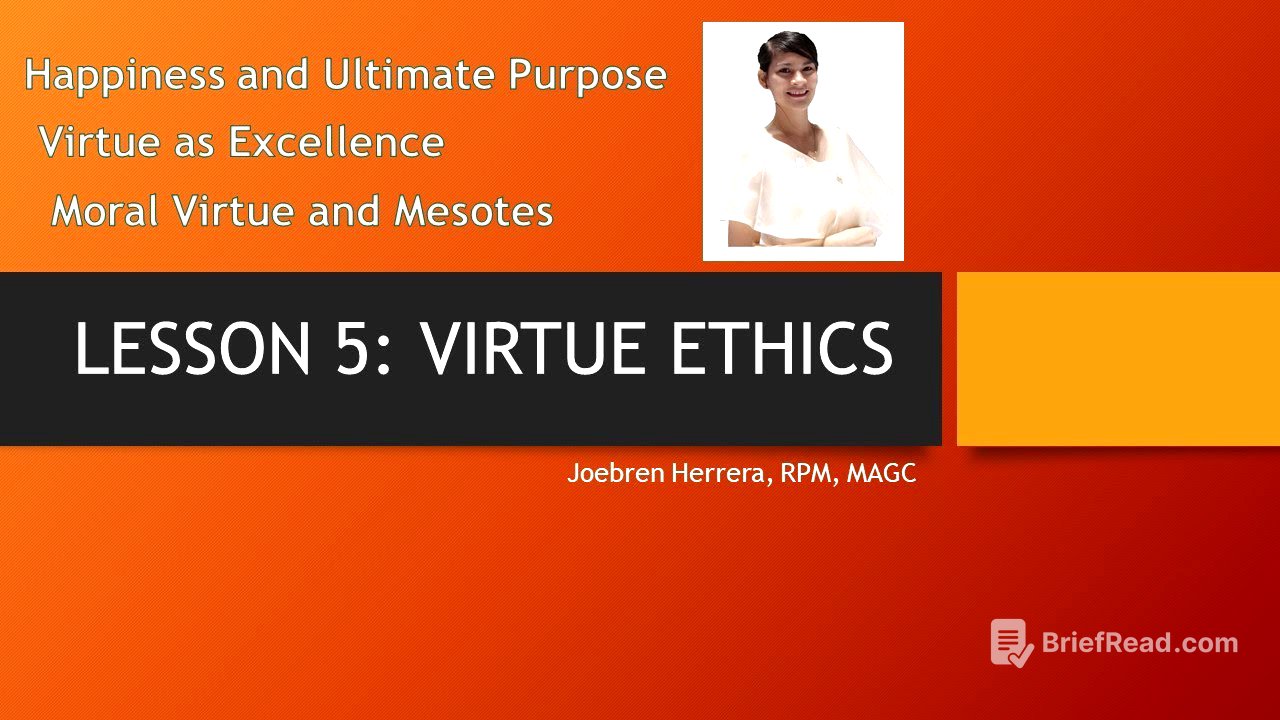
In this video, Joe Bren discusses Lesson Five on virtue ethics as a part of his ethics series. He explains the significance of virtue ethics, primarily through the thoughts of ancient Greek philosophers Plato and Aristotle, focusing on the character and goodness of humans. The video outlines the major philosophical ideas of these thinkers regarding the ethical principles of existence, the nature of happiness, and the pursuit of the ultimate purpose in life.
- Overview of virtue ethics and its focus on character.
- Differences between Plato's and Aristotle's views on reality and happiness.
- Importance of achieving virtue and practical wisdom derived from experience.
Introduction and Overview of Virtue Ethics [0:00]
Joe Bren opens the video by expressing gratitude to his subscribers as he prepares to discuss virtue ethics in ethics, a lesson he identifies as Lesson Five. He emphasizes his ongoing commitment to sharing knowledge and updates frequently.
The Nature of Virtue Ethics [1:12]
The discussion shifts to virtue ethics, which emphasizes the goodness of human beings and their character. He mentions that some psychologists believe humans are inherently good, thus aligning with the core principles of virtue ethics.
Plato and Aristotle: Major Thinkers [2:18]
Bren introduces Plato and Aristotle as key thinkers in virtue ethics. He discusses their views on rationality, emphasizing that humans have rational wills, which aid in understanding their existence and actions. Both philosophers contemplate the ethical principles of life.
Plato's View on Existence [3:54]
Plato's perspective is presented, explaining that he sees reality as existing outside of human sensory experience, accessible only through intellect. This illustrates his belief in the importance of rational understanding over sensory perception.
Aristotle's View on Reality [4:56]
In contrast, Bren outlines Aristotle's belief that reality is found in everyday experiences with objects. Aristotle emphasizes the interconnectedness of humans with the material world.
Happiness and Ultimate Purpose [8:02]
Aristotle's views on happiness as life's ultimate purpose are discussed. He argues that people pursue actions they believe will be beneficial for themselves and others, striving for higher goals in life.
Criteria for the Highest Good [10:17]
Bren elaborates on Aristotle's criteria for determining the highest good and final end, which includes self-sufficiency and the quest for fulfillment. He mentions Abraham Maslow's concept of self-actualization as it relates to finding one's final end.
The Pursuit of Happiness [13:23]
The main goal of life is framed as the pursuit of happiness. Bren highlights how wisdom gained from life experiences shapes one's understanding of happiness and the ongoing human quest for it.
Understanding Virtue and Excellence [21:48]
The conversation then shifts to virtue, emphasizing excellence as an important aspect. Bren asserts that achieving a high purpose is challenging and requires life experience and trials.
Rational and Moral Faculty [27:38]
Bren explains the distinction between the rational and moral faculties that contribute to virtuous behavior, stating that moral virtue involves acting rightly and knowing how to choose good actions.
Practical Wisdom [29:40]
The video discusses the concept of practical wisdom as an understanding derived from experiences and the need to make the correct decisions based on learned lessons and maturity over time.
The Morally Virtuous Person [31:54]
Bren emphasizes that a morally virtuous person seeks appropriate action that balances emotions and moral judgments, advocating for finding a median or "mean" in ethical behavior.
Conclusion [37:41]
In closing, Joe Bren thanks his viewers for their support and encourages new viewers to engage with his channel.