TLDR;
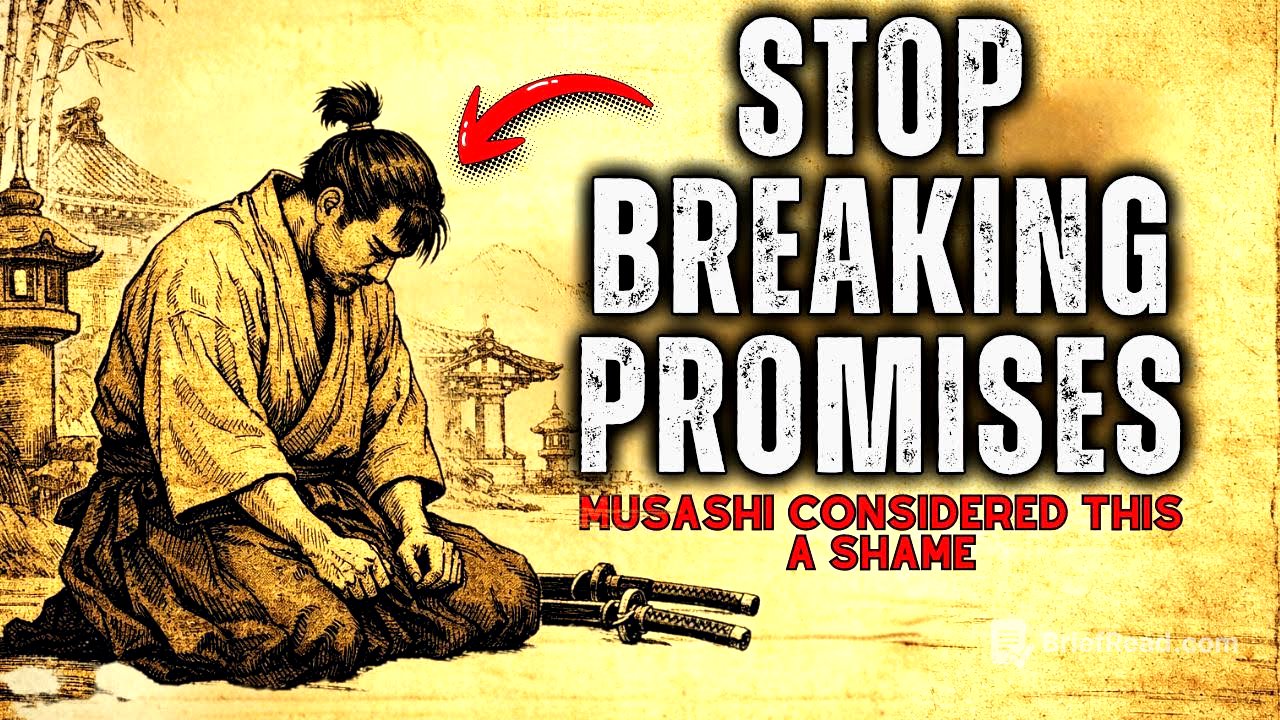
This video explores the concept of honor as a daily practice of aligning one's actions with their decisions, drawing from the philosophy of Miyamoto Musashi. It challenges the modern tendency to excuse failures in self-discipline as mere lack of motivation, instead framing them as breaches of internal honor that erode self-respect. The video provides a path to rebuild internal honor through small, consistent promises and absolute fulfillment, emphasizing the importance of the word as a vow.
- Breaking promises to oneself leads to a weakened identity and a cycle of self-sabotage.
- True discipline is born from the end of negotiation with oneself and the consistent honoring of decisions.
- The practice of making and fulfilling small promises daily is a ritual to restore internal honor and strengthen one's character.
INTRO [0:00]
The video introduces the idea that breaking promises to oneself is not just a lack of motivation but a matter of shame, particularly in Japanese philosophy. Miyamoto Musashi viewed breaking one's word as a failure of character, which the presenter argues is something many people do daily. The modern world encourages indulgence and excuses, but the way of the warrior sees these as corrosive. Japanese philosophy values the coherence between decision and action, and breaking promises leads to a loss of self-respect, discipline, focus, and mental strength, resulting in a cycle of self-sabotage.
1. THE MODERN LIE — WHEN MOTIVATION BECOMES EXCUSE [6:02]
The modern world often excuses a lack of action as a lack of motivation, but Japanese philosophy views it as dishonor. Miyamoto Musashi saw failing to follow through on a decision as a sign of dishonor, placing responsibility inward. The current mentality normalizes failing oneself with external excuses, but Musashi understood that each unhonored decision weakens internal character. Transformation isn't just about discipline or methods, but about the relationship with one's word. Honoring decisions strengthens the spirit, while breaking them corrodes mentality.
2. THE INTERNAL MIRROR — WHERE YOUR WORD BEGINS TO BREAK [8:25]
Japanese philosophy serves as an uncomfortable mirror, reflecting the small, daily decisions where one's word is broken. These behaviors, such as hitting snooze or endless scrolling, are normalized in modern society but were seen by Musashi as blows against one's identity. A person is the sum of the decisions they honor, not the grand promises made in moments of excitement. Every broken promise weakens who you are consistently. When you promise and don't follow through, your mind registers that your decisions are flexible, impacting your journey and capacity for transformation.
3. THE CODE OF MIYAMOTO MUSASHI — THE WORD AS A VOW [10:49]
Miyamoto Musashi viewed the word given to oneself as a vow, an internal commitment that didn't need witnesses. Honor is internal coherence, doing what was decided even when nobody is watching. In samurai mentality, a man without his word is a man without a blade. Each honored decision sharpens the spirit, while each broken promise dulls the mind. Rigorous training aligns action and decision, eliminating internal incoherence. When you follow through, you send a message that your decisions have weight, transforming your mentality and strengthening your identity.
4. THE TRUE ENEMY — THE MIND THAT SEEKS COMFORT [13:18]
The true enemy is the brain seeking comfort, which whispers and influences choices that seem harmless but profoundly impact one's journey. This enemy negotiates, rationalizes, and betrays original decisions, making you believe that changing your mind is intelligence when it's fear in disguise. Musashi knew that the greatest duel was against this inclination toward comfort and trained the mind to resist weakness. Giving in to comfort adjusts your mentality to expect less of yourself, and decisions lose weight.
5. THE INVISIBLE ABYSS — THE FALL OF SELF-RESPECT [15:41]
There's a silent moment when the truth imposes itself: you're failing yourself. This modern shame corrodes everything from within. When a man loses self-respect, everything else begins to crumble. The impact seems small at first, but gradually shapes a weak identity from excess concessions. Strength dissolves in the small unhonored decisions in the backdrop of routine. When self-respect crumbles, mentality changes, decisions become looser, and transformation seems distant.
6. THE SAMURAI PRINCIPLE — THE END OF NEGOTIATION [17:53]
Mousashi taught a simple principle: small promise, absolute fulfillment. The true turnaround happens when you promise less and fulfill everything. Every promise carries an internal cost, so the rule was fewer promises, zero breaks. Discipline is born from the end of negotiation. When you stop arguing with yourself, the mind understands that the decision isn't open for debate, changing how you act. Consistency is internal structure, not infinite willpower.
7. THE RITUAL OF HONOR — DO AND FULFILL [20:14]
Ideas don't change identities on their own; simple rituals repeated with intention do. The path begins with a minimum promise, small enough not to generate resistance, clear enough not to allow escape. The ritual is straightforward: make a small promise and execute it the same day to break the pattern of mental negotiation. By repeating this process, alignment occurs, generating real impact. Each small promise fulfilled sends a powerful message: my word has weight.
8. THE FINAL CHOICE — HONOR OR SELF-DECEPTION [22:35]
There's no more room for theory; stop breaking promises as an internal order. Every time you break a promise made to yourself, something in you adjusts downward. Either you live with action aligned with decision, or you accept living without internal honor. Continuing to break promises is choosing one path; stopping is choosing another. Character is built when you decide who controls your decisions. Stop fragmenting yourself by saying one thing and doing another.
9. THE WARRIOR'S SEAL — THE WORD SHARPER THAN THE SWORD [24:47]
What remains when everything else fails is your word. What really sustained a warrior was the coherence between what you decide and what you do. Real transformation happens backstage, in the small decisions you honor when nobody is watching. Conscious repetition builds character, sustaining any lasting change. Restoring the weight of your own word is a practical foundation, separating those who start from those who continue. Each honored decision strengthens your mentality, and each coherent action deepens the transformation.
Conclusion [26:48]
The video concludes by encouraging viewers to subscribe for more content that generates real transformation over time. It prompts viewers to comment "My word has weight" as a commitment to themselves and to like the video to help it reach others seeking clarity and internal coherence.



![The ONLY Nine Sols JADE GUIDE You'll Ever Need! [A Deep Dive On EVERY Jade!]](https://wm-img.halpindev.com/p-briefread_c-10_b-10/urlb/aHR0cDovL2ltZy55b3V0dWJlLmNvbS92aS9UNG9nTGQ2LXNZOC9ocWRlZmF1bHQuanBn.jpg)