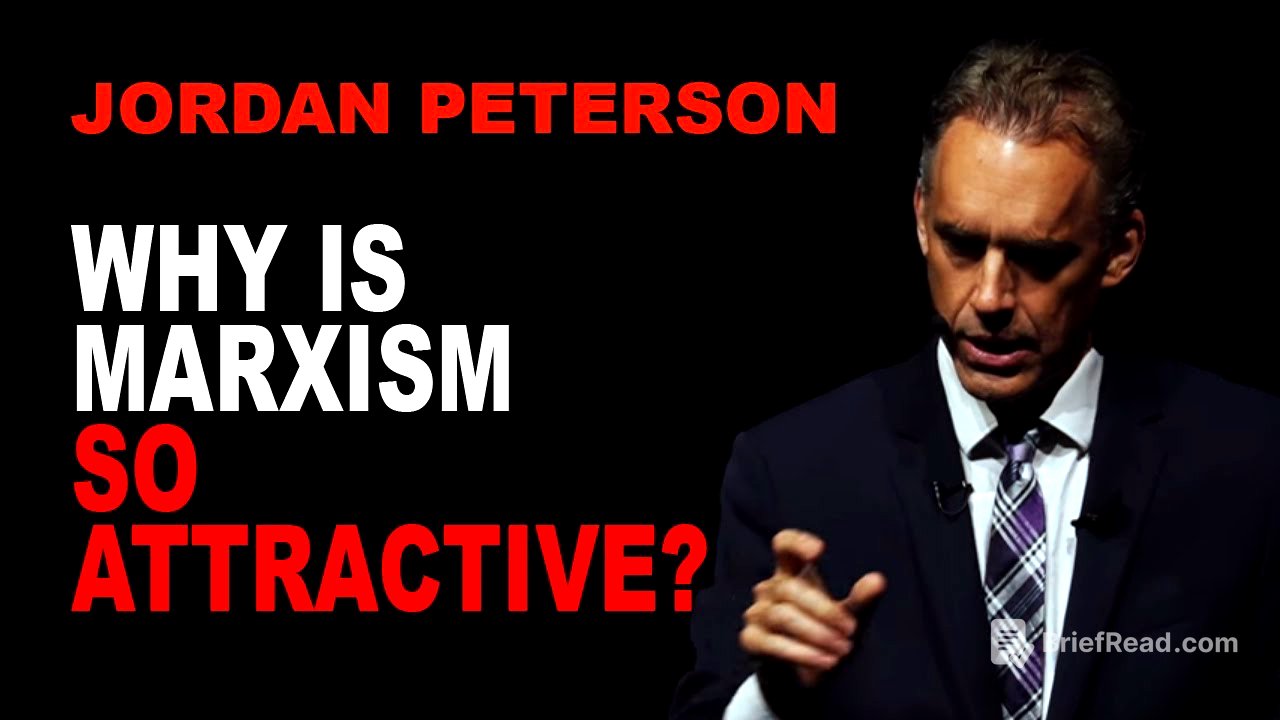
TLDR;
This video explores the enduring influence of Marxism, particularly in contemporary society and education. It discusses the philosophical underpinnings of Marxism, the resentment it fosters, and how it has evolved into postmodernism and identity politics. The speaker emphasizes how Marxism manifests in bureaucratic structures rather than official political arenas, leading to significant implications for individual freedoms and society.
- Marxism has remained a significant ideology since the 1800s, particularly in academia.
- Resentment and biased education contribute to the resurgence of Marxist ideas, overshadowing historical atrocities.
- Marxism has evolved into postmodernism and identity politics, affecting mid-level bureaucracies.
The Enduring Influence of Marxism [0:00]
The video initiates a discussion on why Marxism is a deeply rooted ideology, contrasting it with other beliefs like classical liberalism. Since its inception in the mid-1800s, Marxism has evolved, particularly gaining traction in educational environments. The speaker points out that early communists, while flawed, held a utopian vision that appealed to the masses, leading to a widespread embrace of their ideas.
Philosophical Underpinnings and Resentment [0:20]
The speaker asserts that historical communist figures had less reprehensible philosophies compared to contemporary Marxists. The belief that wealth inequality is rooted in theft fuels resentment, which serves to justify negative emotions. This philosophy resonates with a Cain-like aspect of humanity, where the narrative of corruption and theft excites envy and can lead to justifying harmful actions against perceived oppressors.
Impact of Education on Ideological Understanding [2:57]
The speaker criticizes the lack of education surrounding Marxist atrocities, particularly in the context of modern classrooms. Many students are often unaware of the brutality associated with regimes like Stalin’s and Mao’s. This educational gap contributes to the cluelessness surrounding Marxist ideologies and their historical context, leading to an ongoing narrative that neglects the negative outcomes of such governance.
Resurgence and Evolution of Marxist Ideologies [3:59]
Rather than disappearing, Marxism has transformed into postmodernism and identity politics. The speaker notes this evolution as particularly cunning, noting how it has infiltrated bureaucratic organizations rather than high political offices. These ideologies exert influence over everyday structures like school boards and legal societies, where adherence to principles of equity, diversity, and inclusivity is becoming mandatory, effectively shaping the ideological landscape at a grassroots level.
Challenges to Resistance Against Bureaucratic Control [5:33]
The discussion concludes with a warning about the complacency of ordinary people towards mid-level bureaucracies that enforce these ideologies. This complacency allows groups adept at gaining control to shape policies and principles that may infringe upon personal freedoms. The speaker suggests that active resistance and awareness are necessary to combat the implications of these changes, as they are subtle yet profoundly impactful on societal structures.