TLDR;
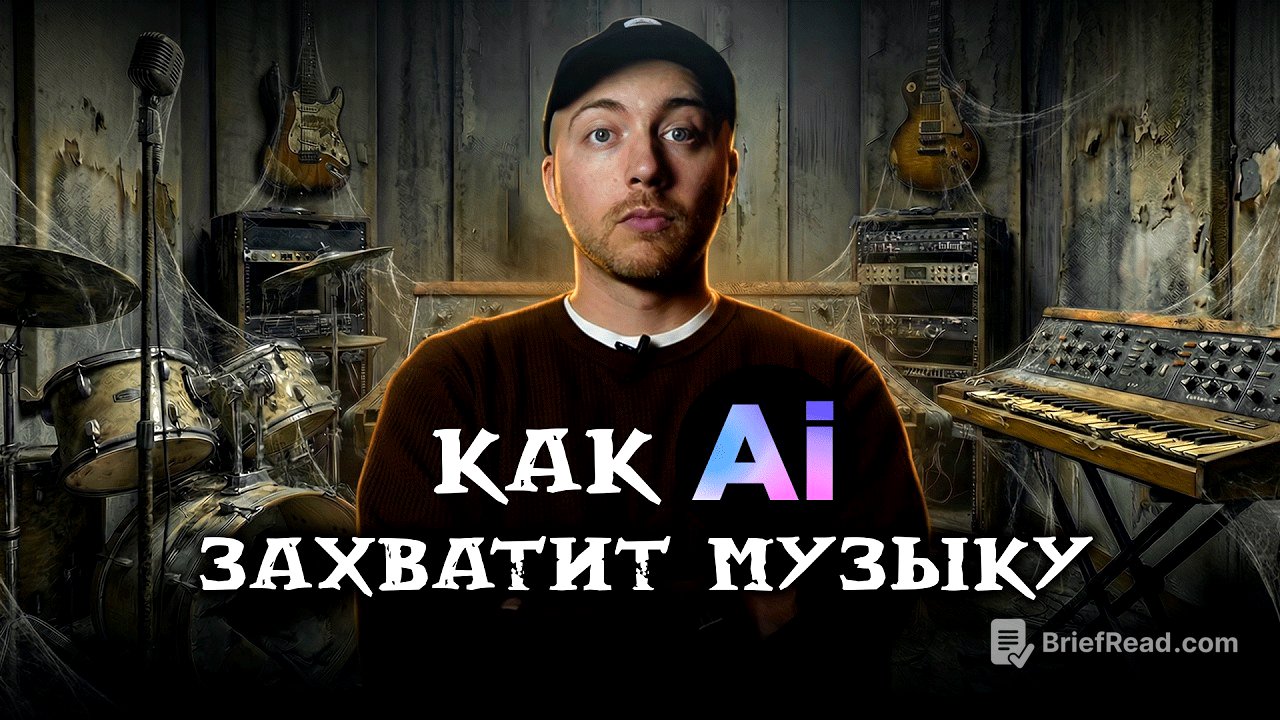
This video explores the rise of AI in music creation, highlighting its potential impact on artists and the music industry. It covers examples of AI-generated songs gaining popularity, discusses how AI learns to create music, and examines the ethical and legal implications of AI-generated content. The video also touches on the historical context of computer-generated music and offers a perspective on how AI might change the future of music creation and consumption.
- AI is rapidly becoming a significant player in the music industry.
- AI music creation tools are becoming more accessible and user-friendly.
- The legal and ethical implications of AI-generated music are still being debated.
- AI could lead to a shift in how music is created, consumed, and valued.
Intro: The Dawn of AI Music [0:05]
The video starts by stating that AI has arrived in the music industry, marking a point of no return. It references the track "Irun" by AVEN, an electronic release that gained popularity but was later removed from streaming platforms due to its AI-generated vocals. Another example is the song by Zenai Mone, a completely AI-generated artist, which reached the Billboard radio charts. The presenter also mentions AI-generated songs like "Snegurochka" and "Yarmarka Sudeb," which have garnered millions of listens. AI is now a competitor to human artists, capable of producing high-quality tracks in seconds. This shift has sparked panic among musicians and divided listeners, prompting a need to understand this phenomenon.
Sponsor: Stereozoe [4:54]
The host introduces a segment sponsored by Stereozoe, a center for vinyl and hi-fi equipment. He highlights three recent music releases: a new album from ASAP Rocky, the final album from Megadeth, and a Brit Pop album from Robbie Williams. The segment promotes Stereozoe's selection of vinyl records and high-fidelity audio equipment. A giveaway of Robbie Williams' greatest hits collection is announced, with details available in the description.
Home Studio: Creating Music with AI [6:44]
The presenter moves to his home studio to demonstrate how musical neural networks work. He uses Suno, a popular music AI, to create music from a hummed melody. He sings a funk-inspired tune into his laptop and prompts Suno to generate a 70s funk track. The AI creates a full song in about a minute. He then tries a heavy guitar riff, prompting the AI to generate a metal track. The presenter expresses amazement at the speed and quality of the AI-generated music.
How AI Music Works: The Science Behind the Sound [10:48]
The presenter explains the basic principle of how neural networks create music. He compares it to how children learn language by recognizing patterns and sequences. Similarly, AI learns music by analyzing vast amounts of musical data, including notes, chords, rhythms, and even pauses. By understanding the patterns of different genres, artists, and eras, AI can recreate or generate similar music. The presenter uses the example of Eurovision songs to illustrate how AI can create predictable, formulaic music.
Experiment: Creating a Eurovision Song with AI [13:46]
The presenter conducts an experiment to create a typical Eurovision song using AI. He uses Synнтакс, an aggregator of neural networks, to access both ChatGPT and Suno. First, he asks ChatGPT to identify common words used in Eurovision songs. Then, he prompts ChatGPT to write lyrics for a Eurovision song using those words. He then takes the lyrics and uses Suno to generate a song in the style of Eurovision, providing a detailed prompt describing the desired tempo, key, and production style. The resulting song is a generic but well-produced Eurovision-style track.
Historical Context: Early Computer Music [19:45]
The video shifts to the historical roots of AI music, starting with the CSIRAC computer in the 1950s, which was used to perform music. It highlights the work of Lejaren Hiller, a chemist and composer who used computers to generate music based on algorithms. Hiller's suite for string quartet was an early example of computer-generated music. The video also discusses Iannis Xenakis, an architect and composer who created music based on mathematical and architectural principles, using computers to generate statistical music in the 1960s.
AI as a Music Workstation: Editing and Enhancing AI-Generated Tracks [23:24]
The presenter returns to the home studio to demonstrate how AI can be used as a music workstation. He shows how an AI-generated track can be broken down into individual tracks for drums, bass, and percussion. He then demonstrates how to add new elements to the song by prompting the AI to add a vocal harmony and a violin part. The presenter emphasizes that AI can be used to enhance and modify existing tracks, acting as a session musician or songwriting assistant.
The Voice of AI: Vocal Generation and Ethical Concerns [28:38]
The presenter discusses the ability of AI to generate vocals, addressing the challenge of finding suitable vocalists for electronic music producers. He demonstrates how to replace his own vocals with a powerful female vocal using Suno. He then revisits the story of AVEN's "Irun," which was removed from streaming services due to suspicions that the AI-generated vocals were based on the voice of Jorja Smith. This leads to a discussion of the legal battles between major labels and AI companies over copyright infringement and the unauthorized use of artists' voices. The presenter notes that major labels are now partnering with AI companies to train AI models on their music catalogs.
The Future of Music Creation: AI as a Tool vs. AI as a Creator [34:58]
The presenter discusses how AI is changing the music production process. He contrasts using AI as a tool to enhance human creativity with using AI to generate music entirely on its own. He demonstrates the latter by prompting Suno to create a song based on the theme of "flying clouds" and "unrequited love on Copacabana beach." The resulting song is decent but lacks the personal touch and creativity of human-driven music. The presenter emphasizes that AI is most effective when used as a tool by human artists.
Conclusion: AI's Impact on Music and the Value of Human Artistry [42:04]
The video concludes by considering whether AI is a miracle tool or a threat to musicians. The presenter believes that AI will ultimately benefit music as an art form by stimulating creativity. While AI may disrupt the commercial music industry and replace some jobs, talented and passionate artists will always be in demand. He acknowledges the frustration that musicians may feel knowing that AI can replicate their skills quickly and easily, but encourages them to use AI as a tool to create even more innovative music. The presenter also suggests that the rise of AI music may lead to a greater appreciation for human stories and experiences in music, making authenticity more valuable than perfection.