TLDR;
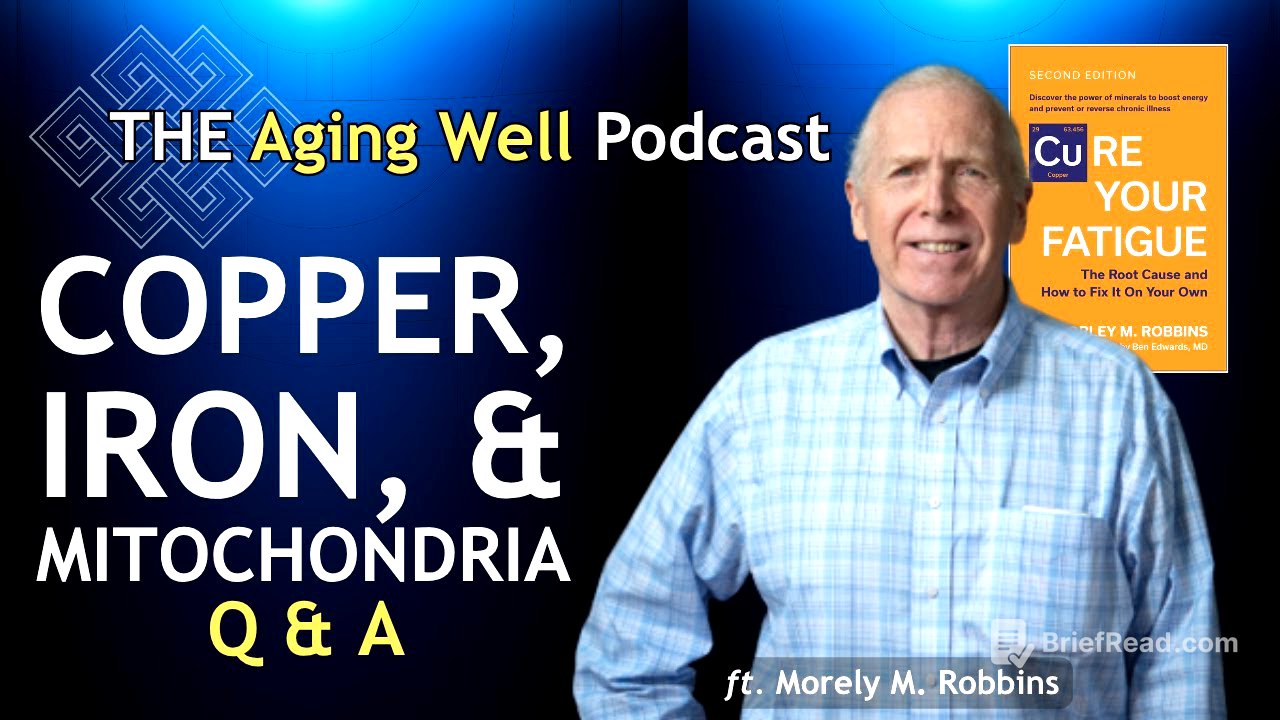
This podcast episode features Morley Robbins discussing the critical roles of iron and copper in aging, energy production, and overall health. He addresses listener questions about blood donation, iron levels, copper IUDs, and mitochondrial function. Robbins emphasizes the importance of mineral balance, particularly the copper-to-iron ratio, and advocates for an ancestral diet, strategic supplementation, and lifestyle adjustments to support healthy aging.
- Blood donation can act as a tonic, stimulating the body to regenerate and recycle iron, but gravity-fed donations are preferable to methods involving machines that use citrate.
- Maintaining proper copper levels is essential for iron regulation, energy production, and overall health, especially as modern farming practices have reduced mineral availability in food.
- The focus should be on energy production within the mitochondria, where copper plays a vital role, rather than solely on zinc or other isolated nutrients.
Benefits of Blood Donation [1:15]
Donating blood acts as a tonic, invigorating the body by prompting it to regenerate and replace the lost blood. This process is driven by erythropoietin (EPO), a hormone that stimulates the production of new red blood cells and signals tissues to release stored iron. Blood donation helps recycle iron and prevent its accumulation, which is linked to aging. A 2012 study highlighted the importance of ferroportin, a copper-dependent doorway for releasing iron, in preventing iron accumulation and supporting healthy aging.
Gravity-Fed Blood Donations vs. Power Red [4:13]
Morley Robbins advises against power red blood donations, which involve using a machine to separate and return plasma. These machines use citrate, an endogenous inhibitor of ceruloplasmin, which is detrimental. He recommends gravity-fed donations to avoid introducing citrate into the body.
Managing Iron Levels Through Blood Donation [6:00]
Regular blood donation helps manage iron levels and maintain homeostasis in the blood recycling system. Robbins shares his experience of lowering his ferritin and hemoglobin levels through consistent blood donations. He recommends quarterly donations combined with the Root Cause Protocol (RCP), which includes nutrient cofactors and copper, to support iron regulation. Copper is essential as it supports iron regulation, acting as the "general" to iron's "foot soldier."
Ancestral Diet and Supplementation [9:39]
Robbins endorses the Weston A. Price diet, emphasizing the importance of obtaining minerals and vitamin cofactors through diet and supplementation. He recommends regular adrenal cocktail intake, mineralizing food and water, and ensuring adequate magnesium (5 mg per pound of body weight) and copper (2-4 mg daily, up to 6-8 mg for some) intake. He encourages people to experiment with their diet and supplementation to find the right balance for their individual needs.
Thoughts on One-A-Day Vitamins [13:01]
Robbins strongly advises against one-a-day vitamins, citing that they contain synthetic nutrients, incorrect ratios, excessive iron and zinc, and insufficient copper and magnesium. He views them as ineffective for recovery and not beneficial for overall health.
How Iron Enters Tissue [13:52]
Most articles on iron metabolism focus on iron absorption from the diet, but the recycling system, managed by macrophages in the spleen, is more critical. The body needs 25 milligrams of iron daily, with 24 milligrams coming from recycling and only 1 milligram from dietary input. Copper is essential for this recycling process. Iron absorption involves a two-step process in the enterocytes (intestinal cells): converting dietary iron into an absorbable form and then deciding whether to store it as ferritin or transport it into the bloodstream via the ferroportin doorway, which is copper-dependent.
Iron Needs for Athletes [19:00]
While hemolysis (breakdown of red blood cells) does occur in athletes, especially runners, the increased iron needs are also influenced by adrenaline. Adrenaline triggers the production of hepcidin, a negative regulator of iron metabolism that shuts down the ferroportin doorway, causing iron to be sequestered in tissues, particularly muscle tissue. This leads to the buildup of the labile iron pool, which is highly reactive and contributes to oxidative stress and aging.
The Role of Copper and Iron in Energy Production [24:45]
Robbins dismisses the zinc-to-copper ratio as a valid metric, criticizing its origins and emphasizing the importance of copper and iron for energy production. He notes that during the COVID-19 pandemic, high doses of ascorbic acid, vitamin D, and zinc (the "COVID cocktail") harmed copper metabolism. Zinc inhibits complex 4 of the mitochondria, the ceruloplasmin ferroxidase enzyme, and copper uptake in the intestine. Copper, not zinc, has antimicrobial properties and is essential for energy production in the mitochondria.
Iron Deposition and Aging [30:09]
Unregulated iron deposition accelerates aging and inflammation. Mainstream sources often promote high iron intake, but iron biologists suggest only 1 milligram of iron is needed daily. Excess iron accumulates in the mitochondria, disrupting their function. Stress increases iron accumulation and oxidative stress, further accelerating aging.
Copper IUDs and Copper Supplementation [32:52]
For individuals with copper IUDs, Robbins suggests that those who are copper deficient may experience a release of iron without adequate copper to regulate it, leading to side effects. He recommends taking copper within the context of the Root Cause Protocol (RCP) to make it more bioavailable and manage iron levels effectively.
Considerations Before Supplementing Copper [36:12]
Most people in North America are likely low in copper due to deficiencies in the food system. Copper deficiency has been a prevalent issue on farms for 80 years, affecting the mineral content of produce and animals. Individuals can either start the RCP and monitor how they feel or undergo blood and hair testing to establish a baseline and track progress.
Mitochondrial Function and Mineral Imbalance [37:31]
Copper is involved in multiple complexes within the mitochondria, not just complex 4. Iron is also crucial for mitochondrial function, particularly in iron-sulfur clusters. Copper is essential for recycling iron and making heme. Copper deficiency impairs energy production and prevents iron from exiting the mitochondria, leading to iron accumulation. Stress hormones like adrenaline and cortisol exacerbate this issue by increasing hepcidin and metallothionein, which binds up copper.
Peptide GHK Copper [43:02]
While GHK copper peptides have gained attention for regenerative and anti-aging properties, Robbins questions the need for exogenous sources if the body should naturally produce them. He compares relying solely on patches or transdermal applications to addressing a copper deficiency, emphasizing the importance of restoring copper physiology through diet and supplementation rather than replacing it temporarily.
Assessing Iron and Copper Status [48:27]
Robbins recommends two primary tests: hair tissue mineral analysis (HTMA) through TEI labs and a full monty iron panel blood test. The HTMA assesses overall mineral status and stress levels, while the blood test evaluates iron markers, copper, ceruloplasmin, zinc, vitamin A, and vitamin D. These tests provide a comprehensive overview of the body's balance and stress levels.
Rebalancing Minerals [51:42]
The Root Cause Protocol (RCP) aims to lower the iron footprint and increase the copper footprint in the body. It emphasizes minerals, especially electrolytes like magnesium, sodium, and potassium. The protocol prioritizes copper, magnesium, and iron, recognizing their importance and the need to manage them through diet and stress management.
Mineral Seesaw Relationships [54:03]
In addition to the electrolyte balance (sodium, potassium, magnesium), copper and iron have a seesaw relationship, as do vitamin A and vitamin D. Maintaining balance among these minerals and vitamins is crucial for overall health and homeostasis.
The Importance of Copper in Aging and Energy Production [56:49]
A better understanding of mineral metabolism can transform how we approach aging by focusing on balance and energy production. Copper is often overlooked in the biohacking and longevity communities, despite its critical role in mitochondrial function. Excess iron chokes the mitochondria, hindering energy production.
Final Thoughts on Aging Well [58:33]
Aging is a natural process, and mitigating iron uptake and retention is essential for healthy aging. The body has elegant mechanisms to recycle iron, requiring copper and retinol for bioavailability. Robbins encourages people to think about aging from an energy standpoint, focusing on vitality, presence of mind, and adequate rest, which can be achieved by correcting imbalances in key minerals through the Root Cause Protocol.