TLDR;
This video explores the intricate processes behind airline food production, from ingredient selection to final service. It covers the industrial scale of operations, the challenges of maintaining food quality at high altitudes, and the specific techniques used for appetizers, main courses, and desserts. The video also touches on the production of various food items like apple juice, pineapples, strawberry jam, sugar, tomato sauce, blueberries, and broccoli, highlighting the technologies and methods used to ensure quality and efficiency.
- Airline food production is a complex, large-scale operation.
- Food is designed to withstand cabin pressure, low humidity, and changes in taste perception at high altitudes.
- Industrial kitchens use advanced techniques to prepare and preserve food quality.
Intro [0:00]
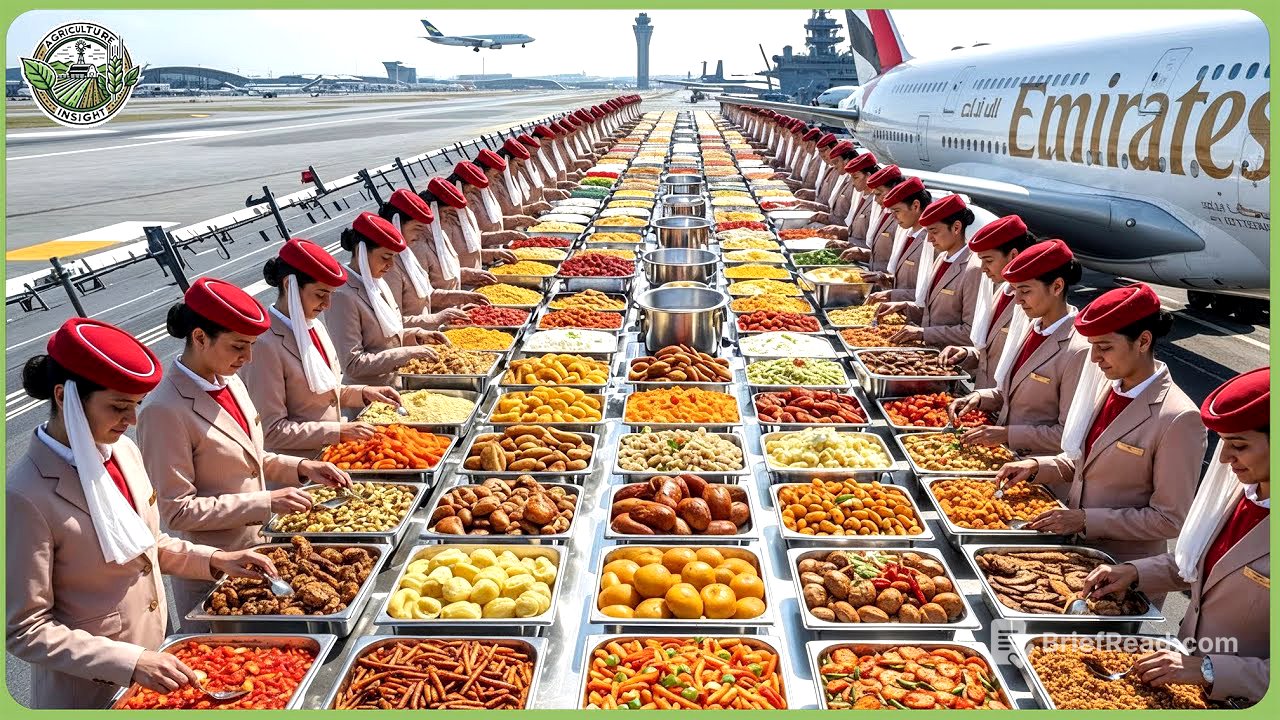
The aviation industry serves over a billion meals annually under strict constraints of space, time, and safety, significantly increasing production and operating costs compared to ground-based meal preparation. The journey of airline food begins with carefully selected raw ingredients, progresses through specialized industrial kitchens, and involves a tightly controlled process of chilling, logistics, and distribution to thousands of flights daily. The food industry and aviation intersect to deliver meals served high above the clouds, with every dish designed to adapt to cabin pressure, low humidity, storage time, and altered taste perception at high altitude.
Appetizer Process [1:21]
Airline meals have evolved from a symbol of luxury with silver cutlery and on-board preparation to an industrialized process where meals are fully cooked on the ground, rapidly chilled, and reheated at cruising altitudes. Low air pressure and humidity in-flight dull the sense of taste, influencing menu design. Leading airlines consider in-flight food part of their national identity, offering dishes like chicken rice from Singapore or smoked salmon salad from New York, with menu options varying by seating class. A vast logistics operation involves unloading, sorting, and washing up to 3 million pieces of tableware daily using industrial washing systems and a monorail system connecting kitchen levels. Fresh ingredients, especially vegetables, are delivered directly from partner farms and undergo rigorous inspection to meet aviation freshness standards, with produce entering the processing line within 4 hours of receipt.
Main dish Process [7:08]
Rice preparation in aviation involves continuous cooking to serve over 30,000 passengers daily, starting with automated weighing and dispensing of water according to pre-programmed ratios to ensure stable structure after chilling and reheating. Rice is only partially cooked to 70-80% doneness and then rapidly chilled to prevent further cooking, with aircraft ovens completing the process using residual heat during reheating. Pasta is a foundational choice for long-haul flights on European and Middle Eastern carriers, produced by mixing flour, water, and eggs with precision, then rested, rolled, and shaped into various forms. The pasta is cooked in industrial boilers, rapidly cooled, and pre-coated with sauce to prevent sticking, while sauces are prepared separately in large vats with ripe tomatoes, olive oil, herbs, and seasonings. Dumplings are a delicate option for special menus on Asian routes, prepared with fillings of processed onions, scallions, and ground meat, and dough made from specialized starch blends, formed and sealed by automated systems, and partially steamed before cooling and storage. Omelets are fully cooked on the ground due to the perishability of eggs, with fresh eggs screened, washed, cracked, and cooked on a semi-automated line, producing over 20,000 omelets per day. For premium cabins, dishes like fillet steak and kingfish are prepared with rigorous meat selection, trimming, and searing techniques to ensure tenderness, flavor, and moisture retention.
Dessert Process [14:23]
In the pastry section, both scale and precision are critical, with production lines capable of turning out up to 10,000 croissants per hour while also producing handcrafted pastries like fuka pastries, donuts, and cream cakes. Pastry chefs innovate by developing new desserts each quarter, streamlining recipes for airline service while maintaining refinement and premium quality. Every dessert is engineered to maintain its shape, texture, and flavor under fluctuating flight conditions, rapidly chilled, and carefully packaged to meet aviation standards. Packaged meals are transported from the kitchen to the aircraft within a strictly programmed time window, with the cabin crew responsible for completing the meal service. The video also details the production processes of apple juice, pineapples, strawberry jam, sugar, tomato sauce, blueberries, and broccoli, highlighting the technologies and methods used to ensure quality and efficiency.