TLDR;
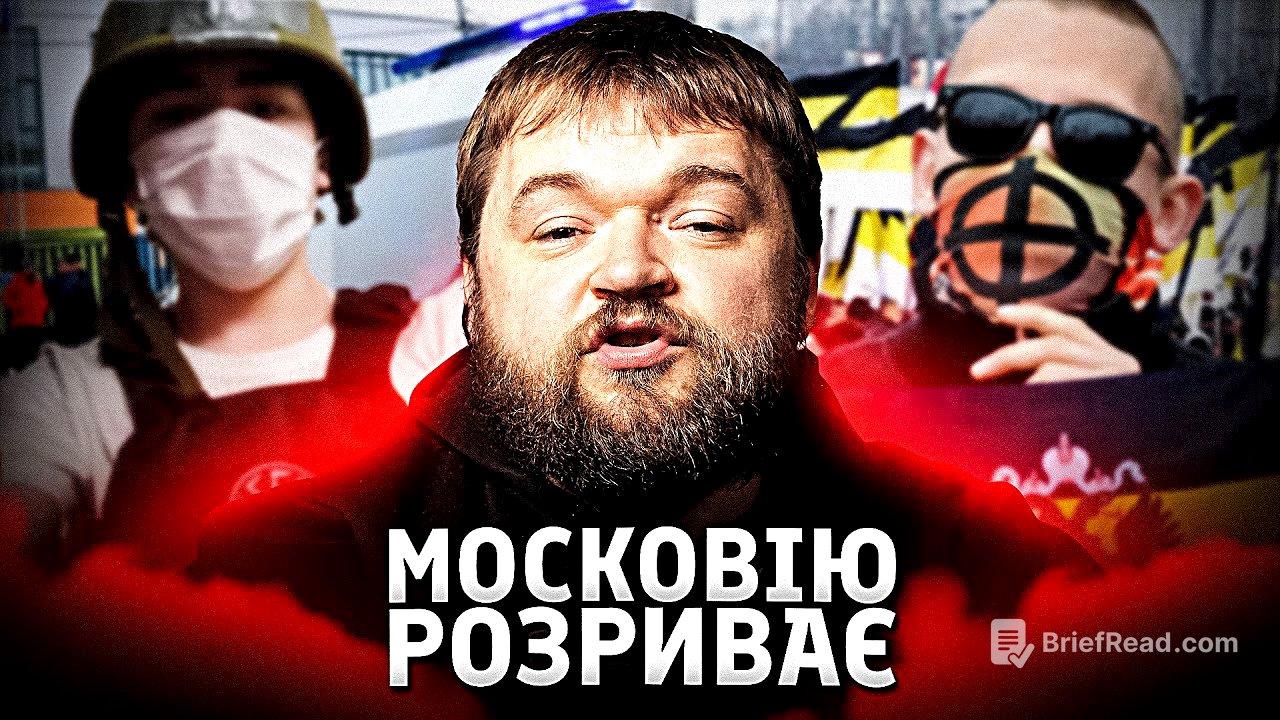
The video discusses a disturbing incident in Russia where a 15-year-old with neo-Nazi views murdered a 10-year-old Tajik boy in an elite Moscow school. This event is not isolated but reflects a deeper societal crisis fueled by xenophobia, militarization, and normalized violence. The video explores the context surrounding this incident, including the rise in xenophobic attacks following the Crocus City Hall terrorist attack, the role of state television in legitimizing violence, and the Kremlin's use of anti-immigrant sentiment for internal consolidation. It also touches on the demographic challenges Russia faces and the potential for increased conflict as the country relies on migrant labor while simultaneously fostering xenophobia.
- The murder of a Tajik boy by a neo-Nazi teenager highlights a crisis in Russian society.
- Xenophobia and violence have increased after the Crocus City Hall attack.
- The Kremlin uses anti-immigrant sentiment for internal consolidation amid demographic challenges.
Intro [0:00]
The video starts by addressing the facade of multiculturalism in Russia, contrasting it with the reality of rising xenophobia and violence. The host references the Kremlin's initial claims of unity among various ethnic groups during the invasion, juxtaposing it with the recent murder of a 10-year-old Tajik boy by a 15-year-old with neo-Nazi views in an elite Moscow school. This incident is presented as a symptom of a deeper societal crisis marked by xenophobia, militarization, and the normalization of violence.
The Uspensky School Incident [0:57]
The Uspensky School, opened in September 2025, is located in a prestigious area near the homes of high-ranking officials and oligarchs. A ninth-grade student, Timofey, arrived at the school with a plan to attack a teacher but ended up killing a fourth-grade Tajik boy named Kobldzhon. Timofey had written an 11-page manifesto titled "My Anger," which began with a quote from Eric Harris, one of the perpetrators of the Columbine High School massacre. He dressed in tactical gear with neo-Nazi symbols and, after being confronted by a security guard, attacked and killed Kobldzhon. He then took a selfie with the body and posted it on his Telegram channel.
The Context of Xenophobia [4:08]
Following the Crocus City Hall terrorist attack, which was perpetrated by citizens of Tajikistan, there has been a surge in xenophobic attacks in Russia. In one month, there were at least 16 attacks on people of non-Slavic appearance and over 25 smaller incidents. The video highlights that federal television played a role by broadcasting the torture of the suspects, which legitimized violence in society. This has led to increased aggression towards Central Asian migrants, with half of Muscovites reporting a worsening attitude towards them.
Demographic Crisis and Xenophobia [8:22]
Russia faces a demographic crisis and needs approximately 11 million additional workers by 2030. However, there is strong anti-immigrant sentiment, with less than 1% of Muscovites supporting the recruitment of migrants to solve demographic problems. The government's attempt to bring in workers from India has faced resistance and xenophobic reactions. The video concludes by stating that the radicalization of youth and the sanctioning of xenophobia by the government create a dangerous cycle of violence. The speaker emphasizes that xenophobia is being used to unite the population, and anyone could become a target.