TLDR;
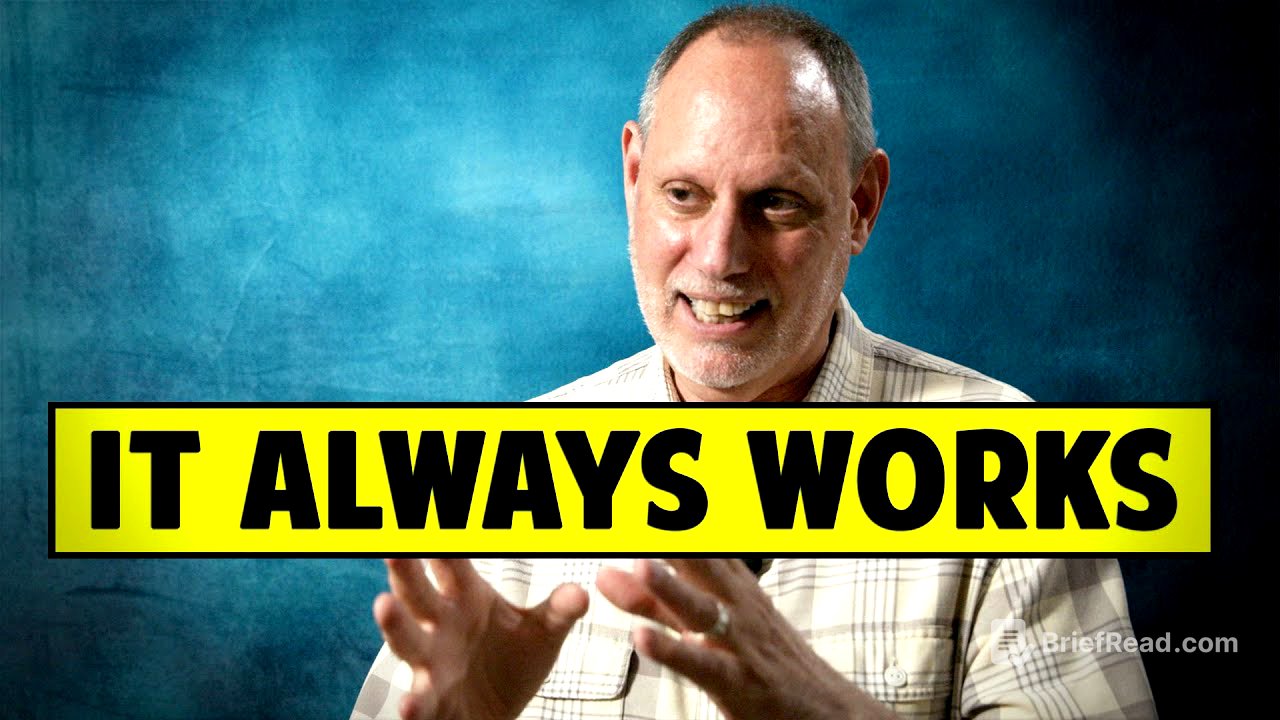
This video features screenwriter Glenn Gers discussing the fundamentals of storytelling, the importance of asking questions in the writing process, and how to discover a writing process that works for you. Gers emphasizes that a story revolves around a character overcoming obstacles to achieve a goal, and that writing is a process of continuous inquiry and self-awareness.
- Storytelling involves a character facing obstacles to achieve a goal.
- Writing is a process driven by asking questions.
- Discovering a personal writing process requires self-awareness and experimentation.
Defining Story [0:06]
Glenn Gers defines a story as following a character or characters who are trying to accomplish something, encountering people who either help or hinder their progress. He likens this to billiard balls in motion, where characters are moving in a direction until they encounter an obstacle that changes their course, but they are still trying to get to that one place. Every character believes they are the main character in their own story, and dramatic action arises from the interchange between characters trying to achieve their goals. The core of storytelling is a character trying to accomplish something, facing obstacles, and taking action in response to those obstacles. These obstacles can be external or internal, as long as they impede the character's progress toward their goal.
Questions and Choices in Writing [3:29]
Writing is a process of asking questions and making choices. Gers emphasizes the importance of thinking in scenes and viewing writing as a series of questions rather than a form to be filled out. He outlines six essential questions to guide the writing process: Who is it about? What do they want? Why can’t they get it? What do they do about that? Why doesn’t that work? How does it end? These questions help transform an idea or feeling into a story by focusing on a character's desires, obstacles, and ultimate resolution. By continuously asking "who, what, why, and where," writers can develop specific answers that bring them closer to writing a compelling scene.
Finding Your Writing Process [6:18]
The most important aspect of the writing process is recognizing that it is unique to each individual. There is no right or wrong way to write; some people write at night, others during the day, some in short bursts, and others in long stretches. The key is to pay attention to yourself, experiment with different methods, and honestly assess what works best for you. Gers shares his personal experience of discovering that he writes well in short bursts, and that trying to force longer sessions was counterproductive. He emphasizes the importance of stopping when you feel yourself losing focus and taking breaks to maintain productivity.
Experimentation and Self-Awareness [9:17]
Glenn Gers emphasizes the importance of being open to your writing process and paying attention to what makes the work good and feels good. He describes his personal setup, which includes having five basic documents open: an outline, a place for notes, the text itself, and an overview. The goal is to create an environment where you can focus solely on the content of your work without having to think about the setup. Gers advises writing things down in some form, whether digitally or on paper, so that you can set it aside and come back to it later. He also shares that discovering his writing style was not an "aha" moment, but rather a process of trial and error over several years. The key is to keep doing the work, even if it's just writing a simple description of a scene, as this creates something for your creativity to build upon.