TLDR;
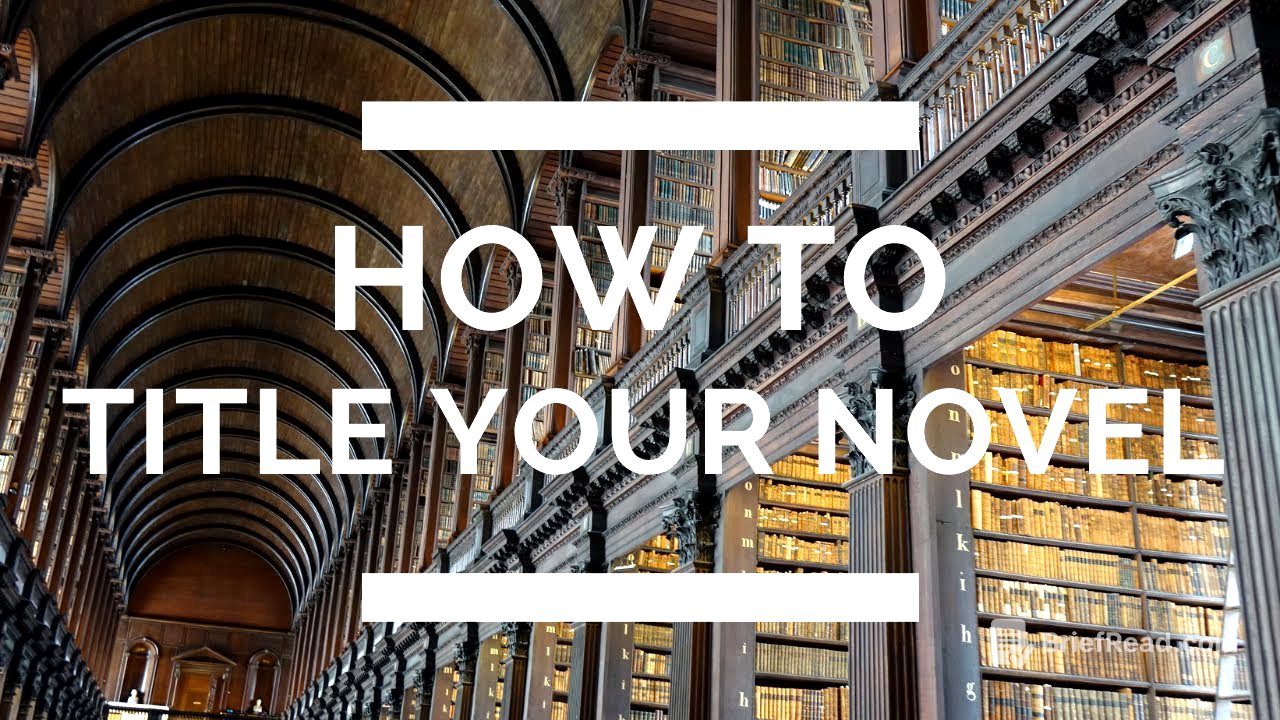
This video explores strategies for creating effective book titles. It covers various approaches, including using key plot elements, character names, settings, allusions, symbols, themes, and phrases from the book. Additionally, it addresses marketing considerations to ensure the title is memorable, searchable, and genre-appropriate. The video encourages writers to brainstorm multiple options and seek feedback to choose a title that captures the essence of their story and attracts readers.
- Key plot event or element
- Character name or role
- Important setting
- Allusion to other works
- Symbol or metaphor
- Story's primary theme
- Phrase from the book
Introduction [0:07]
The video introduces the importance of book titles, noting that they spotlight the heart of the novel and guide readers to key thematic elements. It mentions how some authors find titling more challenging than writing the book itself. The video aims to provide strategies for brainstorming musical, memorable, and marketable titles by analyzing patterns in successful novels. It emphasizes the motivational and developmental benefits of naming a novel early in the writing process, as it helps solidify the story's core focus.
Key Plot Event or Element [2:25]
This chapter discusses using a key plot event or element as a title. Examples include The Hunt for Red October, where the submarine's name reflects the central conflict, and The Hatchet, where an item is central to the plot. In fantasy and sci-fi, titles like Divergent and Mistborn highlight unique abilities, while The Time Machine and The Andromeda Strain showcase explored concepts. Series often use parallel naming structures, as seen in The Broken Earth trilogy and Harry Potter, to create cohesion and intrigue. Plot-related titles work well for plot-driven novels, where the hook stems from an exciting premise.
Character Name or Role [5:00]
This section focuses on using character names or roles in titles. Protagonist titles like Emma, Coraline, and Oliver Twist promise larger-than-life personalities. Unusual names, such as in The Evolution of Calpurnia Tate, can also draw attention. Secondary characters who significantly impact the protagonist, like Lolita and The Great Gatsby, can also be spotlighted. In young adult romances, couple names like Emmy & Oliver are common. Combining a character's name with a phrase that captures the core conflict, as in Where’d You Go, Bernadette, can also be effective. Titles like James and the Giant Peach and Julie of the Wolves pair characters with interesting details, often used in children's fiction. Adult titles might focus more on crime, love, and death, as with The Strange Case of Dr. Jekyll and Mr. Hyde. Some novels have hidden character names, like Strange the Dreamer and Looking for Alaska, where the name's meaning is revealed through the story. A character's role, such as in The Book Thief and Pretty Little Liars, can also suggest a compelling story.
Important Setting [8:16]
The chapter explores using a significant setting as a title. The setting doesn't need to be the sole location, but it should powerfully shape the character or plot. Shutter Island exemplifies this, where the desolate island setting creates a sense of foreboding. Settings often have symbolic meanings, as seen in The Lowland, where the marshy land mirrors the characters' relationships. Titles can reference familiar places, like Fear and Loathing in Las Vegas, or entirely made-up settings, such as Jurassic Park. The setting can also be a time period, as in 1984. A setting-related title can set the mood for the entire story, creating terror, romance, or any emotion in between.
Allusion [10:36]
This section discusses using allusions to other famous texts in titles. The Graveyard Book alludes to The Jungle Book, setting a familiar premise in a graveyard. Allusions work well when the novel draws heavily from a particular source, as seen in The Curious Incident of the Dog in the Night-Time, which references a Sherlock Holmes story. Allusions guide the reader's experience, allowing them to compare and contrast themes. Epigraphs can explain the title's allusion, as with Things Fall Apart, which references W.B. Yeats' poem "The Second Coming." Shakespearean plays are also popular sources, with Brave New World alluding to The Tempest. Contemporary novels might reference song titles, like The Hate U Give, which comes from Tupac's "THUG LIFE" philosophy.
Symbol or Metaphor [15:16]
This chapter focuses on using a symbol or metaphor as a title. The Goldfinch uses a painting to represent the survival of a character's mother's memory. Using a symbol draws attention to its significance and encourages meaningful connections. The Secret Life of Bees uses bees as a metaphor for the characters' complicated, secret lives. Even simple titles like Dandelion Wine can have deeper meanings, embodying the magic of childhood memories.
Theme [16:47]
This section discusses directly using the novel's theme in the title. War and Peace captures the massive scale of the historical text. Sense and Sensibility describes the core qualities of the main characters. Atonement makes perfect sense at the novel's end, as the story is about atoning for a wrongdoing. When focusing on a theme, ensure the novel encompasses that theme on every level. Kindred explores familial connections and kindred spirits through the complex relationship between the protagonist and her white ancestor.
Phrase [19:15]
This chapter explores using phrases, often lifted directly from the text, as titles. These might include personal pronouns like "I," "my," or "we," as in I Am the Messenger and To All the Boys I’ve Loved Before. Kathy Fish advises using a fragment or sentence edited out of the story to create resonance. Anthony Marra found the title A Constellation of Vital Phenomena in a medical dictionary, reflecting the novel's structure and themes. To Kill a Mockingbird appears as a phrase when a character learns an important lesson, capturing the thematic core of the novel.
Marketing Considerations [21:22]
This section addresses marketing considerations for titles. Ensure the title yields unique search results to avoid being lost among generic terms. Avoid titles too similar to other published novels to prevent confusion. Consider whether the title rolls off the tongue and sounds pleasing to the ear. Also, ensure the title brings to mind the right genre to attract the target audience. Current genre trends can be borrowed from, but avoid leaning too heavily into them to prevent sounding generic.
Brainstorming Exercise [27:35]
The video provides a brainstorming exercise with 22 different approaches to inspire title creation, including using the inciting incident, important items, character names, settings, allusions, symbols, themes, and phrases. It encourages creating at least ten options and surveying beta readers, family members, and booksellers for feedback on which titles are most intriguing and genre-appropriate.