TLDR;
The video provides a step-by-step guide to self-directed learning, emphasizing the importance of being proactive and defining clear goals. Key points include the need for a focused target, efficient resource selection, structured curriculum, testing understanding, and building accountability to achieve successful self-education.
- Self-learning is a valuable skill that surpasses formal education.
- Clear goals and structured plans are crucial for effective self-learning.
- Testing yourself and creating projects reinforces understanding and retention.
The Importance of Self-Directed Learning [0:00]
Self-directed learning is essential because every skill admired in others was learned rather than innate. People learn to code, speak multiple languages, or understand financial markets through self-teaching or external instruction. While traditional education has its merits, the ability to learn independently and adapt to new subjects or tools is paramount as professional relevance evolves.
Step 1: Define What Done Looks Like [1:00]
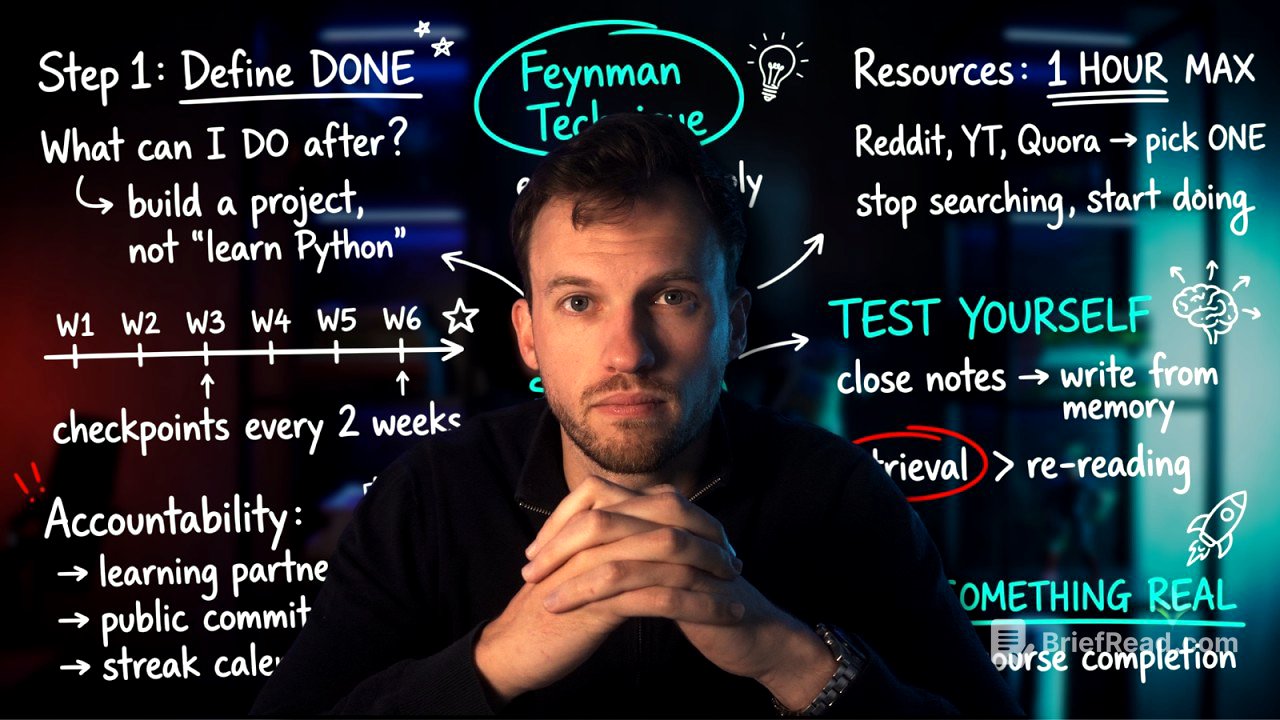
Before beginning to learn, define what "done" means for each skill. Most self-learners get lost in consuming content without clear progress. To counter this, set specific, actionable goals, such as building a web scraper when learning Python or completing a photography project. By having tangible targets, learners can measure progress effectively and discard irrelevant resources.
Step 2: Find the Right Resources [2:38]
With an abundance of online learning materials, it is easy to become overwhelmed. Spend a maximum of one hour to identify resources. Rely on crowd-sourced recommendations from platforms like Reddit or Quora to find reliable courses. Choose one primary and one backup resource to maintain focus and ensure progression.
Step 3: Build Your Own Curriculum [4:45]
Creating a personal curriculum is crucial when teaching oneself. List major topics from your primary resource and divide them into a timeline that fits your study schedule. Add checkpoints every one or two weeks to assess understanding of the material. This structured approach helps eliminate uncertainty and keeps learners on track.
Step 4: Use the Feynman Technique [6:19]
Richard Feynman's technique encourages learners to explain concepts simply as if teaching someone else. This method highlights gaps in understanding, prompting further study on those specific areas. The emphasis on self-explanation significantly improves learning outcomes by identifying misunderstandings early.
Step 5: Test Yourself Constantly [8:34]
Regular self-testing is vital for retention but often overlooked in self-directed learning. Research indicates that testing is more effective than passive review. After study sessions, recall what you've learned without looking at your notes, and create mini-exams at the end of each week to reinforce memory and identify areas needing review.
Step 6: Stay Accountable [10:46]
Without external validation, self-learners often struggle to maintain motivation. Establish accountability through public commitments, learning partners, or tracking progress with visual streaks (like marking a calendar). These strategies help ensure that learners remain engaged and committed to their goals.
Step 7: Build Something with What You Learn [12:58]
Applying knowledge through project creation solidifies understanding. Deep engagement with the material—such as building an app or writing an essay—ensures retention and comprehension. Projects demonstrate mastery in ways that completing courses alone cannot, providing concrete evidence of what you've learned.
Recap of the Self-Learning Process [14:26]
To successfully teach yourself any skill, follow these steps: clearly define your goal, efficiently find resources, create a structured curriculum, utilize the Feynman technique, consistently test your understanding, maintain accountability, and ultimately build something tangible. This methodology is adaptable across various subjects, fostering lifelong learning independence.