TLDR;
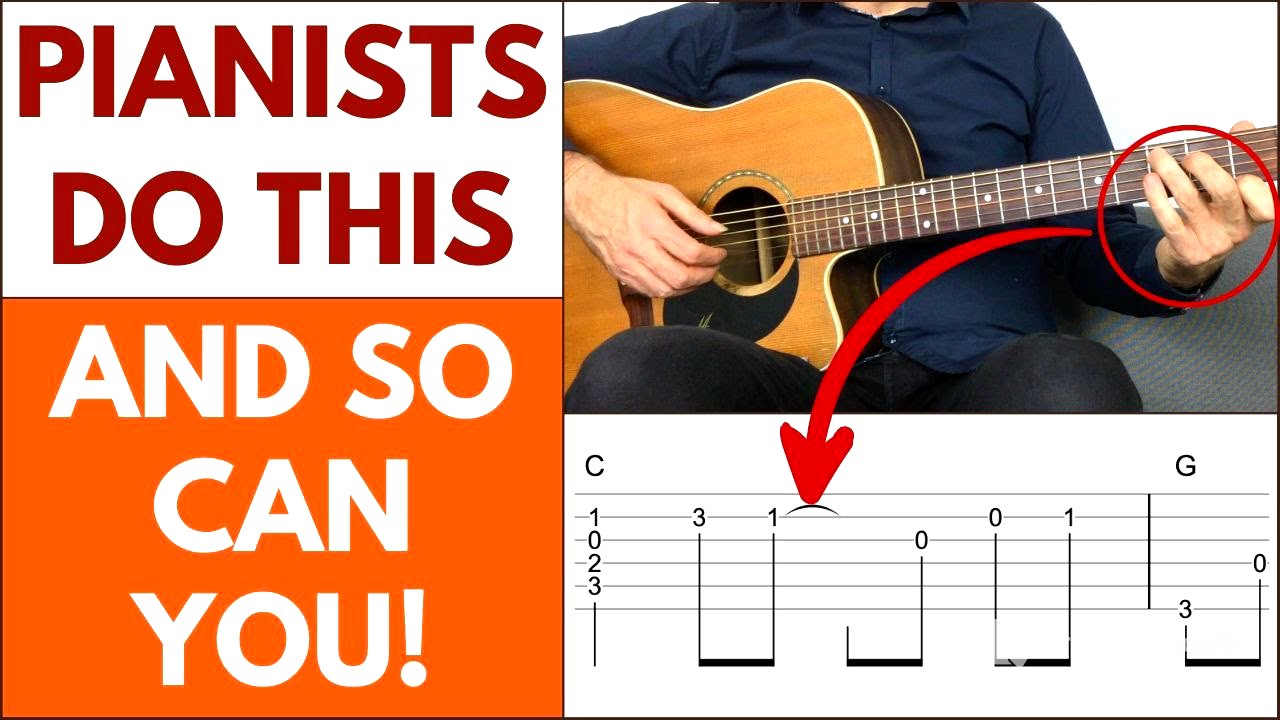
This video teaches how to play chords and melody simultaneously on the guitar, emphasizing the importance of technique to make chord melody arrangements approachable. It introduces exercises designed to develop the skills necessary for this style of playing by focusing on chord shapes while playing scales and melodies.
- Understanding chord melody mechanics
- Exercises for combining chords and scale notes
- Techniques for integrating melody with chord shapes
Introduction to Chord Melody Mechanics [0:00]
The video starts by explaining the concept of chord melody mechanics, a term coined by Simon Candy. He focuses on exercises that help develop the required technique for playing chord-melody pieces. The main goal is to learn how to hold chord shapes while simultaneously playing melodies from corresponding scales.
Exercises to Develop Technique [0:30]
Simon introduces several exercises that combine holding chord shapes with playing scales. Starting with the C major scale, he demonstrates how to extend the scale beyond the basic progression. The video emphasizes knowing all the C major notes available in the open position, covering chords like C, D minor, E minor, F, G, and A minor.
Playing Chords and Scales Together [1:20]
The practice involves holding the C chord and playing the scale in descending order while maintaining the chord shape. He illustrates how to manage finger movements to keep the chord ringing as scales are played. This section highlights the importance of letting some notes ring through while adapting finger placements for scale notes.
Integrating Melody with Chords [3:00]
Moving on to the D minor chord, Simon explains how to sustain the chord while descending to the root note. He also discusses using the E minor chord for a wider range, demonstrating how to manage finger positions to maintain the chord as much as possible while exploring the scale.
Exploring Additional Chord Shapes [5:00]
He introduces the F chord and discusses how it requires a different approach, using simpler shapes instead of barre chords. The G chord is also explored, advising to block certain strings and adapt finger positions for effective melody integration. Simon reinforces the concept of sustaining chord sounds as notes are played.
Melody Creation Across Chords [7:30]
In this part, Simon demonstrates how to create small melodic phrases and overlay them on different chords from the key. He shows that melodies can work across chords and emphasizes the need to maintain chord shapes while executing these melodies.
The Importance of Chord Changes [11:40]
The video progresses to include chord changes in the exercises. He illustrates playing a C chord with a melody followed by transitioning to a G chord. Simon emphasizes the significance of keeping the chord shapes intact while changing and integrating melodies.
Techniques for Successful Chord Melody Playing [15:00]
Concluding, Simon highlights the importance of sustaining chord shapes while playing notes to build a solid foundation for chord melody arrangements. He encourages viewers to practice both scales and melodic phrases as well as incorporate chord changes to enhance their playing ability.
Free eBook Offer [16:20]
Simon offers a free ebook that expands on the principles taught in the video, providing step-by-step guidance for creating chord melody arrangements. He discusses how the choice of key can simplify arrangements and improve overall sound.
Final Thoughts [19:20]
The video concludes with encouragement to practice the skills learned and to explore further resources. Simon invites viewers to share their thoughts and subscribe for more guitar content, reinforcing the importance of technique in achieving proficient chord melody playing.