TLDR;
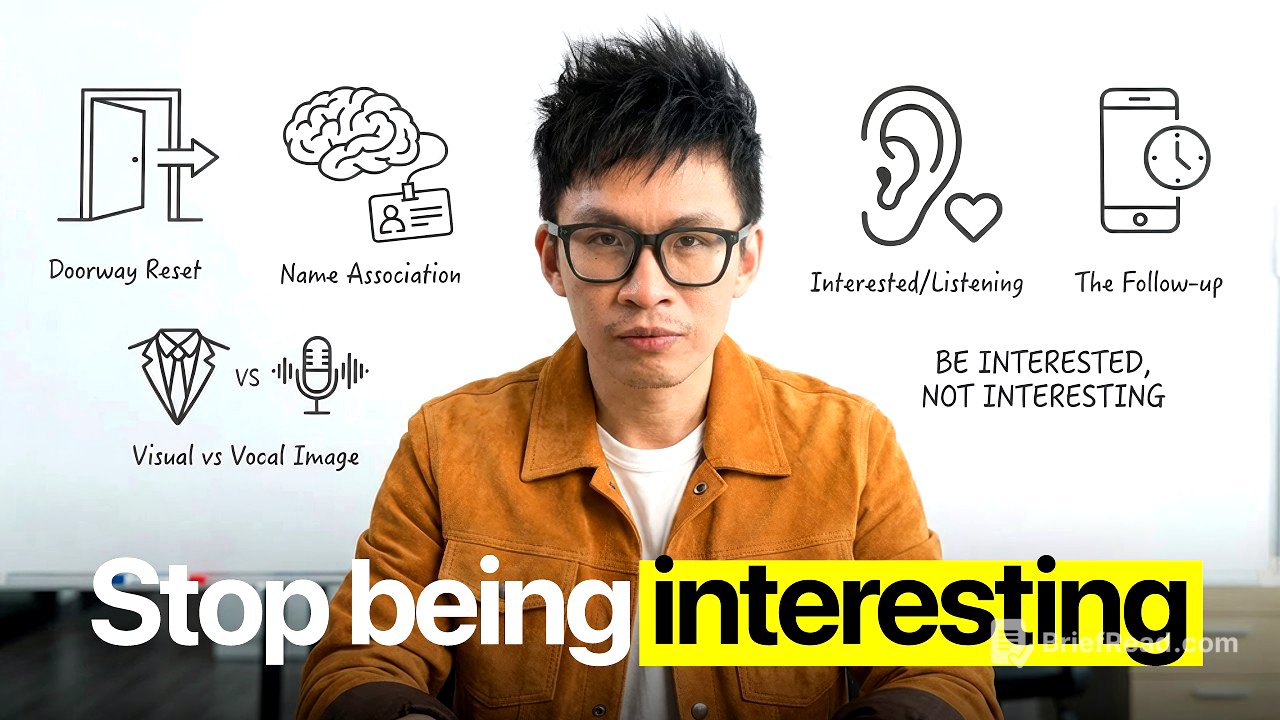
This video outlines five key components to creating a strong and lasting first impression. It emphasizes the importance of body language, remembering names, vocal image, genuine interest in others, and thoughtful follow-up. The video encourages viewers to focus on making a connection rather than trying to impress, and to prioritize giving value before seeking to receive it.
- Body Language: Adjust your posture before entering a room to project confidence.
- Remembering Names: Use name association techniques to make names more memorable.
- Vocal Image: Develop self-awareness of your vocal image through recording and analysis.
- Genuine Interest: Focus on listening and showing interest in others.
- Thoughtful Follow-Up: Send personalized follow-up messages within 24 hours, offering help without expecting anything in return.
Introduction [0:00]
The initial moments of meeting someone can significantly impact their perception of you. A negative first impression can lead to being "incorrectly memorable," forcing you to spend subsequent interactions trying to correct that initial perception. It takes only a tenth of a second for someone to form an opinion of you, even before you speak.
Component 1: How You Walk Into a Room [0:53]
The way you enter a room sets the stage for the impression you make. People often avoid eye contact and make themselves small, signaling a lack of confidence and low status. To counter this, Vinh Giang introduces the "doorway reset" technique. Before walking through any door frame, readjust your posture by standing tall with shoulders down and back, imagining a string pulling the center of your head high. This simple adjustment projects confidence and positively influences your voice.
Component 2: Remembering Their Name [2:24]
Forgetting someone's name can be awkward, and simply repeating it isn't always effective. Vinh Giang suggests using "name association," where you immediately link a person's name with a unique physical feature, quality, or a play on words. The sillier and more vivid the association, the easier it is to remember. This technique creates a strong connection in your mind, helping you recall their name later. However, these associations should remain internal and not be shared with the person. Remembering someone's name makes them feel valued and deepens your connection.
Component 3: How to Use Your Voice [6:00]
While visual image is important, vocal image plays a crucial role in making a strong first impression. Vocal image reveals your level of authority, credibility, and trustworthiness. Improving your vocal image requires self-awareness. Vinh Giang recommends recording a video of yourself speaking unscripted for 5-10 minutes, answering self-reflective questions generated by AI. After waiting 24 hours, analyze the video to identify non-functional behaviors in your visual and vocal delivery. He also provides a link to a free three-part video course in the description to guide you through this process.
Component 4: What You Say [10:21]
Making a great first impression isn't about being impressive; it's about being interested. Focus on listening and looking for small details to connect with the other person. Ask questions about their interests, passions, and goals. When someone feels genuinely seen, the conversation shifts from networking to connection. Be more like Vinh Giang's friend Fong, who excels at listening and asking the right questions, making people feel understood and valued.
Component 5: What You Do in the 24 Hours After [12:41]
To make a lasting impression, send a personalized follow-up message within 24 hours. This message should be specific and show that you were present and engaged in the conversation. Offer help or share a relevant resource without expecting anything in return. Be curious about how you can help the person achieve their goals. By giving first, you apply the law of reciprocity, which makes the other person naturally want to give back. This approach fosters genuine connection and makes you stand out from others.