TLDR;
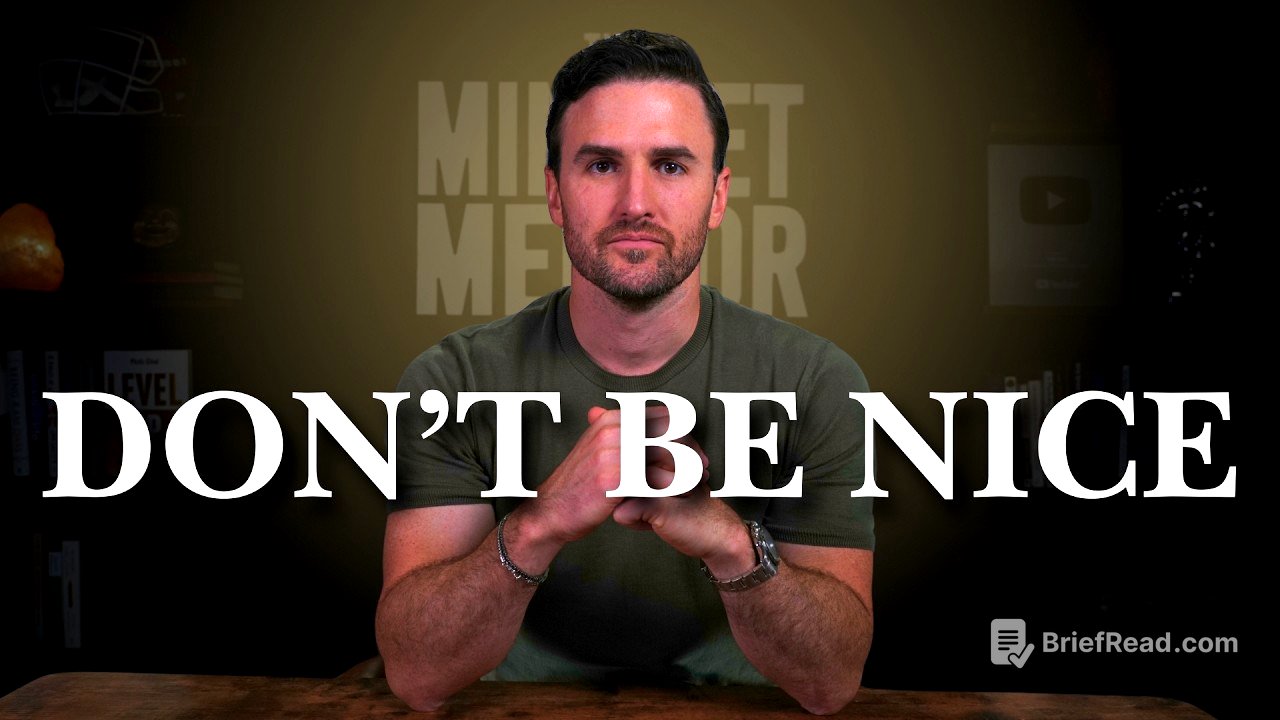
This episode discusses how to gain respect from others by embodying self-respect, setting clear boundaries, and acting with integrity. It distinguishes between being nice (appeasing others) and being kind (telling the truth with love), emphasizing that true respect comes from consistency, strong personal standards, and clear communication. The key takeaways include understanding the importance of self-respect, teaching others how to treat you, setting and maintaining boundaries, and acting with integrity in small, consistent ways.
- Respect is earned through actions and self-respect, not demanded.
- Kindness, rooted in strength and honesty, commands more respect than niceness, which often involves people-pleasing.
- Teaching people how to treat you involves setting boundaries and sticking to them.
- Consistency in behavior and integrity builds trust, which is the foundation of respect.
Introduction: Commanding Respect Through Self-Respect [0:00]
The episode introduces the idea that respect is not freely given but commanded through one's actions, energy, boundaries, and overall behavior. Every action teaches people how to treat and talk to you. The goal is to provide the mindset and behavioral shifts needed to create unshakable self-respect and a magnetic presence. This involves acting like you matter and standing in your truth, which others will recognize and respect.
The Difference Between Nice and Kind [2:31]
The discussion highlights the crucial difference between being nice and being kind. Being nice often involves appeasing others and avoiding discomfort, which can lead to resentment and a lack of self-respect. On the other hand, kindness is rooted in strength, clarity, directness, and honesty. Kindness involves telling the truth with love and upholding boundaries, reflecting a deep care for both oneself and others.
Kindness Commands Respect: The Tough Uncle Example [4:30]
Kindness commands respect because it demonstrates strength and self-respect. The speaker uses the analogy of a "tough uncle" who genuinely cares but also calls you out when you're out of alignment. An example from the speaker's life is shared, where her cousin Jason advised her to quit her job and travel, which she did, leading to a transformative experience. People respect those who are true to themselves and unwilling to compromise their values.
Teaching People How to Treat You [7:27]
You must teach people how to treat you through your actions and responses. If you allow others to overstep your boundaries or speak disrespectfully without addressing it, you are teaching them that such behavior is acceptable. People unconsciously take note of how you show up and will treat you accordingly. It's crucial to respond in a kind but firm way to reinforce your boundaries and self-worth.
The Importance of Self-Respect [9:22]
People will not treat you better than you treat yourself. If you don't value and protect your time and boundaries, others won't either. It's essential to know your standards for yourself, your life, and your relationships. Discover who you are, what you believe, and what you stand for. People respect those who are grounded in themselves and their beliefs, even if they don't agree with them.
Discovering and Communicating Your Boundaries [10:56]
Discovering and communicating your boundaries is essential for commanding respect. Many people are unclear about their boundaries, leading to others overstepping them. Boundaries are simply instructions for how to be in a relationship with you, not walls or ultimatums. Clearly communicate your boundaries and understand that people will test them, so you must remain firm. Saying no is magnetic because it shows you value your time, peace, and energy.
Respect is Earned in Small Moments Through Consistency [14:01]
Respect is earned in small, consistent moments, such as showing up on time, keeping your word, and doing the right thing even when it's difficult. Consistency in who you are makes people feel safe and builds trust, which is the foundation of respect. You don't need to be perfect, but you should own your mistakes, communicate early if you can't fulfill a commitment, and be honest about what you don't know.
Self-Audit and Implementing Change [16:22]
Conduct a self-audit to assess where you are, who you want to be, and what your boundaries are. Identify areas where you might be teaching people to dismiss you, where you're being nice instead of kind, and where your standards are too low. Focus on making one solid change each week to build a foundation of commanding respect. This involves viewing yourself as worthy, communicating effectively, and deciding who you will and will not be in the world.