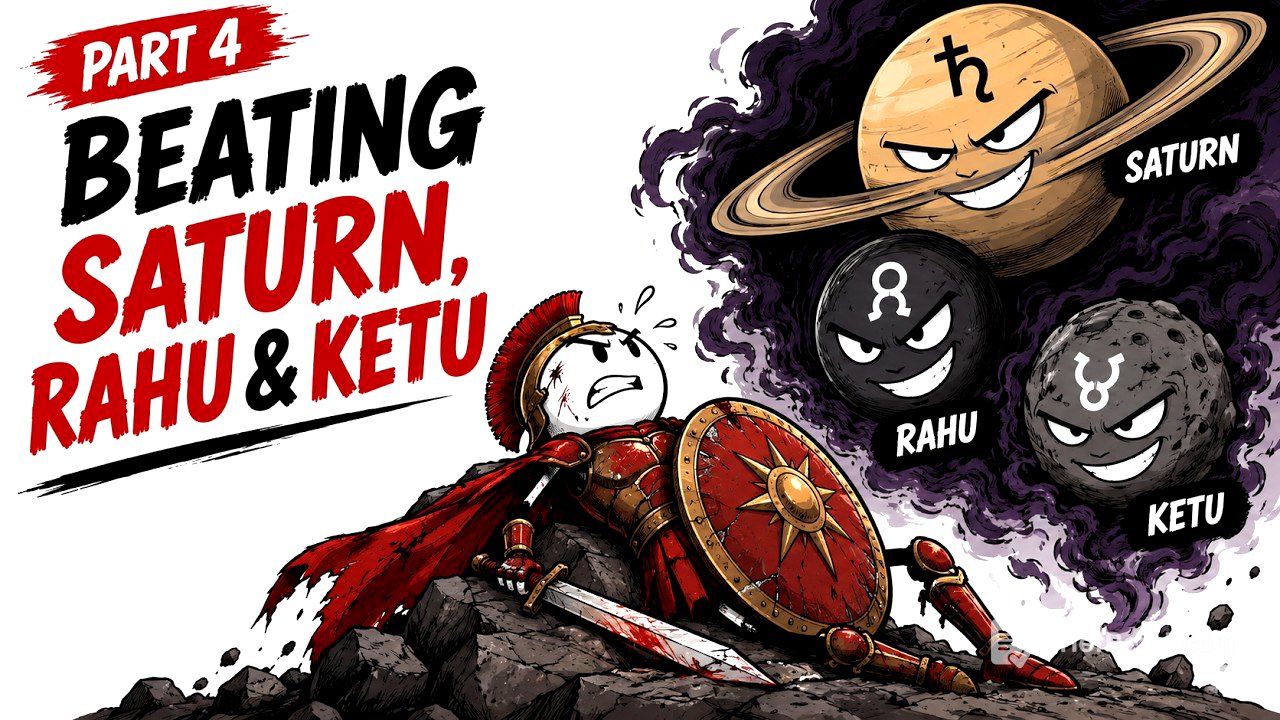
TLDR;
This video presents a personal journey through the astrological significance of Ketu and Rahu, the lunar nodes in Vedic astrology, and the challenges and lessons associated with them. It explores the themes of detachment, obsession, discipline, and their practical implications in everyday life.
- Ketu emphasizes the importance of surrender and non-attachment, particularly in areas of life where one feels chronic dissatisfaction.
- Rahu represents desire and the quest for the unfamiliar, urging a committed approach to new experiences despite their challenges.
- Saturn stands as a symbol of discipline, structuring one's life through sustained effort and patience.
My experience with Ketu (K2 in the first house) [0:00]
The speaker shares their personal experience with Ketu in the first house, finding it challenging due to the concept of detachment that comes with Ketu's influence. They explore the confusion of what to detach from, especially regarding personal identity and validation from others. The speaker ultimately concludes that detachment doesn't mean abandoning personality but rather not letting self-worth depend on it.
Ketu (Understanding the South Node) [0:28]
Ketu, known as the South Node in Vedic astrology, is described as a mathematical point rather than a physical planet. It embodies areas of life where a person has already mastered skills or experiences from past lives, bringing a sense of instinct and natural ability. However, Ketu represents areas where growth is no longer needed and fosters a detachment from outcomes, leading to a sense of chronic dissatisfaction and spiritual restlessness.
How to beat Ketu (The power of surrender and non-attachment) [0:34]
To work with Ketu, one must practice surrender and non-attachment, especially in those areas where effort does not yield lasting satisfaction. The speaker highlights the modern psychological research supporting the idea that letting go of attachment to outcomes can lead to greater well-being. By identifying Ketu's influence in their life, individuals are encouraged to release the need for validation and focus instead on internal fulfillment.
My answer (Detaching from personality vs. abandoning it) [5:21]
The speaker discusses their realization about detaching from personality traits without losing one's true self. This means not seeking external validation for personal interests or passions. They emphasize the importance of engaging in genuine enjoyment and recognizing that self-worth should not be tied to social approval.
Rahu (The North Node/The hungry head) [6:20]
Rahu, the North Node, represents the unfulfilled desires and new experiences one is drawn to but may find difficult to attain. It symbolizes an insatiable hunger for new territory and experiences, constantly pushing individuals to explore and commit to unfamiliar aspects of life. Rahu's influence acts as a karmic compass, guiding personal destiny towards what has yet to be discovered.
How to beat Rahu (My personal experience/Intensity) [10:23]
The speaker shares strategies to manage Rahu's intense desires, focusing on the importance of celebrating effort rather than outcomes. By shifting the focus of dopamine responses from achievements to the processes involved, individuals can reduce the addictive nature of chasing results. This method recognizes the driving force behind Rahu's dissatisfaction and encourages embracing consistent effort in personal pursuits.
How to beat Rahu (Dopamine systems and systematic exposure) [12:23]
Rahu directly influences the dopamine systems in our brains, relating to cravings and the anticipation of reward. The speaker discusses the significance of exposure therapy, confronting fears within Rahu's areas of influence gradually rather than avoiding them. This continuous practice fosters familiarity and reduces compulsive behaviors, supporting personal growth by embracing the challenges tied to Rahu's lessons.
Saturn (The planet of discipline and framework) [15:17]
Saturn, visible only to the naked eye, represents the boundary between ease and discipline, emphasizing the need for sustained, unglamorous effort. Known in Vedic astrology as Shani, it governs structure and responsibility, indicating that true achievement comes through hard work and accountability rather than talent or charm. A strong Saturn emphasizes the importance of building a solid foundation through persistence over time.
Example of Saturn (Saturn in the 12th house & its special aspects) [22:22]
Using their own chart as an example, the speaker illustrates how Saturn's placement in the 12th house influences lessons related to isolation, spirituality, and hardship. The restructuring effects of Saturn extend beyond just one aspect of life, impacting multiple areas such as finances and health. This showcases Saturn's holistic approach to personal responsibility and growth.
How to beat Saturn (Hormetic stress, repetition, and the long-form commitment) [23:17]
The speaker discusses strategies for tackling Saturn's challenges, emphasizing the importance of hormetic stress, which cultivates resilience. By committing to long-term goals and embracing the difficulty without seeking immediate rewards, individuals strengthen their relationship with discipline. This practical approach highlights the value of consistency and the notion that the work done in obscurity builds a foundation that is deeply authentic and lasting.