
TLDR;
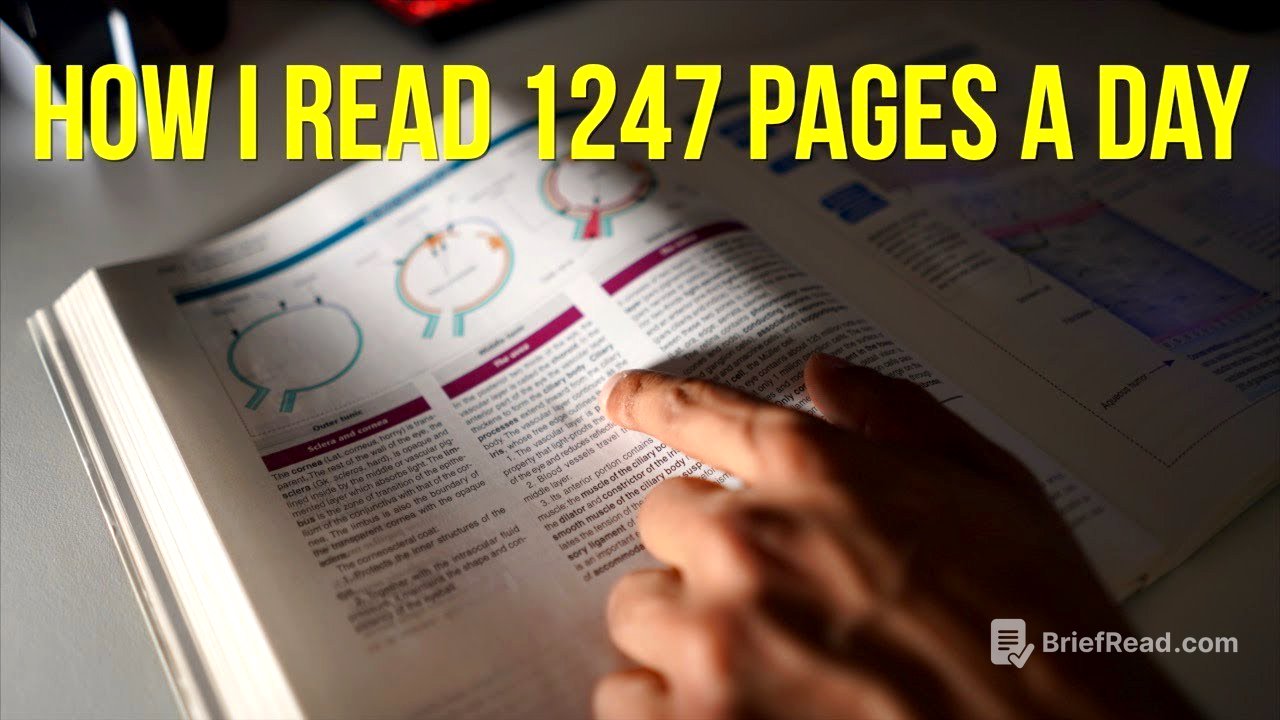
In this video, Salim Ahmed shares effective strategies to enhance reading speed and comprehension, particularly useful for students. He introduces the Triforce method, which consists of three key strategies for increasing reading efficiency.
- Improve baseline reading speed by removing internal monologue and using a visual tracker.
- Apply the 80/20 rule to focus on key information when reading non-fiction.
- Summarize and consolidate reading material to ensure retention and understanding.
The Triforce Method for Reading Faster [0:00]
Salim Ahmed presents the Triforce method to help individuals finish books quickly and effectively. He discusses the importance of speed reading, especially for students who have a large volume of reading material. He emphasizes the necessity of spending less time reading and more time on activities that are meaningful.
Improving Baseline Reading Speed [0:30]
The first strategy focuses on enhancing reading speed by eliminating the internal monologue often experienced while reading. Salim suggests using a free website called Speer, which allows readers to group words together, reducing the tendency to read word-by-word. This helps the reader to visually process rather than audibly process the words. He claims that this method can increase reading speed by at least 50%, providing his own experience of going from 250 to over 500 words per minute. Additionally, using a visual tracker, such as a pen or finger, helps maintain a consistent reading rhythm, minimizing distractions and backtracking while reading.
Having a Reading Strategy [2:15]
The second strategy highlights the significance of having a reading approach tailored to the material being read. Salim references the 80/20 rule, stating that roughly 80% of knowledge is derived from 20% of the content. He uses the book "Atomic Habits" as an example, explaining that by speeding through the book while identifying significant advice, readers can maximize their comprehension and efficiency. According to him, by slowing down during key parts, readers can grasp important information better.
Summarizing and Consolidating Information [3:31]
In the final strategy, Salim underscores the necessity of summarizing what was read to enhance retention. He recommends summarizing each page in one to two lines, ensuring engagement with the material. This technique fosters better understanding and retention of information. Furthermore, Salim suggests taking practical actions based on the content, especially for non-fiction books, to reinforce learning and lead to behavioral changes. He relates this method to his personal success in his medical school admissions, attributing his top 1% score to effective reading strategies and active engagement with the content.





![The 5 Stages of Burnout [How To Recognize Them]](https://wm-img.halpindev.com/p-briefread_c-10_b-10/urlb/aHR0cDovL2ltZy55b3V0dWJlLmNvbS92aS9ubndrWDZ1OXRGby9ocWRlZmF1bHQuanBn.jpg)