TLDR;
This video explains how the chords in the key of C function together through a cycle of thirds, highlighting their relationships and roles in music composition.
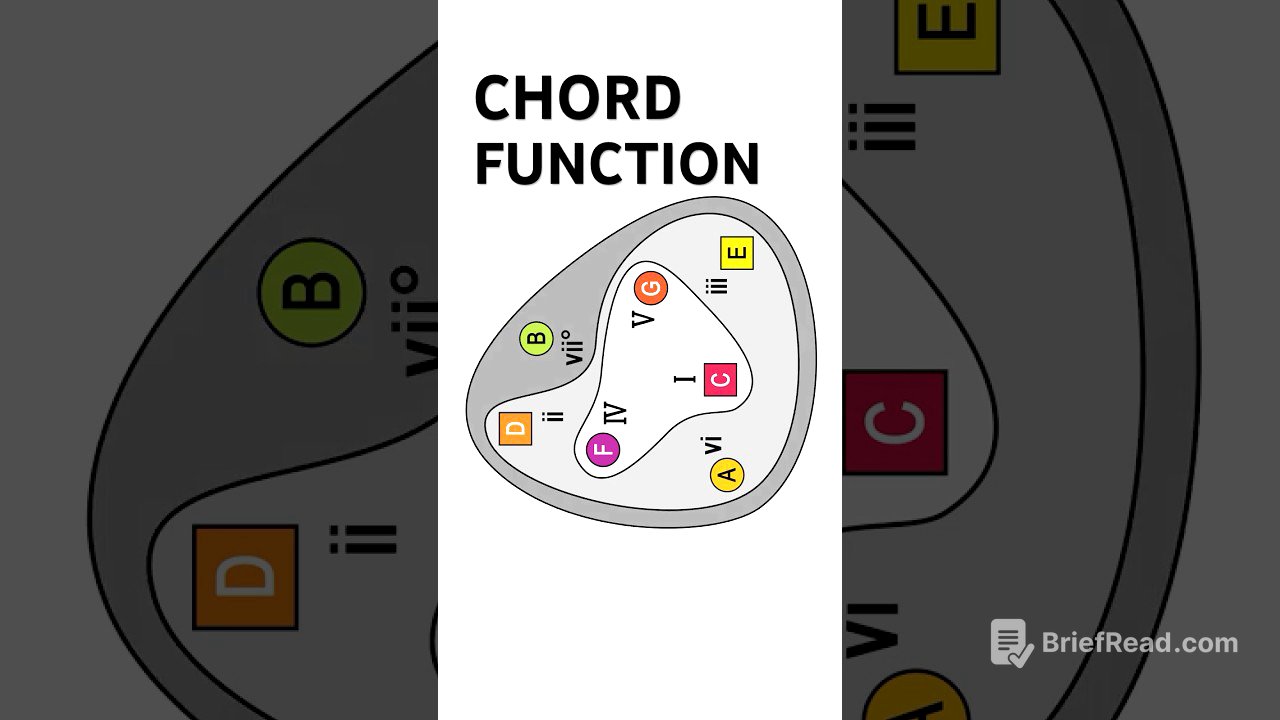
- The seven chords in the key of C are C, D minor, E minor, F, G, A minor, and B diminished.
- The major and minor thirds create a circle of thirds, showing how chords overlap and connect.
- The major and minor chords serve different functions: stability, change, and tension, which can be used to create dynamic musical progressions.
Chords Function in Music [0:00]
The video begins by introducing the chords of the key of C, which include C, D minor, E minor, F, G, A minor, and B diminished. It explains that these chords are constructed using an alternating pattern of major and minor thirds. When visualized as a wave of thirds that is looped, these chords form an endless cycle where they are interconnected.
The concept of the circle of thirds is discussed, illustrating the relationships among the chords, where the major chords and minor chords overlap. Specifically, it mentions the roles of the three major chords, three minor chords, and one diminished chord. Each of these chords serves distinct purposes: the major and minor chords signify stability, whereas certain chords indicate change or create tension. This understanding helps musicians construct compelling progressions by navigating through states of stability, change, and tension to enhance a song's momentum.