TLDR;
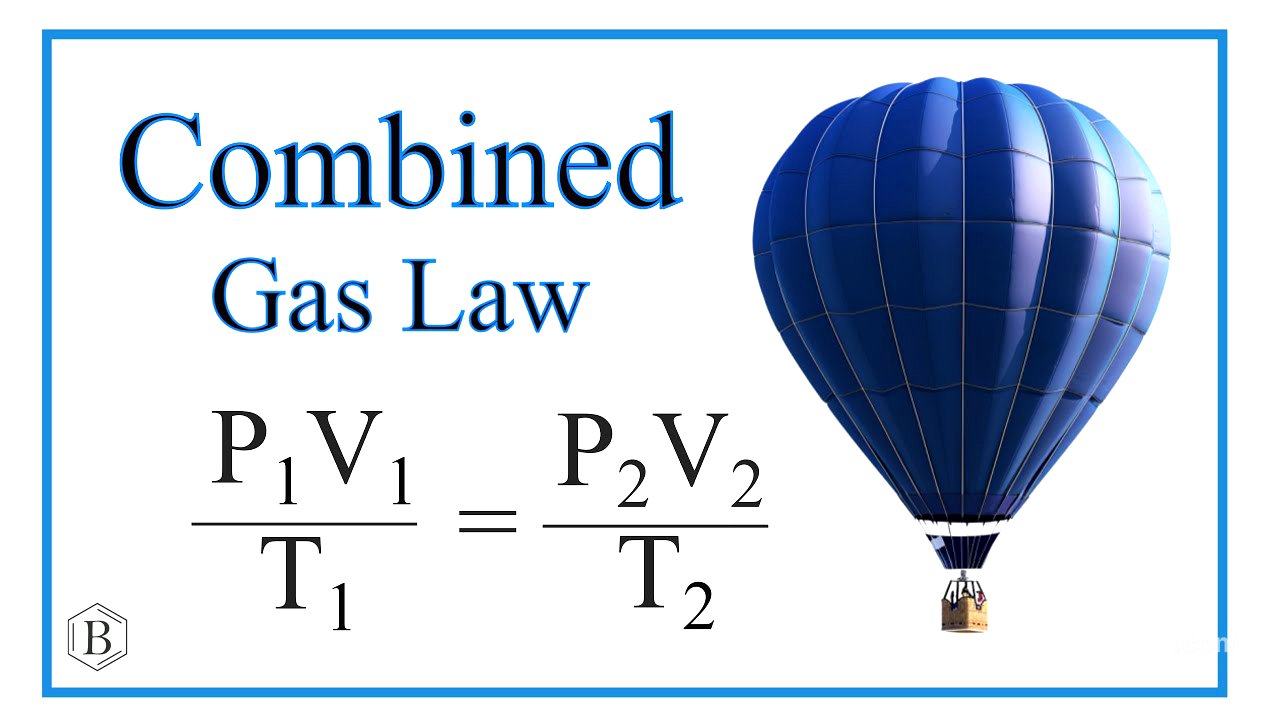
In this video, Dr. B explains the combined gas law, detailing when to use it, and how to ensure unit consistency while performing calculations. He covers examples involving initial and final conditions of pressure, volume, and temperature, emphasizing the importance of working in Kelvin and using equivalent pressure units.
- The combined gas law applies when there are changes in initial and final conditions.
- Always convert Celsius to Kelvin and ensure pressure units match.
Understanding the Combined Gas Law [0:00]
Dr. B introduces the combined gas law, explaining its application in problems involving initial and final conditions of gases. He starts with an example, using an initial volume of 2.3 liters and a pressure increase to 4.7 ATM, where the temperature remains constant, simplifying calculations to Boyle's Law. After setting up the formula, he finds the final volume to be 0.64 liters.
Using Kelvin for Temperature [1:45]
The next example requires finding volume after cooling at a new temperature. Dr. B stresses converting from Celsius to Kelvin by adding 273 to the Celsius value, a crucial step for accuracy. For this scenario, he calculates the final volume as 3.13 liters after correctly setting up the formula with Kelvin values.
Consistency in Pressure Units [3:20]
In another example, Dr. B highlights the importance of using the same units for pressure, converting mmHg to atmospheres by dividing by 760. After ensuring the units are consistent, he calculates the final volume, resulting in 8.6 liters. This section reinforces the necessity of unit conversion to maintain accuracy in calculations.
Conclusion and Key Takeaways [5:05]
Dr. B wraps up the video with a recap of using the combined gas law effectively. He emphasizes the critical steps of converting temperatures to Kelvin and ensuring that pressure units are compatible, all pivotal for obtaining correct results in gas law calculations.





![[Why series] Earth Science Episode 3 - High Air Pressure and Low Air Pressure](https://wm-img.halpindev.com/p-briefread_c-10_b-10/urlb/aHR0cDovL2ltZy55b3V0dWJlLmNvbS92aS9EcXVYTzJGRWwwUS9ocWRlZmF1bHQuanBn.jpg)