TLDR;
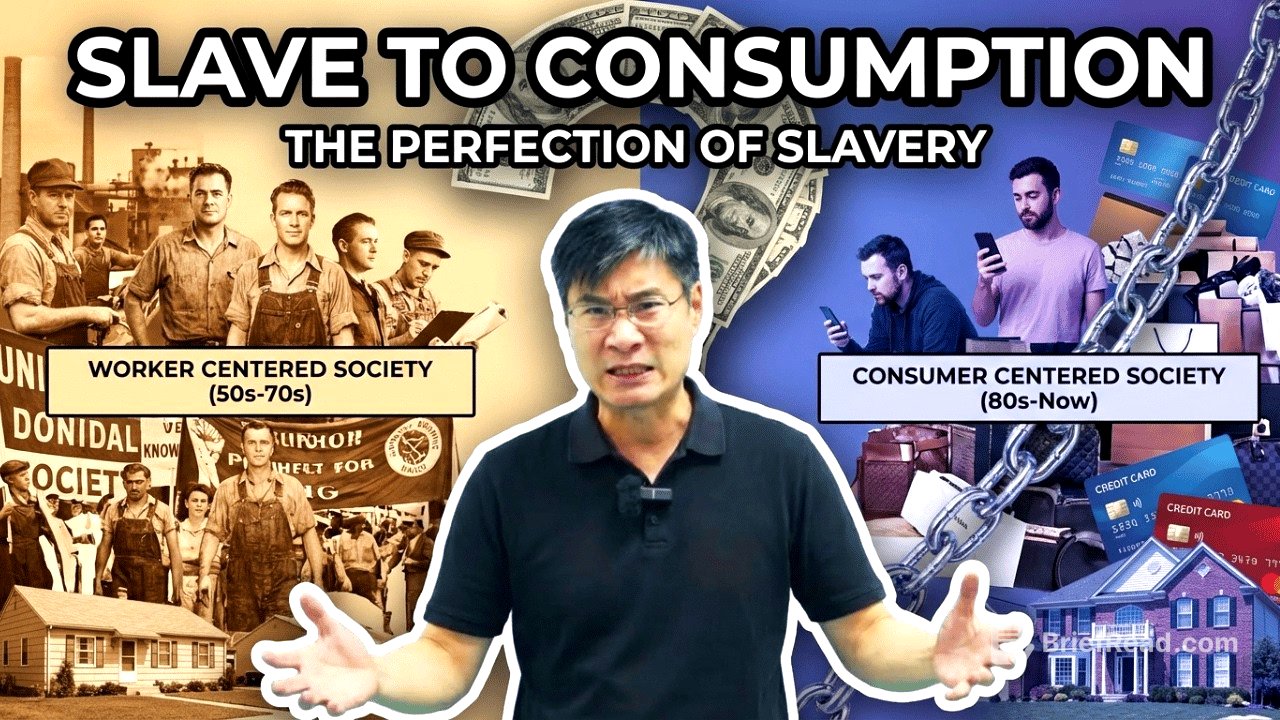
This video discusses how modern society has shifted from prioritizing the worker to prioritizing the consumer, leading to a state of "perfected slavery" where individuals are unaware and accepting of their economic constraints. Key points include:
- Post-World War II societies initially embraced Marxist ideals by prioritizing workers.
- The 1980s marked a shift towards prioritizing money and the rise of consumerism.
- Consumerism fosters competition, individualism, and economic logic, hindering collective action.
- This system is seen as a "perfection of slavery" because individuals willingly participate without realizing their constraints.
Marxist Ideals and the Post-War Era [0:03]
The speaker begins by noting that while Marx's predictions about communism's rise in industrialized nations didn't occur as expected, his ideas significantly influenced post-World War II societies. Many Western societies adopted socialist principles, prioritizing the worker as the central figure and value creator. This was reflected in policies that supported the working class through healthcare, education, and union empowerment.
The Revolt of the Elite and the Shift to Consumerism [2:11]
In the 1980s, a shift occurred due to what the speaker terms "the revolt of the elite," who sought to reverse the egalitarian trends that empowered workers. This era, marked by the Reagan and Thatcher revolutions, saw a transition towards neoliberalism and free-market capitalism. The focus shifted from the worker to the consumer, with governments promising low prices and a wide selection of goods rather than job security.
The Consumer Mentality: A Thought Experiment [5:17]
To illustrate the consumer mentality, the speaker conducts a thought experiment where everyone in a school receives $1 million. The immediate result is a rush to purchase status symbols like houses, leading to competition, debt, and social division. This consumer-driven competition fosters individualism and hinders collective action, replacing community solidarity with economic logic.
Economic Logic and the Perfection of Slavery [10:30]
The speaker argues that consumerism leads to "economic logic," where decisions are primarily based on financial gain. This mindset has become pervasive, influencing how people view relationships and opportunities. The speaker concludes that consumerism is the "perfection of slavery" because individuals are unaware and accepting of their economic constraints, making them unlikely to rebel against the system. This system achieves what the elites want and the masses are unwilling and unable to protest and rebel.