TLDR;
The video discusses the interconnected systems within a home and how various factors like design, materials, and environmental conditions can significantly impact indoor air quality and overall health. Key points include:
- Importance of addressing air and moisture issues to prevent mold and health risks.
- The crucial role of energy efficiency in heating and cooling systems.
- Understanding different methods of heat transfer and their implications for home design.
The Home as a System [0:06]
This chapter introduces the concept of a home as a system of interrelated parts. It emphasizes that issues such as leaks in showers or poor ventilation can lead to serious problems like mold, which adversely affects indoor air quality. Additionally, problems with roofing and plumbing can deteriorate the home’s structure. Understanding these interconnections is crucial for sustainable building practices.
Building to Your Environment [2:21]
The chapter discusses how homes should be built according to their environmental conditions. For example, homes in cold climates require more insulation, while homes in humid areas may not even have basements. Different heating and cooling systems are also recommended based on geographical location, highlighting the importance of tailoring construction to the local climate.
Air Leakage and Moisture Control [3:33]
Air leaks are a major concern in building science as they lead to the introduction of undesirable moisture and gases, such as radon. The chapter highlights common leak points, including ductwork and windows, and the impact of these leaks on indoor environments. Moreover, it stresses the need for sealing and caulking to create a more airtight structure.
Understanding Heat Flow [9:43]
This chapter explores the three methods of heat flow: conduction, convection, and radiation. It explains how heat transfer through different materials affects energy efficiency in homes. Proper insulation slows heat movement, and the selection of materials greatly influences heating and cooling costs.
Efficiency in Heating Systems [9:02]
Efficient heating systems often lead to significant savings on energy costs. The chapter compares heating systems based on their Annual Fuel Utilization Efficiency (AFUE), illustrating the financial benefits of selecting higher efficiency models despite their higher initial costs.
Ventilation in Tight Homes [22:26]
This chapter discusses the necessity of ventilation in tightly sealed homes, which can trap moisture and indoor contaminants. It introduces different types of ventilation strategies—natural, spot, and whole-house ventilation—to ensure a constant flow of fresh air while controlling humidity levels.
Water Management Strategies [24:55]
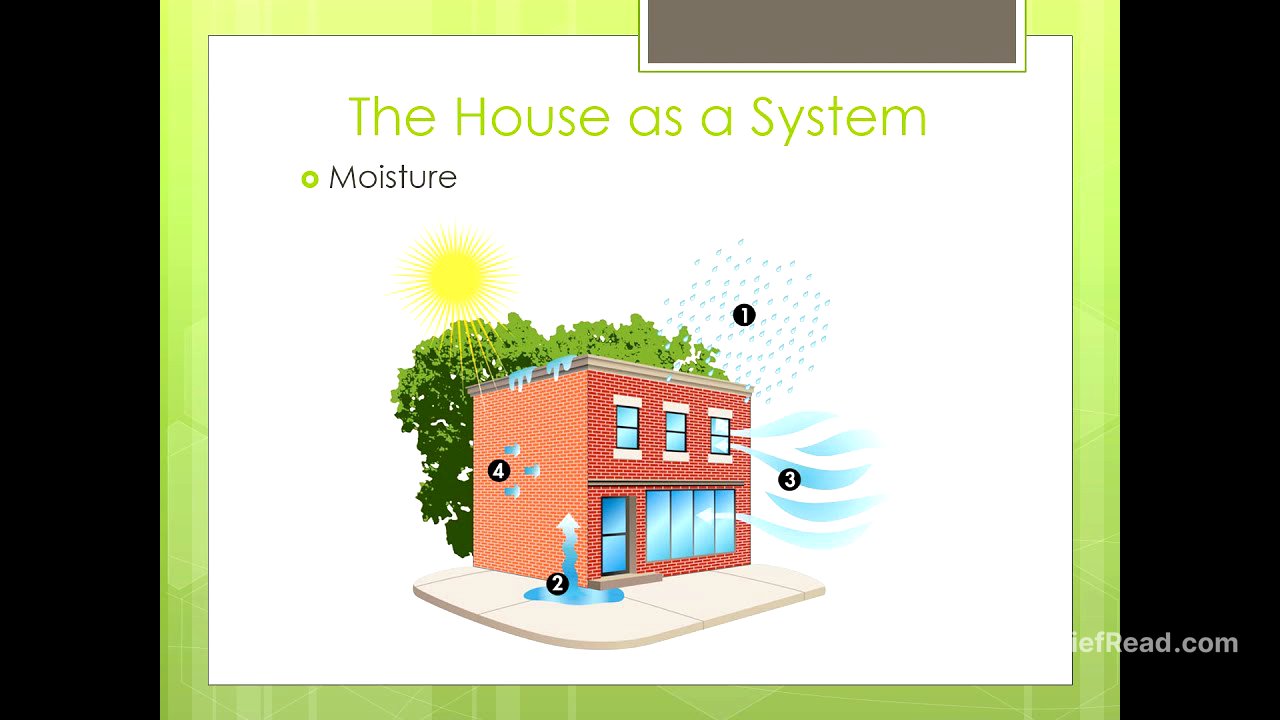
The chapter covers the three forms of water—solid, liquid, and vapor—and how they can negatively impact a home. It emphasizes the importance of proper insulation and roofing, as well as techniques like landscaping and drainage, to manage water and prevent moisture-related issues in homes.
Impacts of Building Materials on Air Quality [28:10]
In this final chapter, the focus is on the relationship between indoor air quality and the materials used in home construction. It discusses how certain paints and cabinets can release volatile organic compounds (VOCs) and formaldehyde, thus stressing the importance of sustainable materials in maintaining healthy indoor environments.