TLDR;
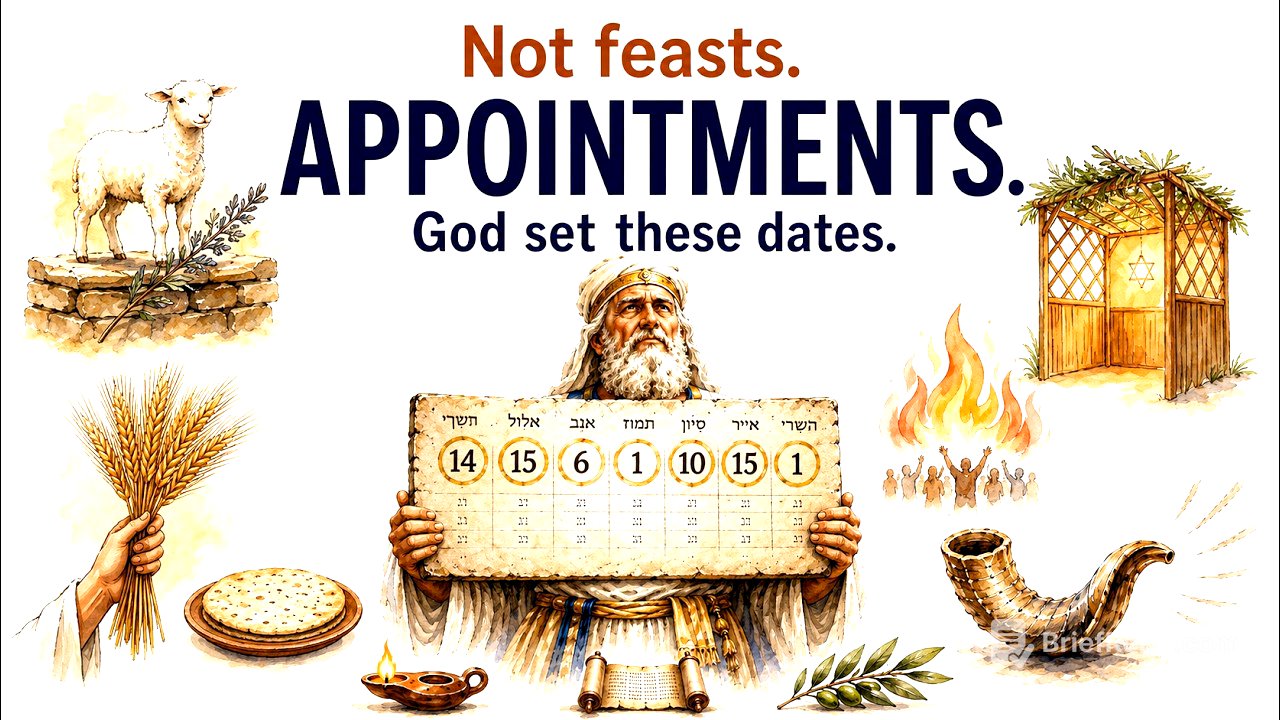
This video explores the significance of specific Hebrew words and how they relate to God's appointed times, known as moedim, which are integral to understanding the Bible's narrative. The speaker emphasises that these appointments are not just historical feasts but are important events set by God before Israel existed.
- Hebrew word "moed" denotes scheduled encounters, not just festivals.
- The concept of these appointed times is rooted in creation, illustrating that they are God's dates for humanity.
- Each of the seven appointed times represents pivotal moments in redemptive history, with future fulfilments still to come.
Introduction: They Are Not Feasts [0:00]
The introduction highlights a critical misunderstanding among Christians regarding the term used for Israel's feasts in the Bible. The speaker states that the Hebrew word "moed" is often translated as "feast," leading to a misconception. The term actually refers to an appointment or scheduled encounter, indicating that these events are not simply historical but have ongoing significance. God defined these appointments long before Israel existed, embedding them within creation itself.
The Word That Changes Everything [1:05]
The speaker elaborates on the term "moed" and its implications for understanding God's calendar. It signifies God's intended appointments, which are crucial for interpreting both the Old and New Testaments. These appointments were established in creation and are not exclusive to Israel but are universal appointments that God intends to keep, addressing important events in redemptive history.
Why God Built This Calendar Before Israel Existed [3:02]
This section discusses the origin of God's calendar, revealing that it was created prior to Israel's existence as a nation. The speaker explains that the calendar signifies God's predetermined plan for humanity. Events listed on this calendar are intended to mark significant moments in history, and every pivotal occasion in redemptive history corresponds to one of these divine appointments.
The Prosecution of Egypt’s Gods [3:29]
The importance of the plagues that struck Egypt is discussed in this chapter, with the speaker explaining how each plague served as a judgment against specific Egyptian deities. This divine prosecution illustrates God's power over the gods of Egypt, culminating in the liberation of the Israelites. The speaker emphasises that God’s actions were deliberate and geared towards establishing his authority as the true God over the false gods worshipped by Egypt.
The Night God Reset the Clock [4:22]
The video recounts the night of Israel’s exodus from Egypt, highlighting how this event represented a reset in God’s calendar. On this occasion, God instructed Moses to declare the first month of the Hebrew year, setting a new starting point for Israel. This moment symbolises a new beginning for God’s people and marks the commencement of a series of divine appointments.
The Foundation Beneath the Entire Calendar [5:41]
The speaker discusses the foundational role of the Sabbath within God’s calendar. The weekly Sabbath is not classified as one of the annual feasts but serves as the underlying structure for the entire calendar. It signifies God's claim over time itself and establishes a rhythm of rest, onto which the annual feasts are built.
Appointment 1: Passover — The Lamb That Was Always Him (Nissan 14) [6:20]
Passover is explored in detail, focusing on its specific requirements and the symbolic significance of the lamb selection process. The speaker parallels Jesus’ entry into Jerusalem with the Passover, highlighting the precision of God’s plan as Jesus fulfills the role of the ultimate Passover lamb at the appointed time. The relationship established through Passover is further illustrated by the Seder traditions that incorporate the cup of redemption.
Appointment 2: The Unleavened Bread — The Bread Without Corruption [8:47]
This chapter explains the Feast of Unleavened Bread, which follows immediately after Passover. Leaven represents sin in scripture, and the removal of it from homes signifies purification. The burial of Jesus during this feast illustrates his sinless nature, accentuating the connection between this feast and the sacrificial work of Christ.
Appointment 3: Firstfruits — The First Sheaf and the Coming Harvest [9:31]
The Feast of Firstfruits is introduced as a significant appointment, highlighting the act of offering the first harvested grain as a sign of the coming harvest. The speaker discusses Jesus as the firstfruits of the resurrection, noting that his rising on this day confirms the promise of a greater harvest of believers yet to come.
Appointment 4: Pentecost — The Day the Law Became a Fire [10:51]
Pentecost, or Shavuot, is framed as the anniversary of the giving of the law at Sinai. The contrast between the law given in fear and the grace offered through the Holy Spirit at Pentecost is emphasised. The chapter underscores that while the law resulted in death (3,000 deaths), the outpouring of the Spirit led to 3,000 new believers, celebrating the transformative power of the new covenant.
The Silence: The Season You Are Living In Right Now [12:43]
This section reflects on the quiet period following the spring feasts leading up to the fall appointments, representing the harvest season. The speaker posits that this season of silence is a time for believers to actively work in the harvest rather than wait idly, understanding it as an active assignment.
Appointment 5: Feast Of Trumpets — The Trumpet With No Backstory [13:25]
The Feast of Trumpets is introduced as the next significant appointment. Unlike other feasts, it lacks a detailed historical narrative, instead focusing on future events. The speaker suggests that this feast anticipates the return of Christ, drawing parallels to scriptural promises concerning the resurrection and gathering of believers.
Appointment 6: Day Of Atonement — The Heaviest Day on God’s Calendar [14:57]
Yom Kippur is described as the most solemn day, highlighting the high priest's unique responsibilities in the Holy of Holies. The significance of the two goats during this day is explained, demonstrating how one represents the covering of sin while the other signifies its complete removal. This dual symbolism underscores key aspects of forgiveness and redemption.
Appointment 7: Feast Of Tabernacles — God Moves In [16:41]
The Feast of Tabernacles is marked as a joyful celebration that reminds believers of their temporary status in this world. The chapter elaborates on the symbolism of the sukkah and God's desire to dwell among his people. The significance of this feast points towards God’s future dwelling among humanity, culminating in the final fulfilment of the story as depicted in Revelation.
The Calendar Is Still Running [18:25]
In closing, the speaker reiterates that God's calendar continues to run as it always has. The first four appointments have been fulfilled, while the last three remain, emphasising that believers are positioned within a divinely orchestrated timeline. God's faithfulness to his appointed times instills assurance in believers that he will fulfil the remaining appointments as promised.