TLDR;
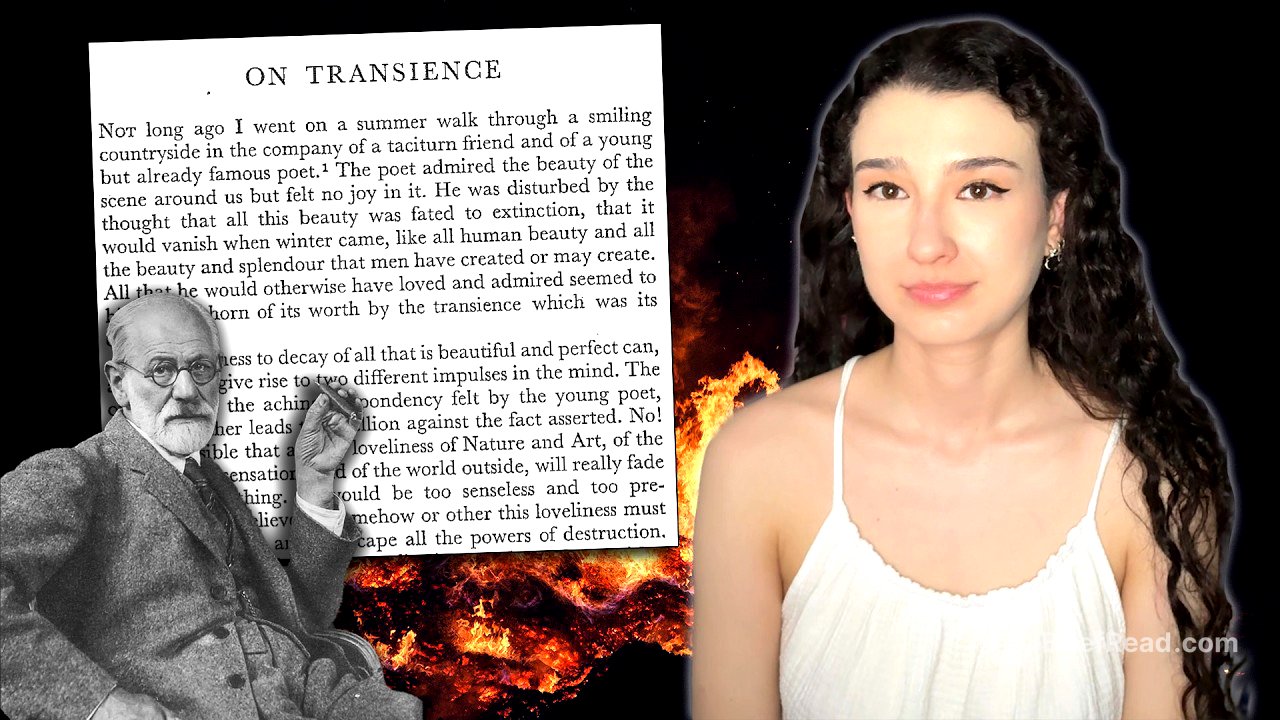
This video discusses Freud's essay "On Transience," written in 1915, which explores the struggle to enjoy beauty in the face of its unavoidable fleeting nature. The essay suggests that the transience of beauty can lead to despair or acceptance, with an emphasis on appreciating beauty in the moment. The impact of World War I on prevailing views about beauty, the nature of mourning, and the cyclical process of suffering and rebuilding are also key points covered.
- Freud discusses the transience of beauty.
- Mourning is described as a preemptive experience related to loss.
- The cyclical nature of life emphasizes rebuilding after loss.
Freud's View on Transience and Beauty [0:00]
Freud expresses his mixed feelings towards his friend, a poet, who struggles to enjoy the beauty of a summer landscape due to thoughts of its inevitable extinction. The poet feels despondent about the fleeting nature of beauty, suggesting that this transience renders beauty less valuable. Freud introduces two potential responses to transience: despair and acceptance. He posits a third response, which is the acceptance of beauty as ephemeral without falling into despair, emphasizing that the transient nature of beauty actually enhances its value.
The Impact of World War I on Beauty and Mourning [3:48]
Freud reflects on the changes brought by World War I, noting that it robbed the world of beauty and revealed vulnerabilities in civilization. He articulates that mourning, despite its hardships, is a natural process that allows for eventual recovery and replacement of lost beauty with new experiences worth cherishing. He cites a belief that despite destruction, humanity will rebuild with renewed understanding of beauty's fragility.
Mourning and the Present Moment [6:30]
Freud describes a phenomenon of preemptive mourning, where individuals mourn anticipated losses rather than actual losses. The narrator parallels her own experiences of struggling to live in the present due to an overwhelming focus on the future, which can hinder enjoyment of current beauty. The video conveys that it is essential to appreciate the present despite the knowledge that it is ephemeral, and that fearing loss can detract from living fully. In conclusion, it suggests a mindful approach to life, advocating for enjoyment of the present without letting fear of future loss overshadow it.
Final Thoughts on Transience [7:04]
The narrator reflects on the broader implications of Freud's essay relating to modern concerns and personal anxieties about future losses, such as climate change or aging. She emphasizes that living in anticipation of loss can preclude the enjoyment of beauty in the present moment. The takeaway encourages a focus on appreciating beauty today, as the inevitability of loss should not diminish the value of the experience.