TLDR;
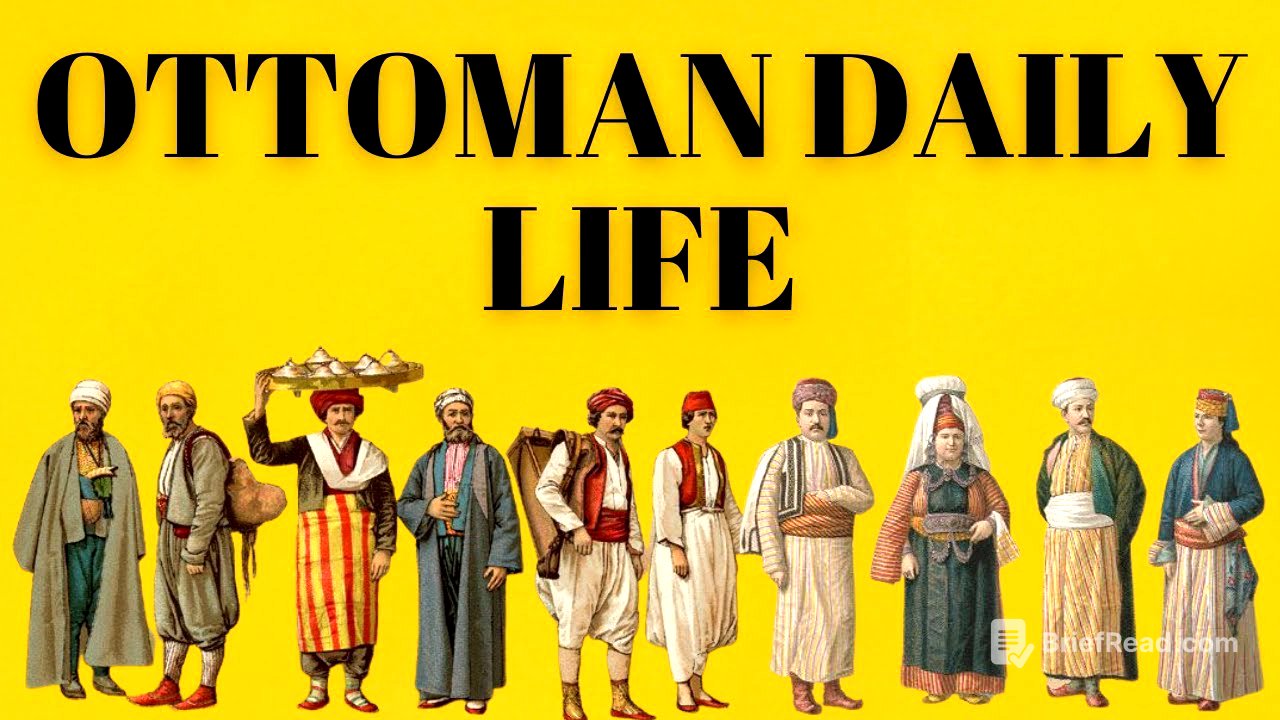
This video explores the daily life during the golden age of the Ottoman Empire in the 16th century, highlighting its multicultural structure, neighborhoods, and social customs.
- Ottoman Empire reached its peak, spanning from Morocco to Iran.
- Cities like Istanbul, Aleppo, and Cairo exemplified a rich mosaic of cultures and religions.
- Women's social life included markets and bathhouses, while men frequented mosques, homes, and coffee houses.
- Cuisine varied among households, often shaped by economic status, emphasizing communal dining.
The Golden Age of the Ottoman Empire [0:00]
In the 16th century, the Ottoman Empire experienced its golden age, stretching from the Atlantic coast of Morocco to the Iranian borders and reaching as far as Austria. Major cities such as Istanbul, Aleppo, and Cairo became vital parts of the Mediterranean world, showcasing a tolerance-based system that resulted in a diverse and multicultural society. This rich multiculturalism laid the groundwork for vibrant daily life, particularly before the Tanzimat reforms.
Ottoman Neighborhoods and Community Life [0:49]
Ottoman cities were divided into neighborhoods, typically accommodating between 5 and 100 families, with medium-sized neighborhoods consisting of about 30-40 families. These neighborhoods revolved around religious centers, including mosques, churches, and synagogues, reflecting the importance of religion in daily life. People belonging to similar religions and ethnicities resided closely, yet neighbors interacted with others from different cultural backgrounds, enriching the communal life.
Role of Women in Ottoman Society [1:57]
Women's social engagement was somewhat limited; however, the state allowed for their inclusion in urban life through bazaars and Turkish cream shops, where they sold handicrafts and socialized. Bathhouses served as a central hub for women, providing a space for connection, relaxation, and social arrangements like marriage. Despite the constraints on women’s mobility, they maintained a level of community presence through these social venues.
Men's Daily Life: Roles and Responsibilities [2:58]
Men's daily lives typically revolved around three main places: mosques for worship, homes for family interaction, and workplaces. Historians suggest that houses became leisure spots for men during the 15th and 16th centuries. While community knowledge and culture thrived in coffee houses and public spaces, the focus on family remained strong, showcasing a contrast in the social lives of men and women.
The Importance of Coffee Houses and Social Gathering Spaces [3:51]
Coffee houses, initially gathering places for reading and discussing science and religion, transformed into social hubs as coffee grew in popularity. These venues allowed for social gatherings and sharing news, vital for community engagement. The cultural significance of coffee houses was profound, marking a shift in the social dynamics of the Ottoman Empire and contributing to the production of knowledge and culture.
Ottoman Cuisine and Dining Customs [6:44]
Ottoman cuisine played a crucial role in daily life, characterized by self-sufficient and versatile meals. Travelers noted the society's comfort with food, with a diet that often included rice, mutton, and vegetables. Meals varied by economic status, where richer households enjoyed elaborate breakfasts while poorer families often subsisted on simpler fare. Dining was communal, reinforcing family bonds, with coffee sessions following meals being a popular custom.
The Architecture and Furnishing of Ottoman Homes [5:00]
Knowledge about Ottoman residences is limited due to frequent natural disasters; however, insights into home furnishing reveal various domestic customs. Daytime living spaces transformed with cushions and carpets, affording comfort and multi-functionality. The prosperity of households was often indicated by the quality of furnishings, especially cushions and carpets. Additionally, houses were organized to enhance communal living and social interactions.
Workplace and Trade in Ottoman Cities [9:11]
In cities, workplaces were organized into specific neighborhoods, allowing for easy transitions from home to shop. Shops often served dual purposes as sales and workshops, contributing to the city's vibrancy. The sounds of production enriched urban life, showcasing the thriving trades and artisan communities. Unlike in many Western societies where class dictated daily existence, in the Ottoman Empire, cultural background was more influential in shaping neighborhood dynamics and interactions.
Cultural Coexistence in Ottoman Neighborhoods [9:56]
The Ottoman Empire displayed a remarkable structure where daily life was informed not by social class but by cultural identity. Even within culturally distinct neighborhoods, people maintained peaceful coexistence despite their differences. This multicultural fabric created vibrant communities, showcasing the Ottoman Empire's unique approach to social integration and diversity.