TLDR;
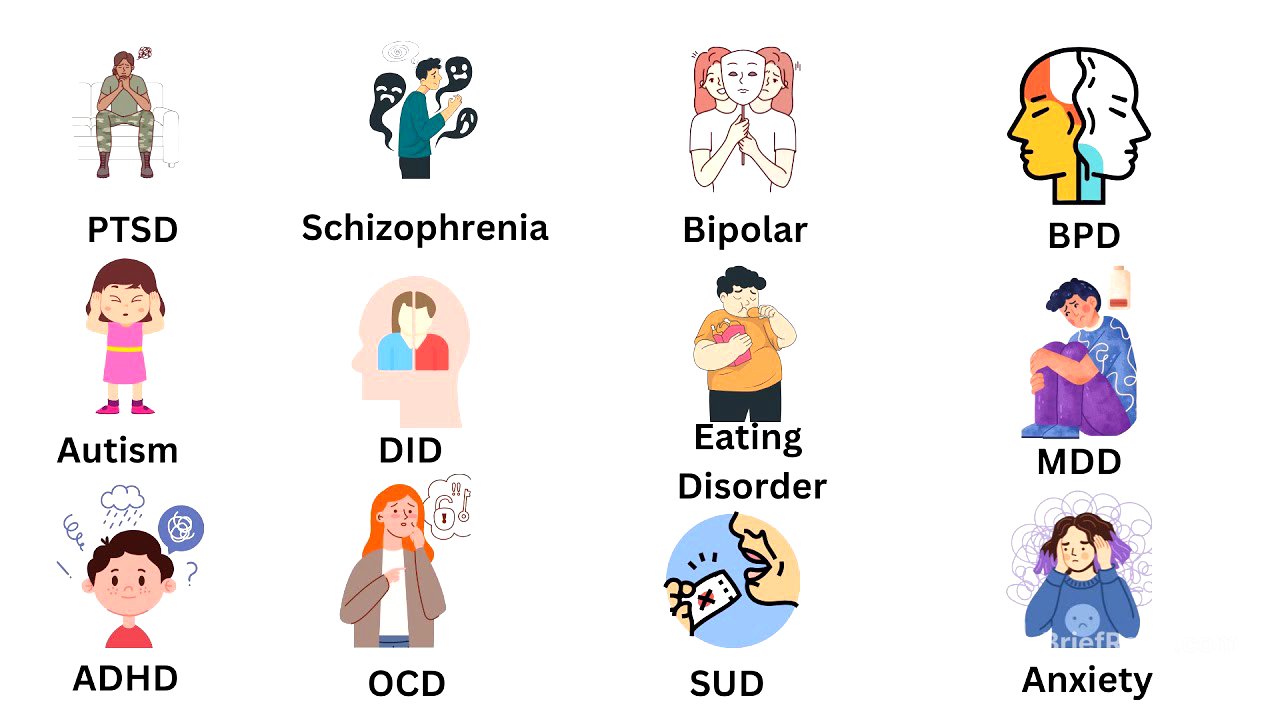
This video provides a concise overview of various mental health disorders, including their symptoms, common treatments, and key characteristics. It covers PTSD, schizophrenia, bipolar disorder, borderline personality disorder, autism spectrum disorder, dissociative identity disorder, eating disorders, major depressive disorder, ADHD, obsessive-compulsive disorder, substance use disorders, and anxiety disorders. The video emphasizes that while these conditions can be challenging, effective treatments and therapies are available to manage symptoms and improve quality of life.
- PTSD can occur after experiencing a traumatic event, leading to flashbacks and anxiety.
- Schizophrenia involves hallucinations and delusions, often managed with antipsychotic medications.
- Bipolar disorder includes extreme mood swings, treatable with mood stabilizers and psychotherapy.
- BPD is marked by unstable emotions and fear of abandonment, often addressed with dialectical behavioral therapy.
- Autism spectrum disorder affects communication and social interaction, with early intervention being crucial.
- Dissociative identity disorder involves multiple identities, usually treated with long-term therapy.
- Eating disorders involve extreme concerns about weight and food, requiring therapy and nutritional counseling.
- Major depressive disorder is characterized by persistent sadness and lack of interest, treatable with therapy and antidepressants.
- ADHD involves inattention and hyperactivity, often managed with medication and behavioral strategies.
- OCD includes unwanted repetitive thoughts and compulsive behaviors, treatable with cognitive behavioral therapy and medication.
- Substance use disorders involve compulsive use of drugs or alcohol, requiring therapy and support for recovery.
- Anxiety disorders involve excessive worry and fear, often managed with therapy and medication.
Post-Traumatic Stress Disorder (PTSD) [0:00]
Post-traumatic stress disorder (PTSD) can develop after someone experiences or witnesses a traumatic event. Symptoms of PTSD include flashbacks, nightmares, and severe anxiety, which can significantly impair daily functioning. While often associated with soldiers, PTSD can affect anyone who has faced trauma. Trauma-focused therapy is a key treatment approach for managing PTSD.
Schizophrenia [0:26]
Schizophrenia is a serious mental disorder that impacts a person's thinking, feelings, and perception of reality. Individuals with schizophrenia may experience hallucinations, such as hearing voices or seeing things that are not there, and delusions, which are strong beliefs that do not align with reality. The onset of schizophrenia typically occurs in young adulthood, making it difficult to work or engage socially. Antipsychotic medications are the primary treatment for managing the symptoms of schizophrenia.
Bipolar Disorder [1:00]
Bipolar disorder is characterized by extreme mood swings, ranging from manic highs to depressive lows. During manic episodes, individuals may feel euphoric, have excessive energy, and make impulsive decisions. In depressive episodes, they may feel extremely down, similar to those with major depressive disorder. These cycles can be disruptive, but medications like mood stabilizers and psychotherapy can help manage the condition effectively.
Borderline Personality Disorder (BPD) [1:27]
Borderline personality disorder (BPD) is marked by intense and unstable emotions. People with BPD often struggle to regulate their moods, experiencing rapid shifts from anger to sadness or anxiety to happiness. They may also have unstable relationships, an intense fear of abandonment, and engage in impulsive behaviors, such as reckless spending or self-harm. Dialectical behavioral therapy, a specialized form of therapy, can help individuals with BPD manage their emotions and build healthier relationships.
Autism Spectrum Disorder (ASD) [2:06]
Autism spectrum disorder (ASD) is a developmental disorder that affects communication and social interaction. Individuals with autism may have difficulty understanding social cues, making eye contact, or participating in typical conversations. They might also engage in repetitive behaviors, like hand flapping, or have specific interests that they focus on intensely. Because autism is a spectrum, symptoms can vary widely from mild to more severe. Early intervention, including speech therapy, occupational therapy, and behavioral therapies, can help individuals with ASD thrive in their own unique ways.
Dissociative Identity Disorder (DID) [2:46]
Dissociative identity disorder (DID), formerly known as multiple personality disorder, involves the presence of two or more distinct identities or personality states. People with DID may feel like they have different selves who control their behavior at different times. This condition is often linked to severe trauma in early childhood. Treatment usually involves long-term therapy to integrate the identities.
Eating Disorders [3:14]
Eating disorders involve extreme concerns about weight, body image, and food. The most common types are anorexia nervosa, where people severely restrict their food intake to lose weight; bulimia nervosa, where individuals binge eat large amounts of food and then purge through vomiting or excessive exercise; and binge eating disorder, where someone eats excessively but does not purge afterward. These disorders can have severe physical and emotional consequences and often co-occur with anxiety or depression. Treatments typically involve therapy, nutritional counseling, and, in some cases, medication to address underlying mental health issues.
Major Depressive Disorder (MDD) [3:56]
Major depressive disorder (MDD), often simply called depression, is more than just feeling sad; it is a persistent feeling of sadness, hopelessness, and a lack of interest in activities once enjoyed. People with depression may also experience changes in sleep, appetite, and energy levels. Treatment is available through therapy and medications like antidepressants.
Attention Deficit Hyperactivity Disorder (ADHD) [4:22]
Attention deficit hyperactivity disorder (ADHD) is usually diagnosed in childhood, but many people live with it into adulthood. It is characterized by inattention, meaning it is hard to stay focused or organized, and hyperactivity, where people may feel restless or impulsive. Someone with ADHD might frequently lose things, struggle with time management, or have difficulty following through on tasks. ADHD can make school, work, or daily tasks challenging.
Obsessive Compulsive Disorder (OCD) [4:54]
Obsessive-compulsive disorder (OCD) is characterized by unwanted repetitive thoughts called obsessions and the urge to perform certain behaviors or rituals known as compulsions. For example, someone might feel the need to wash their hands constantly to ease the anxiety of germs. OCD can be debilitating, but treatments like cognitive behavioral therapy and medications can help reduce symptoms.
Substance Use Disorders [5:21]
Substance use disorders involve the compulsive use of drugs or alcohol despite negative consequences. It can lead to dependence, where stopping the substance causes withdrawal symptoms. Addiction is a chronic disease, but with proper treatment like therapy, medication-assisted treatment, and support groups, recovery is possible.
Anxiety Disorders [5:43]
Anxiety disorders involve feelings of excessive worry, fear, or nervousness that interfere with daily life. Common forms include generalized anxiety disorder, where people feel anxious about many things often without a clear cause; panic disorder, where individuals experience sudden intense bouts of fear known as panic attacks, which can include heart palpitations, shortness of breath, and dizziness; and social anxiety disorder, where someone feels overwhelming fear of being judged or humiliated in social situations. People with anxiety disorders often avoid situations that trigger their anxiety, which can limit their lives.