TLDR;
This video covers various types of fishing lures and their uses. Anglers can benefit from understanding different lures suited for various conditions and fish behavior.
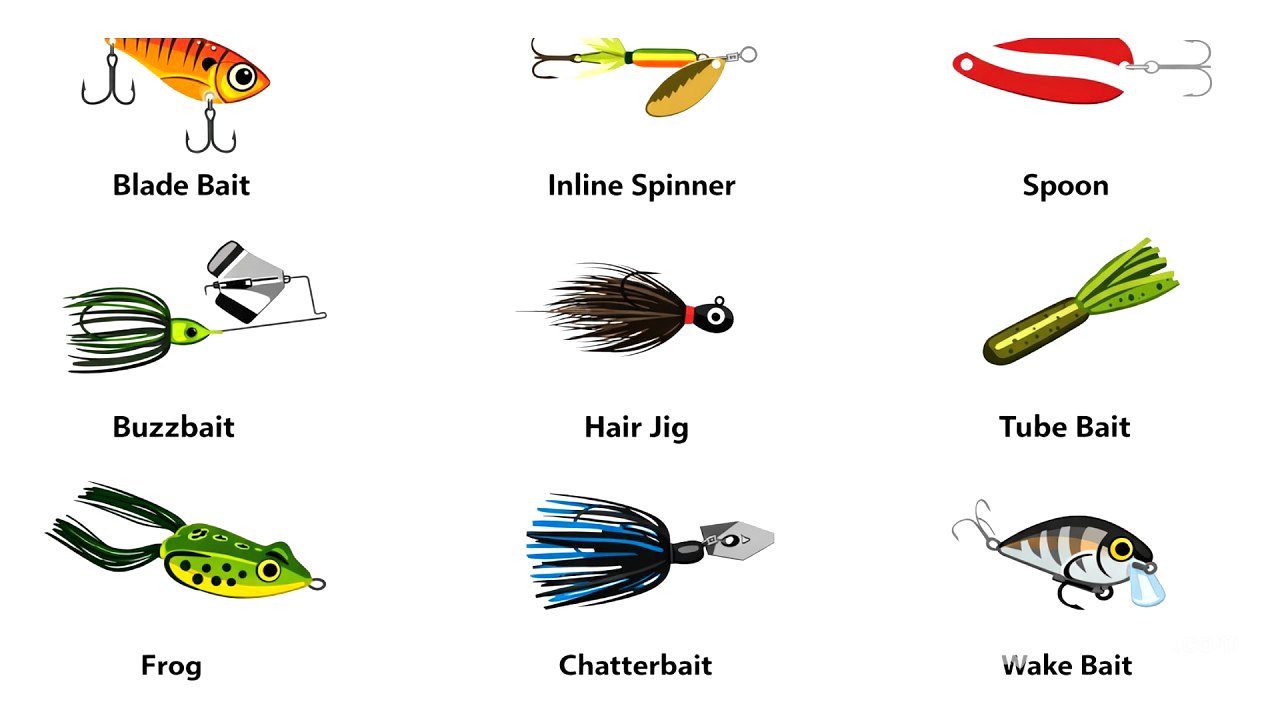
- Bladebaits sink quickly, mimicking distressed baitfish.
- Inline spinners produce flash and vibration, effective for trout in streams.
- Spoons resemble injured baitfish, usable in both freshwater and saltwater.
- Buzzbaits create surface noise to attract fish in shallow areas.
- Hair jigs offer a natural presentation for selective species.
- Tube baits mimic crawfish and injured fish, popular for bass fishing.
- Frog lures navigate thick vegetation, imitating frogs on the surface.
- ChatterBaits blend jig and spinnerbait features, effective in stained water.
- Wakebaits disturb the surface to imitate baitfish, useful in low-light conditions.
Bladebait [0:00]
Bladebaits are thin metal lures designed to vibrate intensely with minimal movement. Their quick sinking capability makes them effective in deeper waters or colder conditions. When lifted and dropped, bladebaits produce a tight pulsing vibration imitating distressed baitfish, making them popular among anglers during colder months when fish tend to stay near the bottom.
Inline Spinner [0:24]
Inline spinners consist of a straight wire shaft with a spinning blade that rotates as it moves through the water. This spinning blade creates flash and vibration, making it easier for fish to locate the lure. Typically equipped with a small body and a hook dressed in feathers or hair for additional movement, inline spinners are especially effective for species like trout in rivers and streams due to their steady, predictable motion.
Spoon [0:48]
Spoons are curved metal pieces that wobble and flash in the water, reflecting light in patterns resembling an injured baitfish. This lure has been utilized for generations due to its effectiveness and simplicity. Spoons can be cast long distances and can be fished at various depths, making them reliable in both freshwater and saltwater environments.
Buzzbait [1:12]
Buzzbaits are topwater lures designed to create noise and surface disturbance. The lure has a spinning blade above the water that churns during retrieval, producing a continuous buzzing sound. Below the blade is a skirted hook, which adds body and movement to the lure. The surface commotion often triggers aggressive strikes from fish hiding in shallow areas.
Hair Jig [1:36]
Hair jigs resemble standard jigs but are dressed with natural or synthetic hair, providing a subtle movement in the water even with minimal motion. This type of lure has traditional roots and is effective for fish like smallmouth bass and trout, particularly in clear water where a more realistic presentation is crucial.
Tube Bait [2:00]
Tube baits are hollow, soft plastic lures shaped like short cylinders, featuring tentacle-like strands at one end. When rigged on a jig head, they spiral down, mimicking a fleeing or injured baitfish. The tentacle movements add extra action, making tube baits particularly popular for bass fishing, as they imitate both crawfish and small fish effectively.
Frog Lure [2:24]
Frog lures are hollow-bodied topwater baits that imitate frogs moving across the surface. These lures are designed with hidden hooks, allowing for easy navigation over thick vegetation without snagging. When twitched, they glide and pause across the water, making them effective in heavy cover where fish ambush their prey.
ChatterBait [2:48]
ChatterBaits, or bladed jigs, combine characteristics of both jigs and spinnerbaits. They feature a flat metal blade attached to the front of the jig head, which creates strong vibrations as the lure moves. A skirt and trailer behind the blade add bulk and lifelike motion, making it effective in stained water where fish can sense vibrations more than they can see.
Wakebait [3:16]
Wakebaits are hard lures designed to stay just below the surface, creating a visible wake as they move. They do not dive deeply but cause a subtle surface disturbance, imitating baitfish swimming near the top. Wakebaits are often effective in low-light conditions when fish are feeding upwards and searching for easy targets.