TLDR;
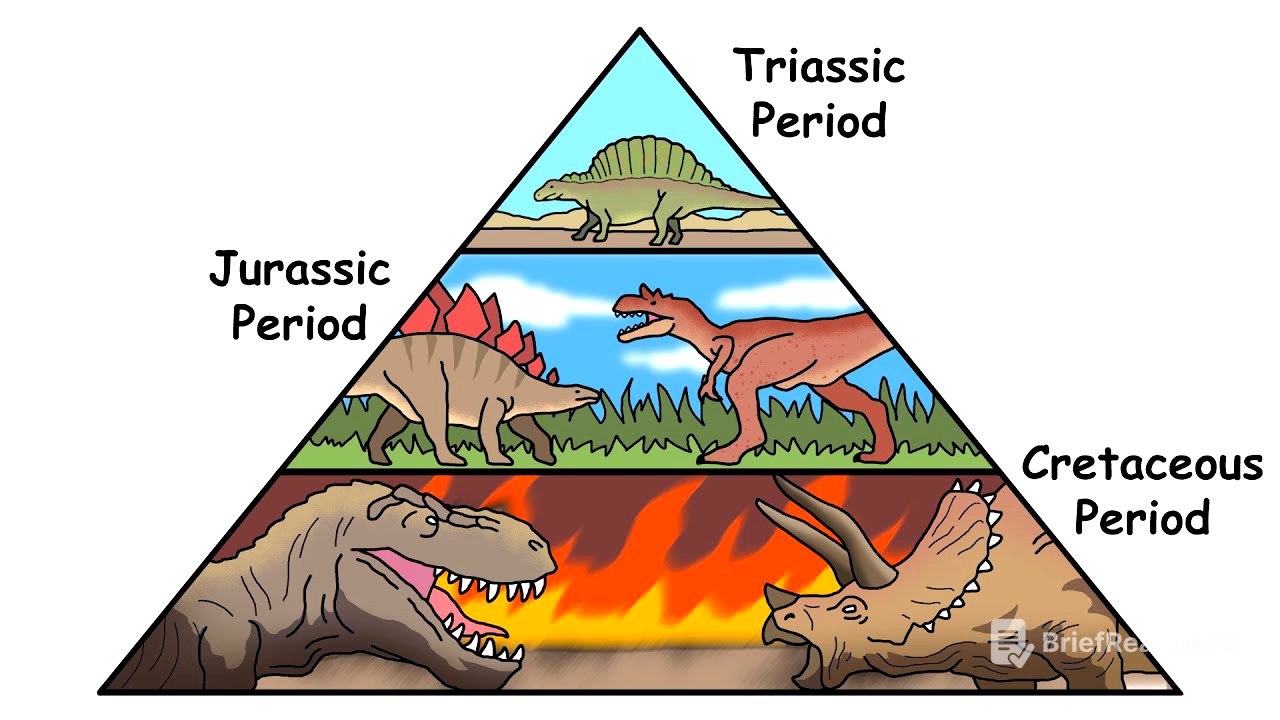
This video explains the evolution and extinction events of dinosaurs across three periods: the Triassic, Jurassic, and Cretaceous. It covers the emergence of early dinosaurs after the Permian-Triassic extinction, their diversification and gigantism during the Jurassic, and the rise of iconic species in the Cretaceous before their ultimate demise due to an asteroid impact.
- The Triassic Period saw the emergence of early dinosaurs and their initial diversification, followed by the Triassic-Jurassic extinction event.
- The Jurassic Period marked the rise of giant dinosaurs like sauropods and theropods, along with the appearance of early ornithischians.
- The Cretaceous Period featured the peak of dinosaur diversity, the evolution of iconic species like Tyrannosaurus Rex and Triceratops, and the final extinction event that wiped out non-avian dinosaurs.
Triassic Period [0:00]
The Triassic Period began 252 million years ago, following the Permian-Triassic extinction event, which decimated a large percentage of marine and terrestrial species due to massive volcanic eruptions in the Siberian Traps. Earth at this time consisted of the supercontinent Pangaea, characterized by arid conditions and seasonal rains. Early archosaurs and synapsids survived, with archosaurs being the ancestors of dinosaurs. Around 230 million years ago, the first dinosaurs, such as Eoraptor and Herrerasaurus, appeared in South America. These early dinosaurs were small and agile, with legs positioned beneath their bodies, enabling them to run on two legs. As the Triassic progressed, theropods and sauropodomorphs began to diversify. However, the Triassic-Jurassic extinction event, caused by volcanic activity as Pangaea began to rift apart, wiped out 76% of species, including large amphibians and archosaur competitors, paving the way for dinosaurs to dominate.
Jurassic Period [3:08]
Following the Triassic-Jurassic extinction, the Jurassic Period saw the rise of dinosaurs, with Pangaea splitting into Laurasia and Gondwana, creating new coastlines and a more stable climate. Extensive forests flourished, providing food for large herbivores. Sauropods, like Brachiosaurus, Diplodocus, and Apatosaurus, grew to colossal sizes, using their immense size for defense and processing low-nutrition plants. Theropods, such as Allosaurus and Ceratosaurus, were common predators. Smaller dinosaurs like Compsognathus also existed. Birds originated from the theropod group, with Archaeopteryx possessing both feathers and reptilian features. Ornithischians, or bird-hipped dinosaurs, also emerged, including Stegosaurus with its distinctive plates and spiked tail, and early armored dinosaurs. Marine environments were dominated by plesiosaurs and pliosaurs, while pterosaurs ruled the skies. Mammals remained small and nocturnal. Around 145 million years ago, environmental shifts led to the decline or extinction of some Jurassic dinosaur groups, marking the transition to the Cretaceous Period.
Cretaceous Period [6:43]
The Cretaceous Period is known for peak dinosaur diversity and the emergence of iconic species. Continental drift continued, further separating Laurasia and Gondwana, leading to high sea levels and a warm climate. Flowering plants diversified, leading to the appearance of new insects. Tyrannosaurus Rex dominated North America, while other large carnivores like Carnotaurus and Spinosaurus thrived elsewhere. Smaller feathered theropods like Velociraptor also became important. Titanosaurs, a new group of sauropods including Argentinosaurus and Patagotitan, became the largest land animals ever known. Ornithischians were the most diverse group, including duck-billed dinosaurs like Edmontosaurus and Parasaurolophus, horned dinosaurs like Triceratops, and bone-headed dinosaurs like Pachycephalosaurus. Ichthyosaurs declined, while mosasaurs became apex predators in marine environments. Pterosaurs persisted, with gigantic forms like Quetzalcoatlus. Mammals diversified, with ancestors of modern placental, marsupial, and monotreme mammals emerging. The Cretaceous-Paleogene extinction event 66 million years ago, caused by an asteroid impact in the Yucatan Peninsula, led to the extinction of 75% of species, including non-avian dinosaurs, pterosaurs, mosasaurs, and plesiosaurs, setting the stage for the age of mammals.