TLDR;
This video explains the structure and function of animal cells, contrasting them with prokaryotic cells and introducing the concept of endosymbiotic theory. It details the various organelles within animal cells, such as the nucleus, endoplasmic reticulum, Golgi apparatus, lysosomes, and mitochondria, and describes their roles in cellular processes. The video also covers the cytoskeleton and its importance in maintaining cell structure and organization, concluding with an analogy of the cell as a factory to illustrate the cooperation of its components.
- Eukaryotic cells, more complex than prokaryotic cells, contain organelles with specific functions.
- Endosymbiotic theory explains the evolution of eukaryotic cells from prokaryotic cells through mutual dependency.
- Animal cells contain a nucleus, endomembrane system (ER, Golgi apparatus, lysosomes), mitochondria, and a cytoskeleton.
Introduction to Animal Cells [0:00]
The video introduces eukaryotic cells, which are more complex than prokaryotic cells and comprise animal cells. Eukaryotic cells contain organelles, some of which resemble individual organisms. The video mentions that eukaryotic cells evolved from prokaryotic cells through endosymbiotic theory.
Endosymbiotic Theory [0:50]
The endosymbiotic theory suggests that larger host cells enveloped smaller bacteria, leading to a mutual dependency. The smaller cells, with unique functions like photosynthesis or oxygen respiration, provided energy-producing processes, while the larger cells offered protection. Over millions of years, these smaller bacteria evolved into organelles within eukaryotic cells.
Animal Cells vs. Plant Cells [1:31]
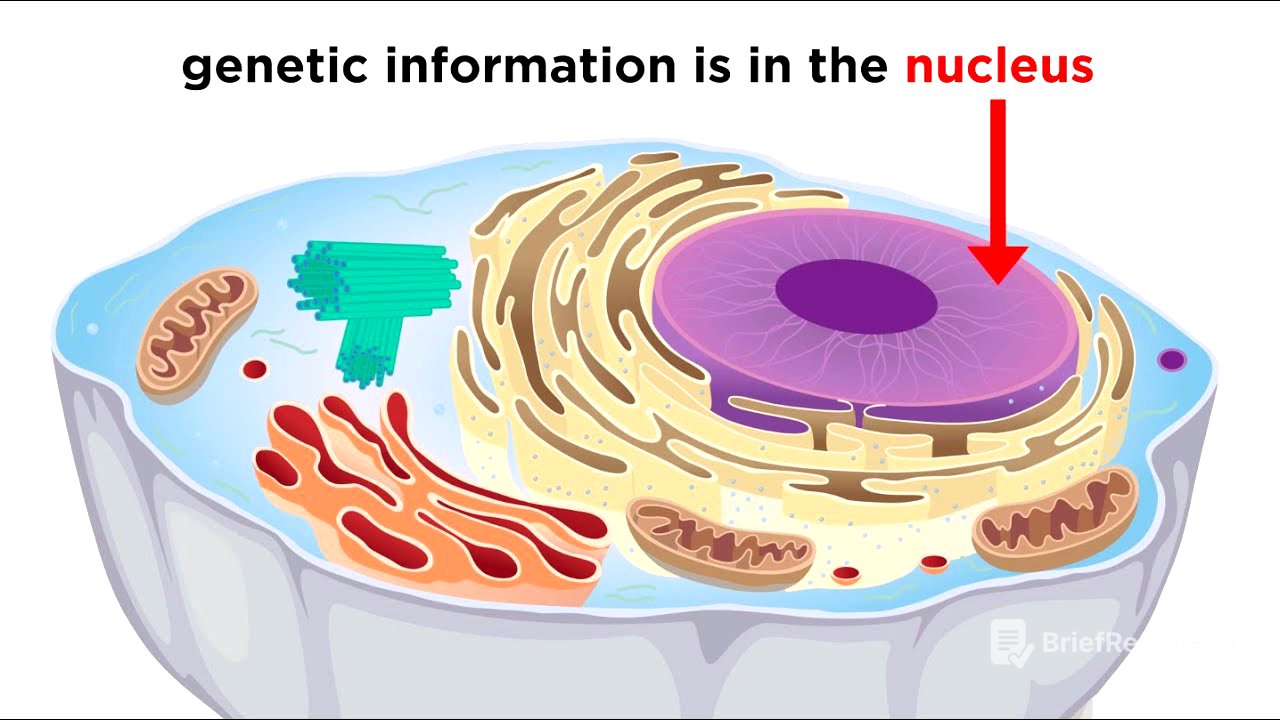
The video distinguishes between plant and animal cells as examples of eukaryotic cells with differing components. It focuses on animal cells, which include human cells. Unlike prokaryotic cells, eukaryotic cells store genetic information inside a nucleus.
The Nucleus [2:07]
The nucleus, a double-membraned organelle, contains pores that regulate the passage of substances in and out, keeping the genetic material (chromatin) separate from the cytoplasm. Within the nucleus, the nucleolus synthesizes ribosomal RNA and ribosome components. Ribosomes exit the nucleus and assemble in the cytoplasm, synthesizing proteins needed for various cellular functions.
The Endomembrane System [3:56]
The endomembrane system includes the nuclear envelope, rough and smooth endoplasmic reticulum (ER), Golgi apparatus, and lysosomes. The rough ER, studded with ribosomes, synthesizes polypeptides that enter the ER lumen, where they are folded, modified, and sometimes glycosylated to form glycoproteins. These glycoproteins are secreted from the cell via vesicles. The rough ER also synthesizes phospholipids and embeds cell membrane proteins, delivering them via transport vesicles.
Smooth ER, Golgi Apparatus [5:17]
The smooth ER, lacking ribosomes, synthesizes phospholipids and steroids like sex hormones, metabolizes substances, and stores calcium ions for signaling. It also detoxifies drugs and poisons by adding hydroxyl groups. Transport vesicles from the ER go to the Golgi apparatus, where proteins are modified, stored, and directed to their destinations. The Golgi apparatus has a cis face for incoming vesicles and a trans face for outgoing vesicles.
Golgi Apparatus Functions [6:34]
The Golgi apparatus modifies molecules by removing or substituting sugars, preparing them for their functions. Molecular tags, like phosphate groups, are added to target products to different parts of the cell. Vesicles also have surface molecules recognized by specific organelles to ensure targeted delivery.
Lysosomes [7:11]
Lysosomes contain acidic environments and enzymes that digest large molecules via hydrolysis. They fuse with vacuoles formed during phagocytosis to break down food particles. Lysosomes also digest damaged organelles through autophagy, maintaining optimal cell functionality.
Mitochondria and Peroxisomes [8:24]
Mitochondria, not part of the endomembrane system, are the sites of cellular respiration, generating energy for the cell. They have a smooth outer membrane and a folded inner membrane (cristae). The mitochondrial matrix contains circular DNA (mitochondrial DNA), ribosomes, and enzymes for cellular respiration. Peroxisomes contain enzymes for oxidative processes, producing hydrogen peroxide as a byproduct, and work with mitochondria to break down fatty acids.
The Cytoskeleton [10:20]
The cytoskeleton is a network of fibers throughout the cytoplasm, maintaining organization, shape, and structural integrity. It consists of microtubules (tubulin dimers), microfilaments (actin strands), and intermediate filaments (coiled keratins). Motor proteins use ATP to move vesicles along microtubules, delivering contents from the ER to the Golgi apparatus or from the Golgi apparatus to the cell membrane.
Centrosome and Cell Analogy [10:59]
In animal cells, microtubules grow from a centrosome near the nucleus, containing a pair of centrioles with microtubules arranged in a ring. The cell is analogous to a factory: the plasma membrane is the security guard, the cytoskeleton is the structural girders, the cytoplasm is the factory floor, the nucleus is the central office, the endoplasmic reticulum is the assembly line, the ribosomes are the factory workers, the Golgi apparatus is the shipping center, the lysosomes are the maintenance crew, and the mitochondria are the power plant.
Endosymbiotic Theory Revisited [12:49]
The endosymbiotic theory is reinforced by the understanding that membrane-enclosed organelles like the nucleus, ER, and Golgi apparatus likely originated from plasma membrane folds. Mitochondria and chloroplasts likely began as separate organisms with their own DNA and membranes. These structures evolved into compartments for different cellular activities, resulting in complex plant and animal cells.