TLDR;
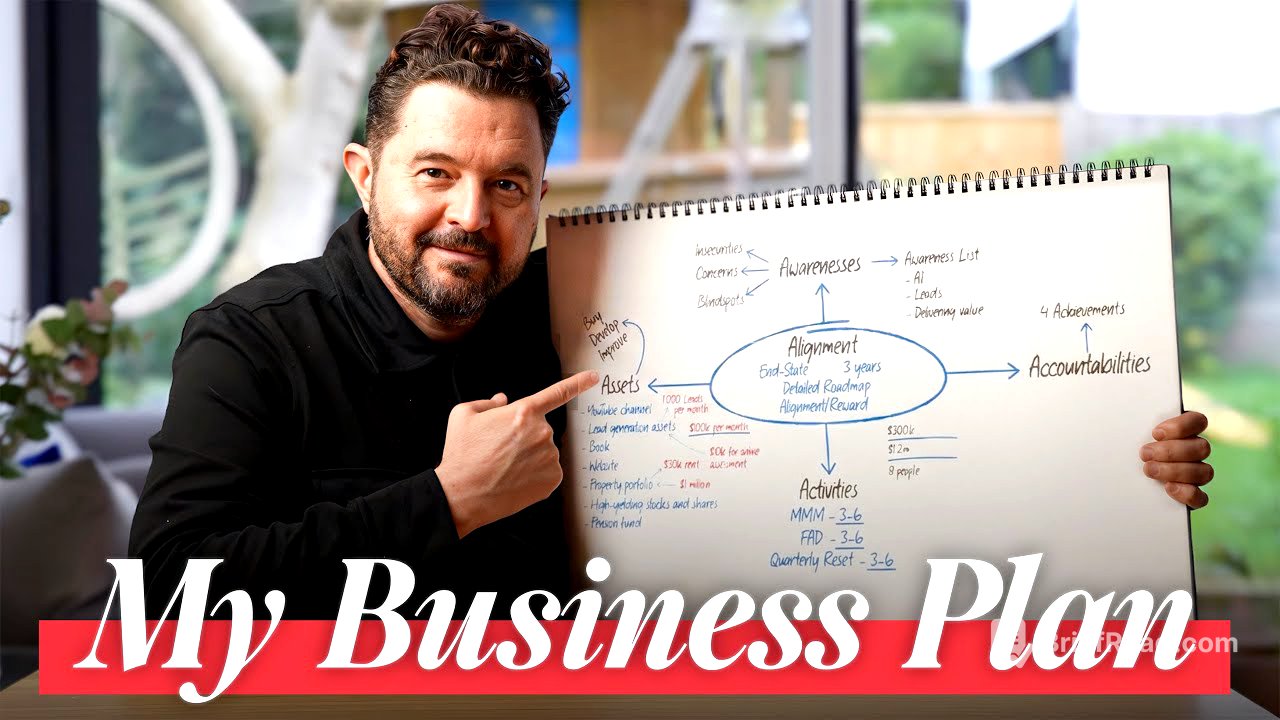
Daniel Priestley introduces the 5 A's framework—Alignment, Awarenesses, Accountability, Activities, and Assets—for effective goal setting and achievement. This framework emphasizes the importance of aligning personal and professional goals, addressing potential problems, building a strong team, focusing on consistent actions, and investing in valuable assets. The framework is designed to be implemented every 90 days to ensure continuous progress and adaptation.
- Alignment: Energetically align with your desired future by defining your end state (lifestyle vs. performance business), studying those who have achieved it, and aligning your inner circle and team.
- Awarenesses: Identify and document potential problems or insecurities that may hinder progress, and create a culture where raising awareness is encouraged.
- Accountability: Assemble a team to address and solve the major issues identified in the awareness phase, ensuring everyone is accountable for specific breakthroughs.
- Activities: Focus on the consistent weekly actions that drive results, using Monday morning meetings to plan and Friday afternoon debriefs to review progress.
- Assets: Invest in assets that make life easier and bring you closer to your end state, choosing to buy, develop, or improve assets as appropriate.
Intro [0:00]
Daniel Priestley introduces a goal-setting framework called the "5 A's," which he has used for the past 20 years. He shares his experiences, including a week on Neker Island with Richard Branson, significant company valuation growth, writing a book, and appearing on "Dire of a CEO" multiple times, alongside personal achievements like taking his kids to school and spending time in nature. This framework helped him achieve these goals by providing clarity and direction.
The 5 A's [0:36]
The 5 A's framework consists of Alignment, Awarenesses, Accountability, Activities, and Assets. Daniel will walk through each step, providing shortcuts and hacks to fast-track the process.
Alignment: Get Clear with Yourself [1:06]
Alignment involves being energetically aligned with the future and feeling excited about it. Key steps include defining the end state, such as choosing between a lifestyle business (fun, freedom, flexibility, smaller team) or a performance business (larger, potentially more stressful, bigger team). It's crucial to align with what you genuinely desire. Study or meet people who have achieved that end state to understand the detailed roadmap, including headcount, revenue, products, systems, and technologies. If you don't feel aligned with the pathway, identify what would make you feel aligned, such as more rewards or doing it with specific people.
Lifestyle vs Performance Business [1:41]
The distinction between a lifestyle business and a performance business is further clarified. A lifestyle business offers fun, freedom, and flexibility with a smaller team, while a performance business aims for significant growth and a higher valuation, requiring a larger team and more complex management. The importance of aligning your choice with your true desires is emphasized, as forcing yourself into one path when your heart desires the other will lead to dissatisfaction.
Aligning Your Spouse & Inner Circle [2:53]
Aligning those around you, such as your spouse and closest friends, is crucial. They need to understand the journey and the sacrifices involved, as well as the rewards they will share. If they are not aligned, they may subconsciously hold you back. Tough conversations may be necessary to ensure everyone is on the same page.
Getting Your Team Onboard [3:26]
Getting your team aligned is essential, especially in a company setting. Whether it's a co-founder or a larger team, everyone needs to understand the roadmap, the end state, and the reward structure. In practice, this means reconnecting the team to the vision every 90 days, re-enrolling them, and ensuring they feel excited about achieving the outcomes. Alignment feels magical, leading to resources appearing and breakthrough moments happening. Lack of alignment can feel like walking through wet cement, indicating a need to revisit and realign the goals.
Awarenesses: The Problems Nobody Wants To Discuss [4:17]
Awarenesses are the potential problems, insecurities, or concerns that bubble up when pursuing a goal. Instead of ignoring these, create an awareness list to document and address them. This list should be a living document, constantly updated with new concerns. Companies should also maintain awareness lists at the leadership and team levels. Encourage a culture where raising awareness is safe and welcomed, using specific language like "Can I raise an awareness with you?" Addressing awarenesses prevents the same issues from recurring and hindering progress.
Accountability: Building Your Power Team [6:12]
Accountabilities are the major issues that need to be solved in the next 90 days. Instead of trying to solve these alone, assemble a team of people who can address them. The book "Who, Not How" is recommended for understanding the power of having the right people on your team. Ensure the team is aligned and aware of the issues before assigning accountabilities.
Activities: The Weekly Non-Negotiables [8:14]
Activities are the consistent actions that drive results. Identify the weekly activities that move the needle for each person. Implement a Monday morning meeting where everyone declares their three to six most important activities for the week, and the team provides feedback. Follow up with a Friday afternoon debrief to check in on the progress of those activities. This process starts and finishes with a quarterly reset, where alignment is revisited, awarenesses are raised, and accountabilities are set for the next quarter.
Assets: Buy, Develop or Improve [10:36]
When it comes to assets, you have three options: buy, develop, or improve. Buying involves purchasing an existing asset, developing involves creating a new asset, and improving involves refreshing an existing asset. List potential investments and determine which assets would make your life easier in the year ahead. Hold an asset investment meeting to figure out the wisest investments, considering the potential return on investment.
The 24 Assets Framework [12:45]
In business, there are 24 important assets to consider investing in. Daniel Priestley wrote the book "24 Assets" to cover these. An assessment is available at www.24assets.com to help determine which assets you already have and which you should develop next. This framework helps in making informed decisions about asset development each year.
Live Example: $300K Lifestyle Business [14:08]
Daniel provides a live example of applying the 5 A's framework to a lifestyle business aiming to generate $1.2 million in revenue and pay the owner $300,000 per year. The steps include aligning the spouse, co-founder, salesperson, and customer success person; identifying awarenesses such as potential disruption by AI or weaknesses in lead generation; assigning accountabilities to solve these problems; defining weekly activities like sales calls and content creation; and investing in assets to make life easier and move closer to the end state.
Success Is A Team Sport [17:36]
Success is a team sport, requiring other people to be involved and aligned. This includes sharing awarenesses, accountabilities, activities, and working together on assets. Having this complete picture allows you to live your dreams. Daniel invites viewers to join the "Make It Big 2026" event to learn about trends impacting life and business in the coming year. He encourages viewers to test the 5 A's methodology and engage with the channel for more content.