TLDR;
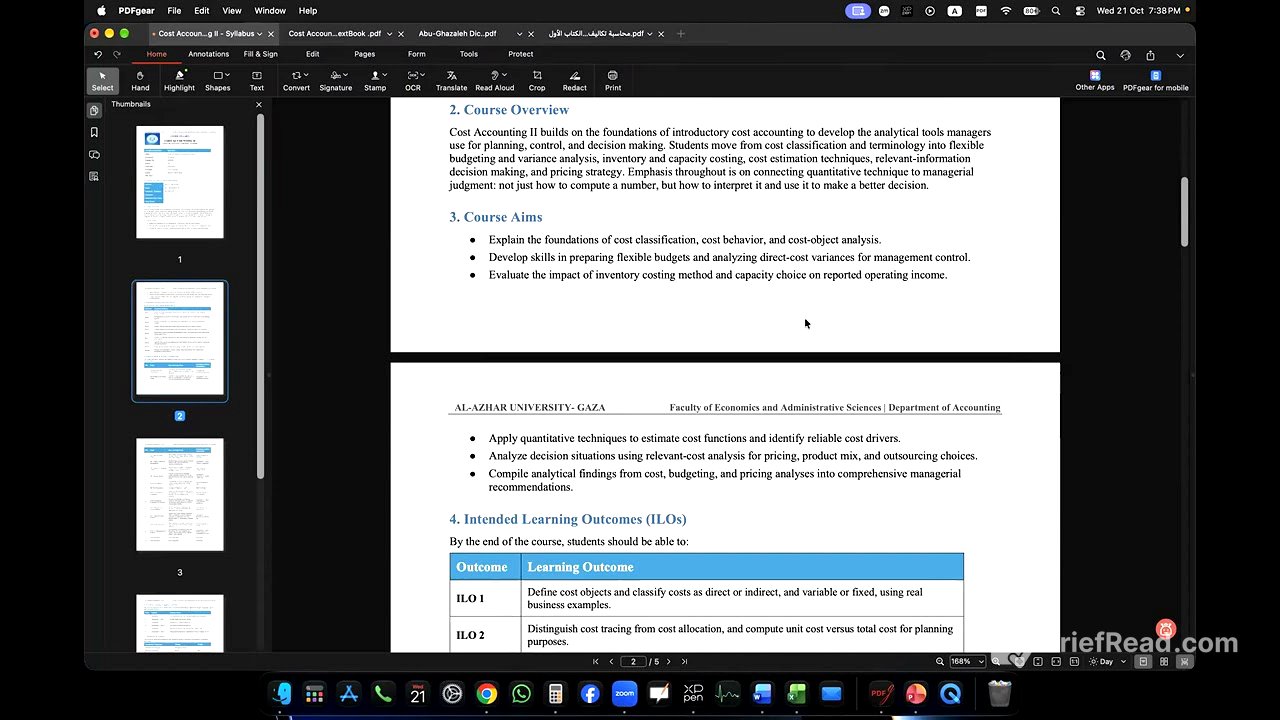
In this video, Dr. Tariq Abu Al-Ajeen introduces the Course: Cost Accounting 2. The lecture covers the course structure, topics to be studied, and assessment methods. The course emphasizes understanding advanced cost accounting topics which are essential for making managerial decisions. The learning outcomes include mastering cost classification, behavior, budgeting, and decision-making techniques.
- Introduction to Cost Accounting 2 and its objectives.
- Overview of advanced topics related to managerial decision-making.
- Learning outcomes include mastering cost classifications and financial analysis techniques.
Introduction to Cost Accounting 2 [0:02]
Dr. Tariq Abu Al-Ajeen welcomes students to the new academic year and introduces the structure of Cost Accounting 2. The course is core and specialized, building upon the foundations of Cost Accounting 1. Students are informed about the topics that will be covered, emphasizing the importance of starting with foundational concepts to ensure a solid understanding moving forward.
Course Overview and Structure [1:00]
The course covers advanced topics that will help students gain insight into the analytical tools used in management accounting. Key focal points include cost classification, terminology related to cost accounting, flexible budgeting, variance analysis, inventory costing, and pricing strategies. These subjects are crucial for assisting management in decision-making processes related to planning, control, and operational efficiency.
Course Goals and Objectives [6:16]
The primary goal of the course is to explain the foundational principles of cost classification, cost behavior, and cost object analysis. Even if students have previously studied similar topics, reiterating these fundamentals is essential for their academic growth. The course also aims to equip students with the necessary skills to apply these concepts in practical situations.
Conceptual Foundation and Key Topics [7:44]
The lecture focuses on important concepts such as flexible budgets and variance analysis. Dr. Tariq explains the significance of understanding inventory costing and various methods for determining these costs. He emphasizes that the choice of costing method significantly impacts financial presentation and decision-making within an organization.
Estimating Costs and Drivers [9:22]
Estimation techniques and cost drivers play a vital role in cost management. The lecture highlights the necessity of using quantitative techniques to support managerial decision-making for cost estimation. Reliable cost drivers are crucial to making informed estimations.
Decision-Making Scenarios [10:17]
Dr. Tariq discusses the importance of analysis for pricing decisions and outsourcing choices. The discussion includes evaluating whether to produce components in-house or source them externally based on cost evaluation. This segment demonstrates how effective analysis influences strategic management decisions.
Learning Outcomes and Course Expectations [12:20]
Students are expected to develop key competencies related to cost concepts, including distinguishing between direct and indirect costs, cost tracing, and allocation. Understanding these principles is essential for accurate cost calculation and effective planning. An emphasis is placed on grasping the necessary knowledge for calculating the cost of goods manufactured and variance calculations.
Evaluation and Resources [23:56]
Dr. Tariq explains the evaluation criteria, which is set at 40% for midterms and 60% for finals. Additionally, he shares that resources such as textbooks and PowerPoint presentations will be provided to support students in their learning, emphasizing the importance of using both the book and supplementary materials for a deeper understanding of concepts.
Conclusion and Future Lectures [26:00]
The session concludes with Dr. Tariq encouraging students to reach out for any clarifications regarding the course. He stresses the importance of linking theoretical knowledge with practical applications to enhance understanding and problem-solving skills in real-world scenarios, setting the stage for future lectures.