TLDR;
Spain’s housing crisis stems from the collapse of the 1990s–2000s property boom, followed by years of insufficient construction as demand increased. High rents and purchase prices, a limited supply of social housing, tourist rentals, vacant homes, and investment speculation have made housing increasingly unaffordable. The crisis hits young people and low-income households especially hard, prompting protests and demands for government action.
- A quarter of Spain’s population struggled to access or keep housing in 2024; millions face overcrowding or possible eviction.
- Rents have risen far faster than wages, while housing construction has not kept pace with household growth.
- Young workers may spend nearly all their average salary on rent, delaying independence and increasing poverty and debt.
The Housing Crisis and the Property Boom [0:00]
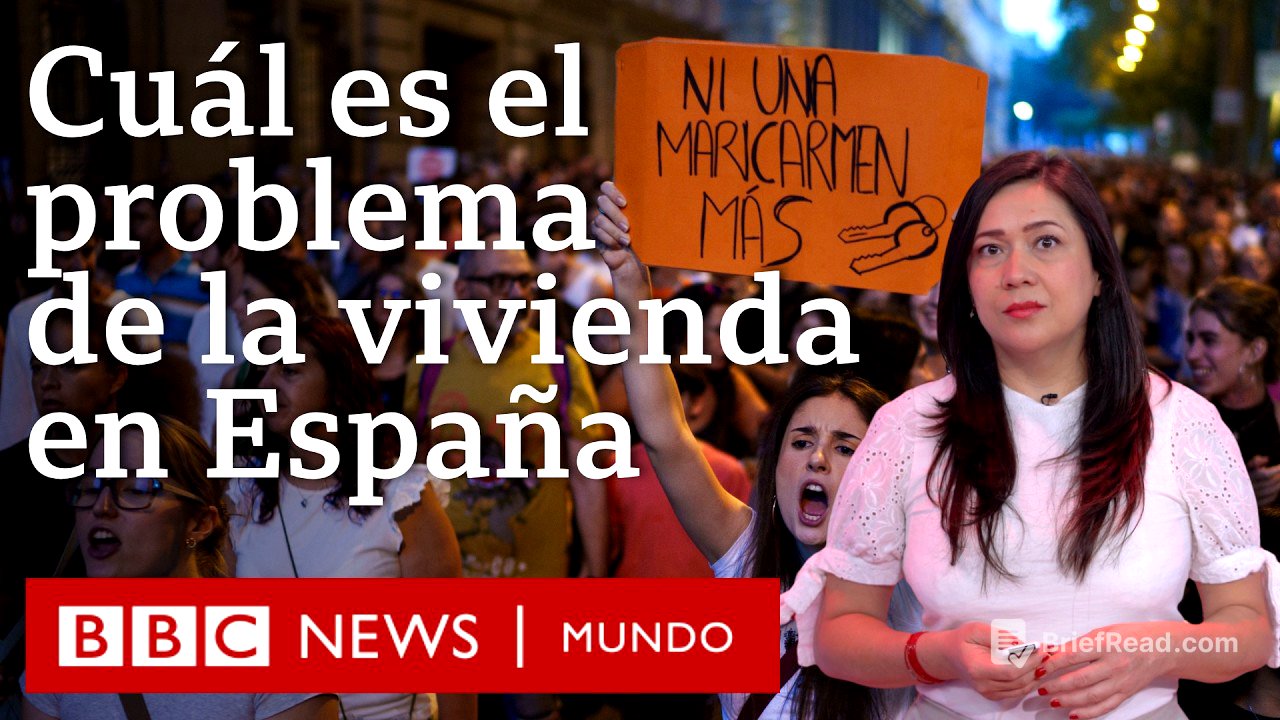
Hundreds of tents in Madrid’s Puerta del Sol symbolize protests over housing, now one of Spain’s leading public concerns. Protesters demand a response from the government led by Pedro Sánchez and argue that housing should be a basic right. In 2024, a Fundación FOESSA survey found that one in four people in Spain had difficulty accessing or maintaining a home. Around 3.4 million people lived in overcrowded conditions, while another three million faced the risk of eviction.
The current crisis follows the collapse of Spain’s property boom. Between 1997 and 2007, the country built as many as five million homes, fueled by low interest rates after adopting the euro, easy access to mortgages, and speculation. A massive expansion of lending to property businesses and homebuyers helped inflate the bubble. When the global financial crisis hit in 2008, Spanish property prices fell by as much as 40%, the market collapsed, and unemployment soared. Many people lost homes they could no longer afford but remained burdened with mortgage debt, and Spain’s recession continued until 2014.
Construction has never returned to boom-era levels, contributing to an estimated shortage of about 750,000 homes. Building remains constrained by a lack of companies and workers, high material costs, and complicated licensing. At the same time, Spain has nearly four million vacant homes, many in smaller towns, while population growth—driven largely by immigration—has created 1.2 million households in five years.
What Is Driving Housing Costs Up? [3:00]
Tourism adds pressure, especially in Barcelona, Málaga, and Mallorca, where more homes are being used for short-term tourist rentals and fewer remain available for permanent residents. Social housing accounts for only 2% of Spain’s homes, compared with an average of 7% across the European Union. Tenant unions and other groups also criticize large investors who buy properties as financial assets, aiming to sell them later at a profit rather than live in them.
Together, these pressures have driven up both rents and purchase prices. Rents increased by more than 90% over a decade, while average wages rose by only 27.8%. The video’s comparison of European housing prices places Spain’s reported 12.8% increase in 2026 behind Portugal, Bulgaria, Slovakia, and Croatia, but more than twice the EU average of 5.1%.
Evictions and the Impact on Young People [4:43]
The eviction of 87-year-old Maricarmen, who has a 50% disability, became a symbol of the crisis and mobilized public support. After protests and negotiations by her lawyer, she reached an agreement with the property owner that allowed her to return home. Her case is not isolated: Spain recorded 25,000 evictions in 2025.
Young people are among those most affected. A working young person would need to spend nearly an entire average salary on housing: the average rent is €1,176 per month, equivalent to 98.7% of a young person’s average salary. After rent is paid, the poverty rate among young people rises from 25.9% to 43%, and nearly half of young renter households are over-indebted. Many therefore continue living with their parents; the average age at which people in Spain move out has passed 30, a record high. The scale of the problem has brought people into the streets and increased pressure on the government to take urgent action. el finalข้อความเต็ม
TLDR;
Spain’s housing crisis grew out of the collapse of the property boom and years of insufficient construction, while demand has continued to rise. Higher rents and home prices, limited social housing, tourist rentals, vacant properties, and investment speculation have made homes increasingly unaffordable. The burden is particularly severe for young people and low-income households, fueling protests and calls for urgent government action.
- In 2024, one in four people in Spain had difficulty accessing or keeping a home; millions faced overcrowding or possible eviction.
- Rents have risen much faster than wages, and housing construction has not kept up with household growth.
- Young renters may spend nearly all their average salary on rent, contributing to poverty, debt, and delayed independence.
The Housing Crisis and the Property Boom [0:00]
Hundreds of tents in Madrid’s Puerta del Sol mark protests over housing, now one of Spain’s main public concerns. Demonstrators are demanding solutions from the government led by Pedro Sánchez and insisting that having a roof over one’s head is a right. A 2024 survey by the Fundación FOESSA found that one in four people in Spain had difficulty accessing or maintaining a home. About 3.4 million people lived in overcrowded conditions, while another three million faced the risk of eviction.
The crisis followed the collapse of Spain’s property boom. Between 1997 and 2007, the country built as many as five million homes, with low interest rates after Spain adopted the euro, easy mortgage access, and property speculation helping fuel construction and prices. Lending to property businesses and homebuyers grew to unsustainable levels. When the global financial crisis hit in 2008, Spain’s housing bubble burst, prices fell by as much as 40%, the market collapsed, and unemployment rose. Many people lost homes they could no longer afford but were left with mortgage debt. The resulting recession lasted until 2014.
Construction has not returned to boom-era levels, and the Bank of Spain and CaixaBank estimate a shortfall of around 750,000 homes. Building is held back by a lack of companies and workers, expensive materials, and complicated licensing. Spain also has nearly four million vacant homes, many in smaller towns, even as population growth—largely driven by immigration—has created 1.2 million households in the past five years.
Tourism, Investment, and Rising Housing Costs [3:19]
Tourism has increased pressure on the housing supply, particularly in Barcelona, Málaga, and Mallorca, where more properties are being used for short-term tourist rentals and fewer are available for permanent residents. Social housing makes up only 2% of Spain’s homes, compared with an average of 7% in the European Union. Tenant unions and other groups also criticize large investors who buy properties to hold for a rise in value and later resell for a profit.
These pressures have driven up both rents and purchase prices. Rents rose by more than 90% in a decade, while average wages increased by only 27.8%. The video reports a 12.8% increase in Spanish home prices in 2026, behind Portugal, Bulgaria, Slovakia, and Croatia but more than twice the EU average of 5.1%.
Evictions and the Impact on Young People [4:43]
The eviction of Maricarmen, an 87-year-old woman with a 50% disability, became a symbol of the housing crisis and prompted widespread public support. After protests and negotiations by her lawyer, an agreement with the property owner allowed her to return home. Her experience is not unique: Spain recorded 25,000 evictions in 2025.
Young people are among the groups most affected. Average rent is €1,176 a month—equivalent to 98.7% of the average salary of a young person. Once rent is paid, the poverty rate among young people rises from 25.9% to 43%, and nearly half of young renter households are over-indebted. Many remain living with their parents; the average age at which people leave home has passed 30, a record high. The worsening conditions have brought people into the streets and increased pressure on the government to act.