TLDR;
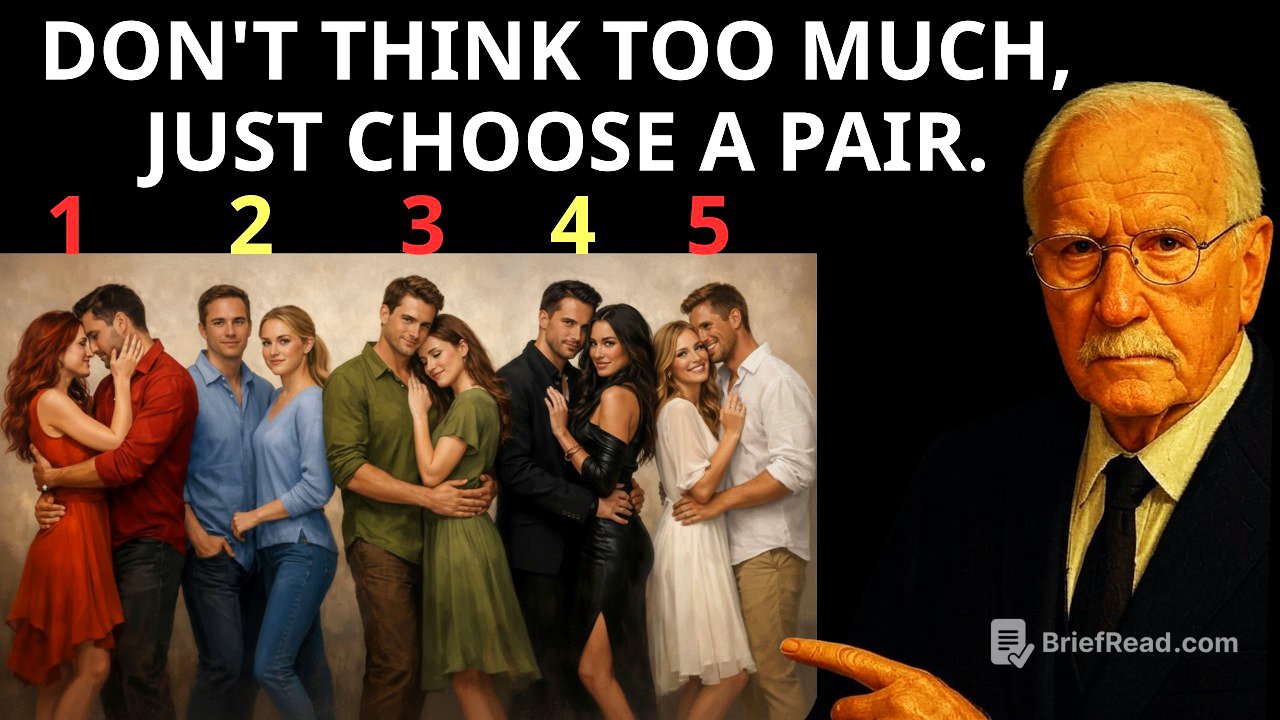
This video explores the subconscious patterns that influence our relationship choices. It presents five different couples, each representing a unique form of connection and emotional bond, and encourages viewers to choose the couple they are most drawn to. The video then analyzes the emotional needs and potential challenges associated with each choice, offering insights into how to love more authentically and address underlying insecurities.
- Decisions are influenced by subconscious patterns and emotional needs.
- Each couple represents a different form of connection and emotional bond.
- Understanding your choice can reveal insights into your emotional world and relationship patterns.
Introduction [0:00]
The video introduces the concept of decisions that arise from a deeper, often unconscious place within us, focusing on choices related to relationships. It encourages viewers to feel rather than analyze their choices, emphasizing that these choices reflect how we love, connect, and the wounds that still affect our relationships. The video presents five couples, each embodying a different form of connection, and stresses that there is no right or wrong choice, nor a need to please anyone else. This exercise serves as a symbolic mirror, reflecting patterns that guide our decisions without our awareness. The key is to identify the couple that elicits an immediate, almost physical response, whether it be calm, attraction, or even discomfort, as these responses are tied to deep emotional needs like security, intensity, control, freedom, harmony, or power, formed long before our adult relationships.
Couple One: Intense Emotional Connection [2:45]
Choosing couple one suggests an intense relationship with emotions, characterized by depth and complete connection. Individuals drawn to this couple feel strongly and quickly, valuing fusion and constant presence in their relationships. Their strength lies in emotional authenticity, avoiding games and masks in their expressions of love. However, this intensity can lead to heightened sensitivity to abandonment, triggering insecurities from subtle changes or distances in the partner. There may be a tendency to confuse love with intensity, finding calm relationships empty. This pattern reflects a deep need for connection, often learned in early life when affection was linked to intense moments. The lesson is to regulate intensity without losing oneself, recognizing that love can also whisper, not just scream, and transitioning from consuming love to sustaining love.
Couple Two: Stability and Reason [5:28]
Choosing couple two indicates a strong value for stability and reason in relationships, prioritizing coherence and emotional security. These individuals exhibit great emotional self-control, preferring to observe and analyze before acting, making them reliable partners who remain steadfast during tough times. However, prioritizing stability can lead to suppressing emotions to avoid conflict, creating subtle emotional distance. This pattern often stems from learning to protect oneself through order, providing safety but potentially missing shared depth. The lesson is to allow oneself to let the guard down in safe moments, realizing that expressing feelings can create connection rather than chaos, leading to a type of love where stability doesn't erase tenderness and emotional growth occurs with honesty.
Couple Three: Harmony and Calmness [8:04]
Choosing couple three reveals a high value for emotional peace and effortless connection in relationships. These individuals seek love that grows quietly over time, valuing empathy and prioritizing the well-being of the connection. Their strength lies in creating a feeling of emotional home, fostering safe and authentic relationships without pressure. However, prioritizing equilibrium can lead to avoiding conflict at all costs, silencing feelings to maintain peace and adapting too much. This pattern often forms in those who grew up seeking stability, where harmony became a form of protection. The lesson is to understand that true growth involves temporary discomfort and that expressing feelings can deepen the connection, marking a turning point where one questions whether harmony can be sustained without losing oneself.
Couple Four: Personal Power and Intensity [11:08]
Choosing couple four suggests a conscious relationship with personal power, valuing internal strength and taking one's place. These individuals possess a marked presence, communicating intensity and determination. They seek challenging connections where they are seen as equals, valuing desire, influence, and the struggle to maintain identity. Their strength lies in inner clarity, knowing their boundaries and avoiding shallow relationships. However, this strength can become a barrier, making it difficult to show vulnerability due to a learned association of vulnerability with losing power. This can create a subtle dynamic of dominance, stemming from a personal history where strength was necessary for emotional survival. The lesson is to discover that true strength doesn't vanish when allowing oneself to feel, learning to love without competing and connecting without measuring control.
Couple Five: Emotional Freedom and Authenticity [14:17]
Choosing couple five indicates a high value for emotional freedom and authenticity in relationships, seeking the freedom to be oneself without fear of losing the connection. These individuals view love as an open space, valuing sharing the journey without losing individuality. Their emotional energy is light and transparent, disliking dynamics filled with drama or control. They seek relationships where breathing comes easily, without needing to prove commitment. Their strength lies in emotional honesty, with clear intentions and genuine choices. However, this lightness can make it difficult to deepen connections when more structure is needed, fearing the loss of essence. This pattern may stem from past experiences where love meant giving up a part of oneself. The lesson is to discover that freedom can exist within commitment, sharing depth without losing lightness, and choosing someone without ceasing to choose oneself.