TLDR;
This video provides an overview of the ongoing negotiations between the US and Iran, facilitated by Pakistan. It covers the secrecy surrounding the talks, the involvement of various international players, and the potential implications for regional stability. Key points include:
- The negotiations are focused on de-escalating tensions and addressing issues like maritime security in the Strait of Hormuz.
- Pakistan's role has evolved from facilitator to mediator, actively involved in guiding the discussions.
- Various countries, including China and Saudi Arabia, are playing significant roles in the region, with potential implications for the negotiations.
Introduction [0:02]
The video begins with an introduction to the current situation, noting that negotiations between the US and Iran are ongoing. The speaker emphasizes the secrecy surrounding the talks, which is a deliberate effort to prevent leaks and maintain control over the narrative. Journalists are being well-cared for but are bored due to the lack of updates.
Secrecy and Lack of Information [0:17]
The speaker highlights the extreme secrecy surrounding the US-Iran negotiations, emphasizing that it's a deliberate strategy to prevent information leaks. Despite some vloggers claiming to have inside information, very few people have access to the details of the discussions. The Strait of Hormuz issue remains a key sticking point in the negotiations.
Official Statements and Media Reports [2:32]
The White House has confirmed that face-to-face negotiations are taking place between the US and Iran. The initial phase involved high-level discussions, followed by technical experts engaging in talks. Iranian news agency Tasnim reported that a round of negotiations facilitated by Pakistan has concluded, with both delegations exchanging text messages. The Iranian side claims that excessive demands from the American team are hindering progress, while reaffirming Iran's commitment to protecting its interests and rights.
Pakistan's Role and International Reactions [4:18]
The Prime Minister of Pakistan has reaffirmed Pakistan's commitment to playing a role as a mediator for regional peace and stability. An Indian professor, Ashok Swain, noted the dignified manner in which Pakistani leaders are hosting the talks, contrasting it with the behavior of Indian Prime Minister Modi. Michael Kugelman, a senior journalist, observed that Pakistan's role has shifted from facilitator to direct mediator and peace negotiator.
Accusations and Counter-Accusations [7:24]
An Iranian spokesperson shared a Washington Post article screenshot, criticizing American officials for accusing Iran of lacking good faith and engaging in extortion. The spokesperson condemned what they see as open calls for violence and assassination against Iranian negotiators in American policy and media circles. Indian media outlets are selectively reporting news to undermine Pakistan's efforts, suggesting that the failure of the talks would negatively impact Pakistan.
Strait of Hormuz and Military Activity [9:35]
American news sources claim that US Navy warships have passed through the Strait of Hormuz, marking the first such passage since the start of the conflict with Iran. The stated purpose is to increase confidence for commercial vessels to safely navigate the route. However, Iranian media claims that US warships were forced to retreat due to threats from Iranian forces. The US Central Command stated that its forces have begun clearing mines in the Strait of Hormuz, with the USS Frankie Peterson and USS Michael Murphy conducting operations to ensure the area is clear of mines previously laid by the Islamic Revolutionary Guard Corps.
Conflicting Narratives and Trump's Claims [11:49]
Iran has denied the American claims about clearing mines in the Strait of Hormuz, asserting that Iranian forces control all maritime movements in the area. Donald Trump claimed that the US is removing mines from the Strait of Hormuz to prevent a major catastrophe, stating that this action benefits many countries. The New York Times reported that US officials are facing difficulties in locating underwater mines, causing delays in reopening the Strait of Hormuz.
Netanyahu's Stance and Security Measures [14:21]
Benjamin Netanyahu has stated that Israel will continue to fight against Iran and its proxies. Extraordinary security measures were taken for the Iranian delegation's arrival in Pakistan, including turning off the transponders on their aircraft. This was done to prevent potential attacks, possibly from Israel, given previous targeting of Iranian leaders.
Symbolic Significance and Delayed Arrival [16:18]
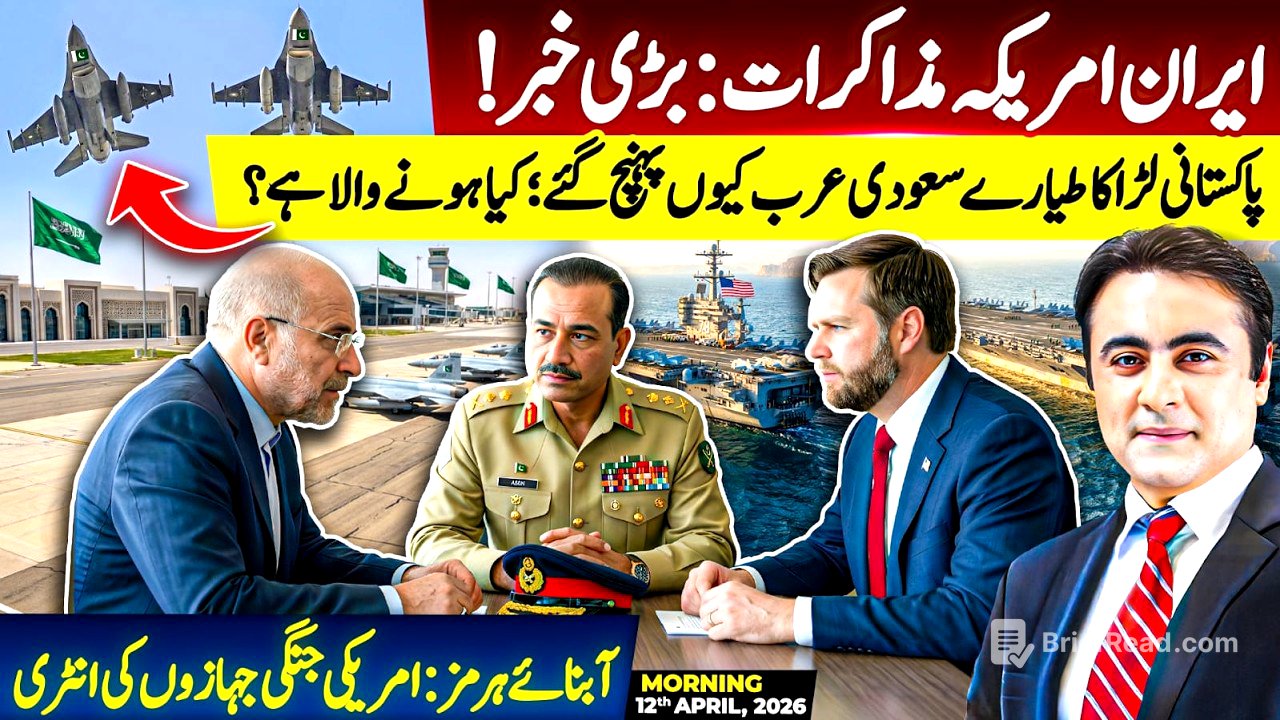
The Iranian delegation is arriving at Nur Khan Airbase, which India previously claimed to have destroyed. This is seen as a symbolic victory for Pakistan, showcasing its role in promoting peace. The American Deputy Secretary's flight was delayed by three hours, leading to speculation and negative commentary from Indian media.
China's Role and Defense Cooperation [17:28]
American intelligence reports suggest that China is preparing to provide Iran with new air defense systems, a move seen as provocative, especially given China's claimed role in mediating the US-Iran conflict. Saudi Arabia's Ministry of Defense announced that a Pakistani military contingent has arrived at King Abdul Aziz Airbase as part of a strategic defense agreement. This is aimed at strengthening military cooperation and promoting regional stability.
Financial Assistance and Conclusion [19:46]
Turkish media reports that Saudi Arabia and Qatar will provide Pakistan with $5 billion to help with its financial challenges. The Saudi Ministry of Finance reportedly met with Prime Minister Shehbaz Sharif to assure Pakistan of financial support due to external pressures and regional tensions. The video concludes with a promise to provide further updates on the negotiations as they become available, focusing on factual information rather than speculation.