TLDR;
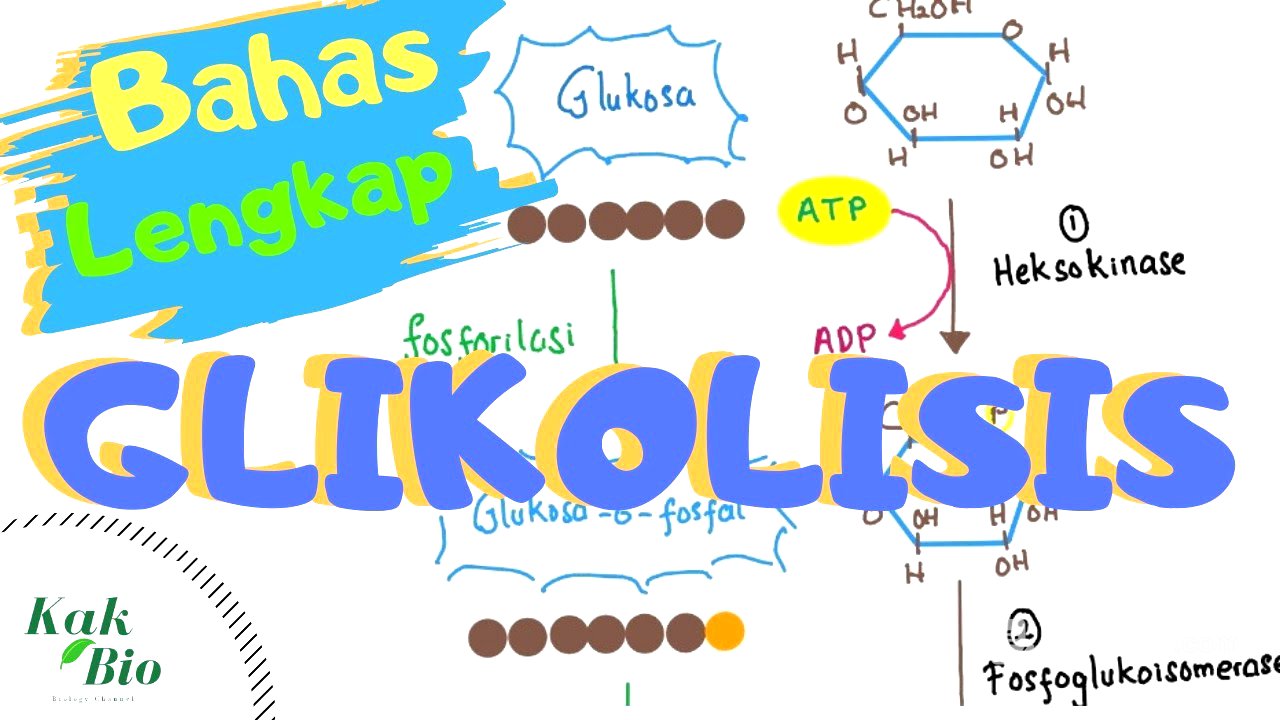
This video explains the aerobic respiration process, particularly focusing on glycolysis, which involves converting glucose into pyruvate. The video details each step of glycolysis, the enzymes involved, and the significance of each reaction.
- Glycolysis transforms glucose into pyruvate, occurs in the cytosol, and involves several steps with specific enzymes.
- The end products of glycolysis include 2 molecules of pyruvate, 4 ATP, and 2 NADH, with a net gain of 2 ATP after accounting for the usage of 2 ATP in earlier steps.
Start [0:00]
The video begins with an introduction to the difference between aerobic and anaerobic respiration, noting that aerobic respiration requires oxygen. It briefly introduces the concept of mitochondria as the cellular organelle involved in aerobic respiration, highlighting glucose as the primary substrate and its origin from food or photosynthesis in plants.
Langkah 1 [6:10]
In the first step of glycolysis, glucose is phosphorylated to form glucose-6 phosphate, which is facilitated by the enzyme hexokinase. This phosphorylation occurs using a phosphate group from ATP, converting it to ADP. The phosphorylation helps to trap glucose inside the cell and increases its reactivity for subsequent reactions.
Langkah 2 [9:56]
In step two, glucose-6 phosphate undergoes isomerization to become fructose-6 phosphate, catalyzed by the enzyme phosphoglucose isomerase. Even though both molecules have the same chemical formula, they have different structural forms, confirming the concept of isomerism.
Langkah 3 [12:35]
Step three involves the phosphorylation of fructose-6 phosphate to form fructose-1,6 bisphosphate, using another ATP molecule. This reaction catalyzed by phosphofructokinase adds a second phosphate to the molecule, preparing it for splitting in the next step.
Langkah 4 [14:27]
The fourth step is lysis, where fructose-1,6 bisphosphate splits into two three-carbon molecules: dihydroxyacetone phosphate and glyceraldehyde-3 phosphate. The enzyme aldolase facilitates this reaction. Isomerase then converts dihydroxyacetone phosphate into glyceraldehyde-3 phosphate, resulting in a net of two glyceraldehyde-3 phosphate molecules available for further reactions.
Langkah 5 [17:43]
In the fifth step, each glyceraldehyde-3 phosphate is oxidized and phosphorylated to form 1,3-bisphosphoglycerate, catalyzed by glyceraldehyde-3 phosphate dehydrogenase. This reaction produces NADH and involves the addition of an inorganic phosphate group.
Langkah 6 [22:33]
The sixth step converts 1,3-bisphosphoglycerate to 3-phosphoglycerate via phosphoglycerokinase, which transfers a phosphate to ADP to produce ATP. This step releases energy and results in 3-phosphoglycerate formation.
Langkah 7 [24:09]
Step seven involves converting 3-phosphoglycerate to 2-phosphoglycerate through the action of phosphoglyceromutase. This is an isomerization reaction that relocates the phosphate group from the third to the second carbon.
Langkah 8 [25:33]
During the eighth step, 2-phosphoglycerate undergoes dehydration to form phosphoenolpyruvate, facilitated by the enzyme enolase. This reaction releases a water molecule and prepares phosphoenolpyruvate for the final transformation.
Langkah 9 [26:58]
Finally, in step nine, phosphoenolpyruvate is converted to pyruvate by transferring a phosphate to ADP to produce ATP, catalyzed by pyruvate kinase. This step releases energy and yields two molecules of pyruvate, completing glycolysis.
Produk Akhir dari Glikolisis [28:54]
The end products of glycolysis result in 2 molecules of pyruvate, a net gain of 2 ATP (4 produced minus 2 used), and 2 NADH. Pyruvate will then proceed to the next stage of aerobic respiration, known as oxidative decarboxylation, leading to the Krebs cycle discussed in a follow-up video.



![Why The Titans Used The Hizack [Question of the Week]](https://wm-img.halpindev.com/p-briefread_c-10_b-10/urlb/aHR0cDovL2ltZy55b3V0dWJlLmNvbS92aS92dEJJMWV0V0xCSS9ocWRlZmF1bHQuanBn.jpg)