TLDR;
The video discusses the significance of milk and milk products in human nutrition. Key points include:
- Major components of milk include proteins, fats, carbohydrates, vitamins, and minerals.
- Various types of processed milk and their nutritional significance are outlined.
- The preparation of common milk products such as curd, paneer, butter, ghee, and cheese is explained, along with their roles in cooking.
Introduction to Milk and Its Components [0:00]
The lecturer introduces the importance of milk and its products in nutrition, mentioning that at the end of the session, students should be able to describe the major components of milk, evaluate its nutritional significance, classify types of processed milk, and explain pasteurization methods.
Nutritional Value of Milk [1:30]
Milk is presented as a complete food source with essential proteins, fats, carbohydrates, vitamins, and minerals. Key details include the primary protein in milk (casein), the fat content which varies between cow and buffalo milk, and the presence of lactose as the sugar in milk. It notes important minerals such as calcium and the vitamins provided by milk, while highlighting that milk is a poor source of iron and vitamin C.
Comparative Analysis of Milk Products [4:22]
Nutritional values of various milk products like cow's milk, buffalo's milk, curd, and paneer are compared. Paneer has the highest energy content at 265 kcal per 100 grams, while buffalo milk has the highest protein content at 43 g. The fat content also varies significantly, with paneer leading in fat content. A detailed comparison table outlines these values.
Types of Processed Milk [8:10]
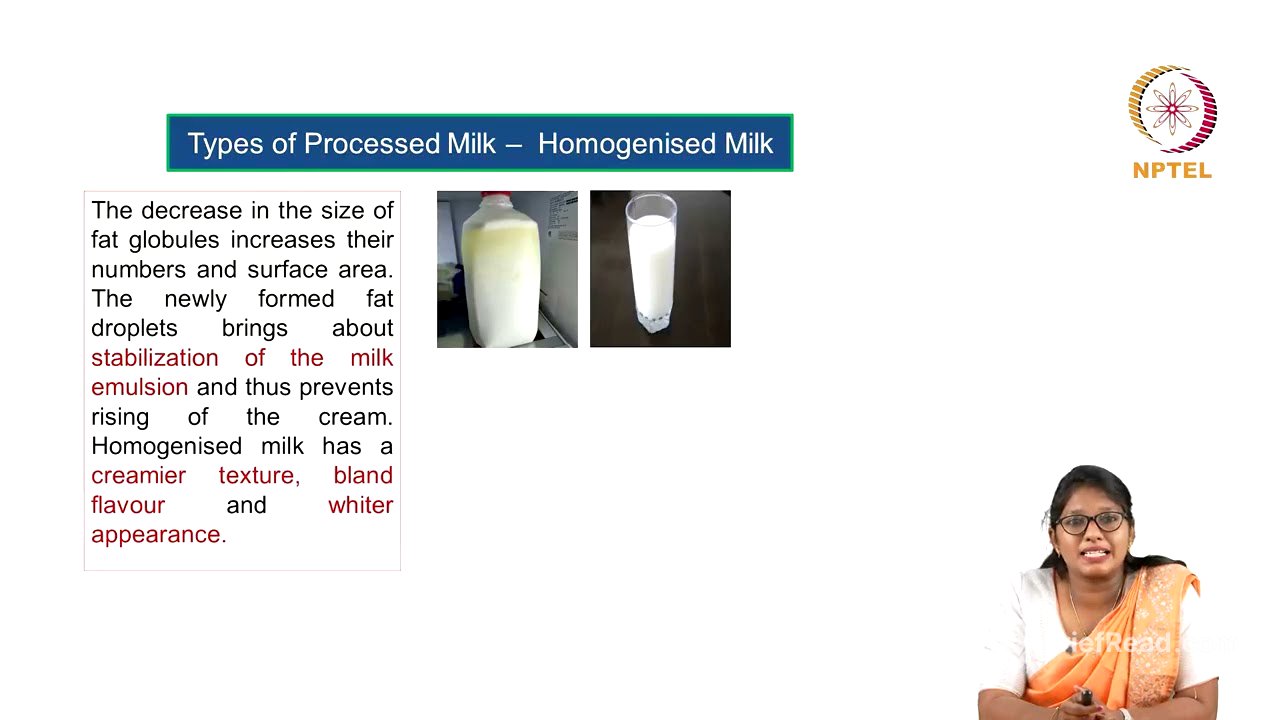
The video explains different types of processed milk available in the market. Skim milk, from which fat is removed, contains minimal fat. Toned milk is a mixture of skimmed milk powder and buffalo milk, designed to contain about 3% fat. Standardised milk maintains a fat content of 4.5%. Homogenised milk is mechanically processed to reduce fat globule size for stability, and evaporated milk is produced by removing excess water under vacuum.
Pasteurization Techniques [12:20]
Pasteurization is described as a crucial process for ensuring milk safety by destroying pathogenic bacteria. The methods discussed include the holding method (62.8°C for 30 minutes), high-temperature short-time (HTST) method (71.7°C for 15 seconds), and ultra-high temperature pasteurization (93.4°C for 3 seconds). Each method aims to maintain the nutritional value of milk while extending its shelf life.
Preparation of Common Dairy Products [15:42]
Common milk products such as kova, cream, butter, ghee, paneer, cheese, curd, and yogurt are discussed. Each product's preparation method and culinary uses are explained. For instance, butter is made by churning cream, while paneer is made by curdling hot milk with lemon juice. The role of these products in Indian cuisine is emphasised, noting their use in various dishes and their nutritional benefits.
Role of Milk in Cooking [23:38]
The video highlights milk's versatile use in cooking, including its role in enhancing the flavour and nutritional value of dishes like milkshakes, soups, and desserts. It mentions milk's contribution as a leavening and marinating agent in various recipes, thereby demonstrating its importance in culinary applications.
Conclusion and Key Takeaways [27:26]
Milk and its products are rich in essential nutrients such as calcium and high-quality protein. However, they are low in iron and vitamin C. The importance of fortification to address these deficiencies is discussed, along with the benefits of processed milk types and the pasteurization process in prolonging shelf life and ensuring safety.