TLDR;
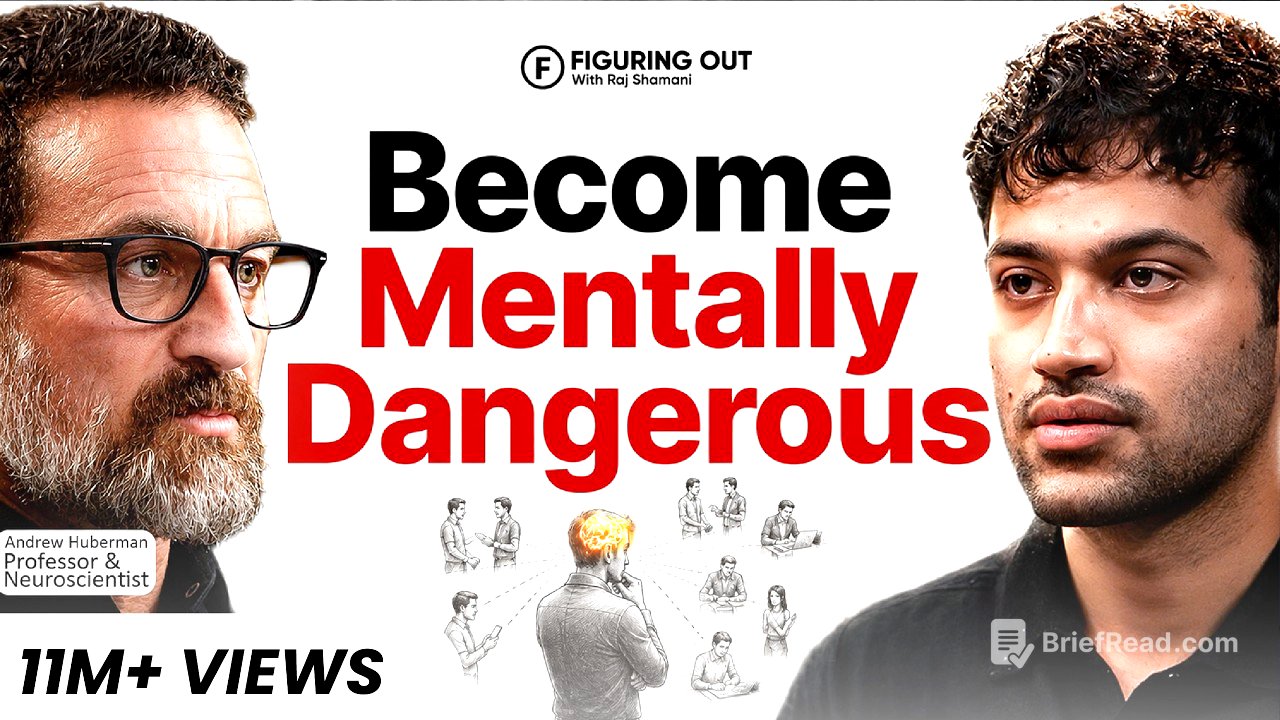
The video features a conversation with Andrew Huberman, a neuroscientist who shares insights on optimizing mental and physical performance. Key points include the significance of managing cortisol levels, the importance of understanding oneself for reaching potential, and practical methods for overcoming challenges such as overthinking and pressure.
- Managing morning cortisol levels can enhance performance and resilience.
- Breathing techniques and yoga nidra can aid in relaxation and sleep.
- Building courage and resilience involves taking incremental steps and engaging in discomfort.
Intro [0:00]
The video begins with a brief introduction to the importance of mental health and performance optimization. The host introduces Andrew Huberman, emphasizing his expertise in neuroscience and its application to everyday life.
Who Is Andrew Huberman? [2:53]
Andrew Huberman describes his background, highlighting his role as a professor at Stanford University and his experience in neuroscience. He discusses his podcast, Huberman Lab, which covers various topics related to brain science, mental health, and performance optimization.
The Morning Cortisol Hack [6:16]
Huberman explains the significance of maintaining high cortisol levels in the morning for improved energy and focus throughout the day. He recommends getting bright light exposure within the first hour of waking and engaging in physical activity to boost morning cortisol levels effectively.
How HRV Works & the Power of Breathwork [17:37]
The concept of Heart Rate Variability (HRV) is introduced, illustrating how breathwork can help alleviate stress and improve HRV. Huberman discusses the physiological effects of breathing patterns and their role in managing stress and emotional well-being.
The Simple Trick to Stop Overthinking [24:01]
Huberman shares a technique to prevent overthinking by directing attention away from ruminative thoughts. Strategies such as focusing on breathing and engaging in physical activities are suggested to shift the mind away from negative thought patterns.
Yoga Nidra, Sleep & How to Fall Asleep Faster [31:02]
This chapter covers the benefits of Yoga Nidra, a guided relaxation practice that promotes deep rest and enhances sleep quality. Huberman offers practical tips for implementing this technique to aid in getting better sleep.
Sleep, Ashwagandha, Nicotine & Cortisol: The Truth [36:46]
The conversation shifts to discuss the roles of sleep and substances like Ashwagandha and nicotine in cortisol regulation and overall health. Huberman explains how each element impacts sleep and stress responses.
“Know Thyself”: The Key to Reaching Your Potential [44:37]
Huberman emphasizes the importance of self-awareness in personal growth and achievement. Understanding one’s strengths and weaknesses is framed as essential for maximizing potential and achieving desired outcomes.
How Much Real Work Can You Sustain Every Day? [51:45]
The discussion focuses on the sustainable amount of work one can handle each day. Huberman underscores the need for balance, rest, and recovery to maintain long-term productivity and well-being.
The 3-Stage Career Framework: Grind, Regulate & Master [54:12]
Huberman outlines a three-stage model of career development that includes intense effort, period management, and mastery of skills. This framework offers a roadmap for individuals pursuing professional growth.
Why Great Performers Follow People, Not Inspiration [1:02:30]
The idea is shared that successful individuals tend to seek mentorship and guidance from those they admire rather than relying solely on abstract inspiration. The importance of fostering relationships is highlighted.
Why Fame Can Destroy Performers [1:11:27]
Huberman discusses the darker side of fame and how it can negatively impact individuals, including mental health challenges and pressures that arise from public scrutiny.
The “Gas Pedal” Framework: Push Hard Without Burning Out [1:16:44]
This framework emphasizes pushing one’s limits while maintaining self-care practices to prevent burnout. Huberman elaborates on managing energy levels effectively.
The Neuroscience of Choking Under Pressure [1:24:26]
Huberman explains the neuroscience behind choking in high-pressure situations, detailing how stress and overthinking can hinder performance. Strategies for dealing with pressure are also discussed.
The “Committee” Method for Better Life Decisions [1:32:35]
The “Committee” method involves gathering trusted individuals to discuss and provide diverse perspectives on significant life decisions, enabling better outcomes through collaborative input.
Is Your Brain Built for Survival or Success? [1:34:53]
This segment addresses the brain's evolution in relation to survival and success. Huberman explains the neurological underpinnings that shape how we respond to challenges.
How to Actually Learn From Podcasts & Books [1:38:00]
Huberman shares effective strategies for extracting knowledge from podcasts and books, emphasizing the importance of active engagement and reflection to enhance learning retention.
When Wellness Becomes the Problem [1:41:46]
The conversation explores the potential negative aspects of wellness culture where excessive focus on health can create anxiety, detracting from overall well-being.
Can People Build Courage? [1:43:19]
Huberman addresses the concept of courage, emphasizing that it can be cultivated through incremental challenges and facing discomfort over time.
Top 3 Mental Games to Build Resilience [1:50:08]
Three mental techniques to build resilience are shared: doing a 10-breath meditation upon waking, challenging oneself physically during workouts, and broadening focus during stressful situations to reduce anxiety.
How to Turn Other People's Energy Into Motivation [1:59:19]
Huberman explains how individuals can harness the energy and motivation from others to enhance their own performance, promoting collaboration and energy exchange.
Losing Three Mentors: How He Processes Grief [2:03:35]
Huberman shares his experiences of losing mentors and how he processed grief, emphasizing the importance of acknowledging loss and finding ways to honor their memories.
Winners vs. Losers: How You Respond to Life [2:06:04]
The contrast between winners and losers is explored as Huberman discusses how responses to challenges shape outcomes and the importance of mindset in navigating life’s hurdles.
What to Do When You Hit Rock Bottom [2:12:06]
Huberman offers advice for individuals facing tough times, highlighting the importance of reaching out for help and focusing on small steps toward recovery and improvement.
Why Immigrants & Their Children Often Develop Extraordinary Drive [2:16:49]
The discussion examines the motivation and work ethic often exhibited by immigrants, tying it to their experiences of opportunity recognition and resourcefulness.
Can Hardship Actually Rewire Your Brain? [2:20:53]
Huberman explains how enduring hardship can lead to neurological changes, potentially fostering resilience and adaptability when challenged in life.
AI, Social Media & Screen Time: His Honest Take [2:23:53]
The impact of AI and social media on cognitive and emotional health is discussed, stressing the importance of mindful consumption habits to counteract potential negative effects.
Stop Being a Consumer: Become the Producer [2:25:56]
Huberman motivates viewers to shift from being passive consumers to active creators in their lives, encouraging engagement in meaningful activities that foster growth and fulfillment.
Why Is Love Difficult to Understand? [2:30:00]
The complexities of love are analyzed as Huberman addresses the emotional challenges that arise in romantic relationships, emphasizing the interplay of connection and personal growth.
When Has He Felt the Most Powerless? [2:34:22]
Huberman reflects on moments of powerlessness in his life, sharing personal challenges and the growth that followed those difficult experiences.
The Cost of Being Andrew Huberman [2:41:28]
Huberman discusses the emotional toll associated with high ambition and the struggles of balancing intense personal drive with maintaining relationships and well-being.
Outro [2:46:17]
The video concludes with a recap of the discussion and an encouragement for viewers to take insights learned and apply them to their personal journeys.