TLDR;
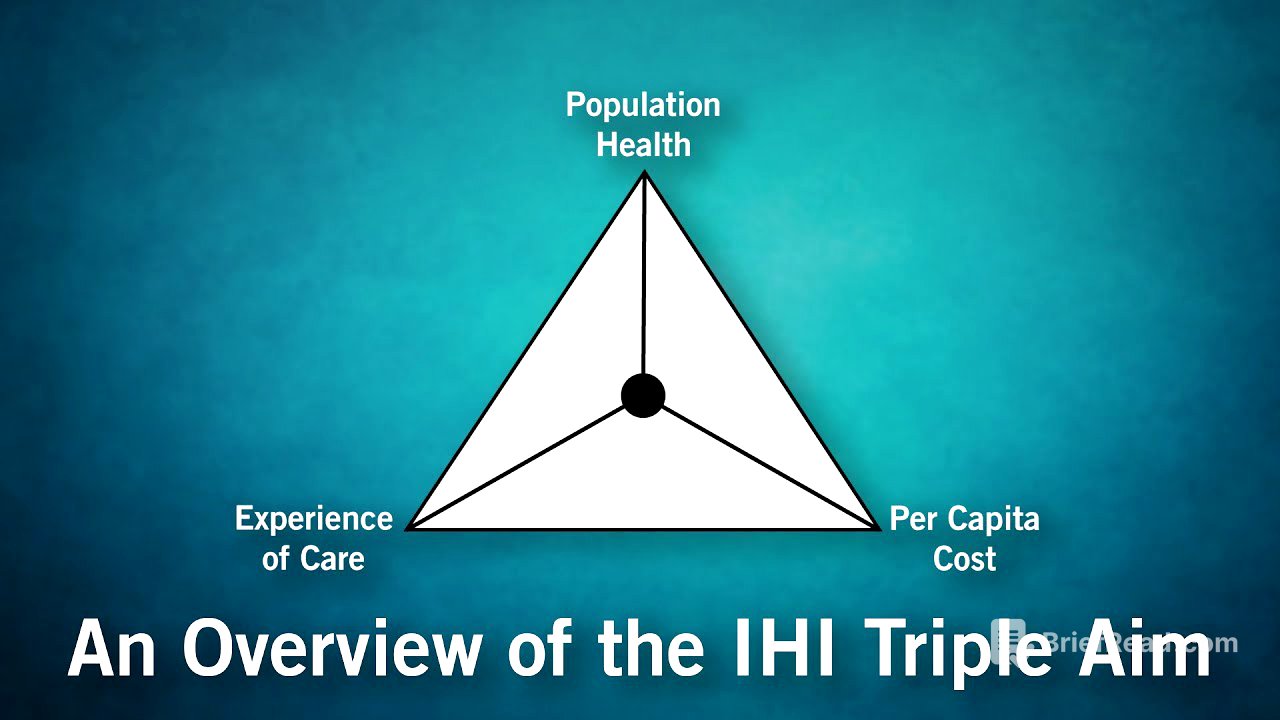
The Triple Aim, conceived by John Whittington and Tom Nolan in 2006, provides a framework for optimizing healthcare by focusing on three key dimensions: improving the individual experience of care, enhancing the health of the population, and reducing per capita costs. It addresses the limitations of previous approaches that primarily focused on the quality of care provided to individuals when they need it, as highlighted in the Institute of Medicine report "Crossing the Quality Chasm." The Triple Aim broadens the scope to include preventative care and societal needs beyond healthcare, such as education and infrastructure.
- The Triple Aim consists of three dimensions: improving the individual experience of care, enhancing the health of the population, and reducing per capita costs.
- It addresses the limitations of previous approaches that primarily focused on the quality of care provided to individuals when they need it.
- The Triple Aim broadens the scope to include preventative care and societal needs beyond healthcare.
The Genesis of the Triple Aim [0:08]
In 2006, John Whittington and Tom Nolan introduced the Triple Aim, intending to define the objectives of healthcare in a concise manner. Before this, the Institute of Medicine's report, "Crossing the Quality Chasm," outlined six dimensions of quality, including safety, effectiveness, patient-centeredness, timeliness, efficiency, and equity. While these dimensions were crucial for individuals receiving care, Whittington and Nolan argued that they only addressed one aspect of healthcare.
The Three Dimensions of the Triple Aim [1:06]
Whittington and Nolan identified a second critical aim: the health of the population. They emphasized that healthcare should not only focus on treating illnesses but also on preventing them. The causes of illness often lie outside of healthcare, so society needs to help people stay healthy. The third aim they introduced was reducing per capita cost, recognizing that societal needs extend beyond healthcare, including education, infrastructure, and economic competitiveness.
The Triple Aim as a Complete Statement [2:06]
The Triple Aim—better care for individuals, improved population health, and lower per capita cost—serves as a comprehensive statement of the social need that healthcare aims to fulfill. It acts as a compass, guiding efforts toward success by balancing the provision of quality care with the broader needs of society and the importance of preventative health measures.