TLDR;
This video by Tony Polecastro highlights four common mistakes that beginners make when learning guitar, which can hinder progress and lead to frustration. The aim is to help learners avoid these pitfalls and improve their skills efficiently. A bonus tip regarding chord playing is also included.
- Mistake 1: Using a poorly set-up guitar.
- Mistake 2: Playing with excessive tension.
- Mistake 3: Having improper fretting technique.
- Mistake 4: Incorrect pick technique.
- Bonus Tip: Utilizing partial chords for easier play.
Mistake 1: Guitar Setup [0:02]
Many beginners struggle with guitar because of their instrument's setup. A guitar that is too big, has high action, or is poorly adjusted can make playing more difficult and uncomfortable. It’s crucial to ensure the guitar is the right size and to get it properly set up. Investing around $50 in a basic setup can significantly improve playability.
Mistake 2: Excessive Tension [2:33]
Holding tension in your hands, shoulders, or body while playing can slow down progress and cause discomfort. Beginners often grip the guitar too tightly, leading to hand cramps and a struggle to play. Learning to relax while playing can improve technique and prevent injury. Checking in with your body and practicing relaxation techniques is essential.
Mistake 3: Improper Fretting Technique [4:50]
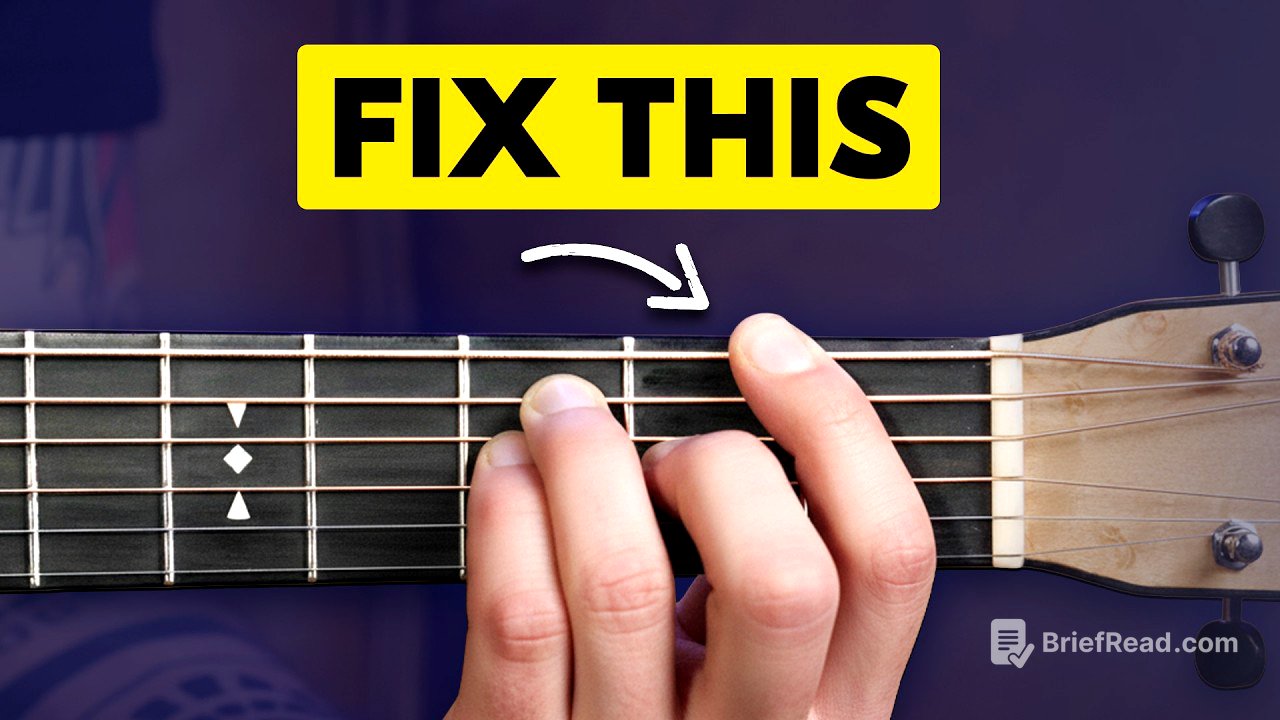
Having the correct fretting technique is vital for producing clean notes. Beginners often fret too far from the intended fret, use the pad of their finger instead of the fingertip, or apply too much or too little pressure. Following a checklist that includes fretting in the sweet spot, arching fingers correctly, and applying optimal pressure can help produce clearer sound.
Mistake 4: Incorrect Pick Technique [6:55]
Improper pick technique can lead to clunky playing and decreased fluidity. Beginners often grip the pick too tightly without the necessary looseness. Using a proper grip angle, relaxing the wrist, and maintaining tension-free movements with the picking hand can enhance playing style. It’s important to practice these techniques for better picking performance.
Bonus Tip: Using Partial Chords [9:00]
Beginners often feel pressured to play full chords accurately but can make progress by playing partial chords. This method allows players to focus on a few strings, making it easier to engage with songs they enjoy. By practicing variations, they can ease into playing full chords over time, making the learning process more enjoyable.