TLDR;
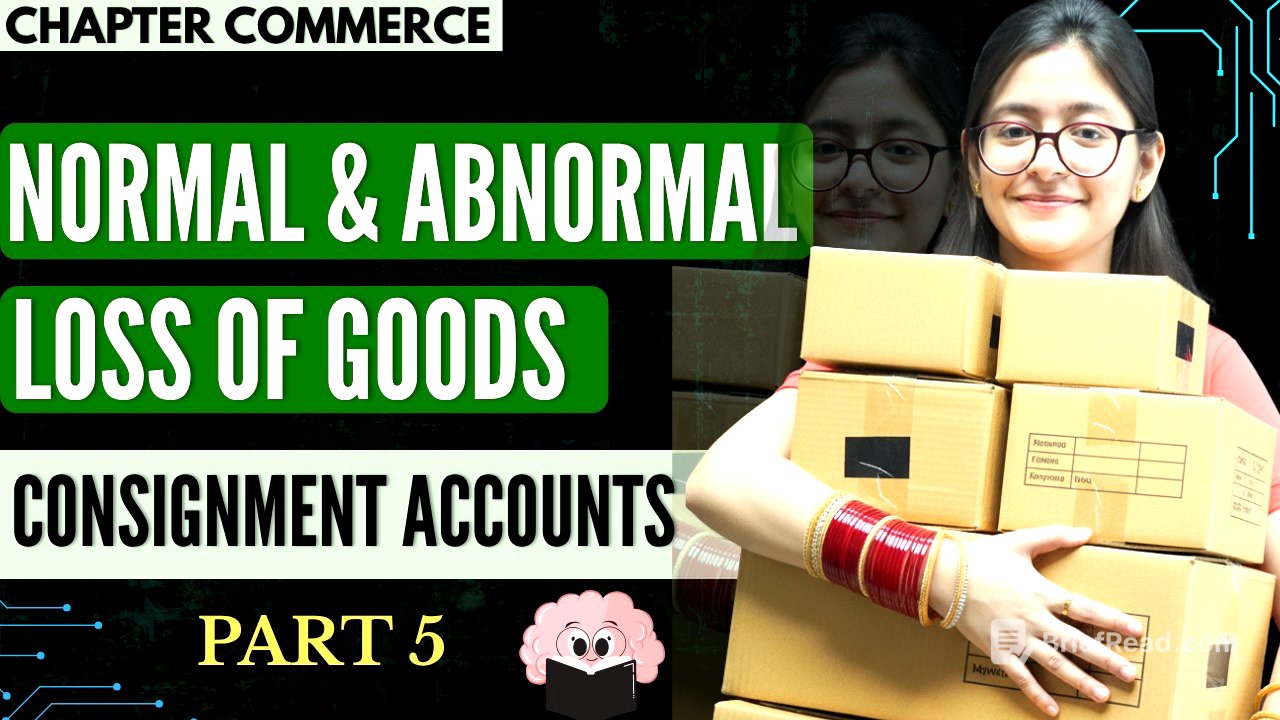
The video focuses on accounting for consignment losses, specifically normal and abnormal losses of goods. It explains the definitions, accounting methods, and provides examples to illustrate how these losses affect financial statements.
- Normal losses are unavoidable and uncontrollable, while abnormal losses can be mitigated with precautions.
- The accounting treatment for each type of loss differs, with abnormal losses requiring specific entries in the consigner's books only.
Introduction to Consignment Accounts [0:00]
The presenter, Purnima, welcomes viewers back to her channel, Chapter Commerce, introducing the topic of consignment accounts, particularly focusing on normal and abnormal loss of goods.
Understanding Normal Loss [0:32]
Normal loss refers to losses that are natural and unavoidable in the course of sending goods on consignment. Examples include losses during loading/unloading and evaporation of goods. Normal loss does not require separate journal entries as it is automatically accounted for by adjusting the cost per unit of goods remaining.
Accounting for Normal Loss [2:00]
When calculating the cost associated with normal loss, losses are deducted from the total quantity sent. The unit cost of goods increases due to the reduced quantity, and recovery for these losses is managed by charging the customers slightly more, which helps cover the loss.
Introduction to Abnormal Loss [4:40]
Abnormal loss, unlike normal loss, is avoidable and can occur due to theft, fire, or accidents. This type of loss must be recorded in the consigner's books but not in the consignees. The presentation describes the process of calculating and accounting for abnormal losses.
Accounting Entries for Abnormal Loss [8:10]
When an abnormal loss occurs, the accounting treatment involves debiting the abnormal loss account and crediting the consignment account. If an insurance claim is made for the loss, the entries reflect the receivable from the insurance company.
Examples of Calculating Losses [10:00]
The presenter illustrates the concepts with practical examples, detailing calculations for both normal and abnormal losses, including the steps for deriving the costs and making necessary adjustments in the financial statements.
Final Considerations and Conclusion [14:00]
In conclusion, the video emphasizes the importance of understanding both types of losses in consignment accounting. A call to action encourages viewers to practice the concepts learned with homework and assures them that any doubts can be clarified through comments or direct messages.