TLDR;
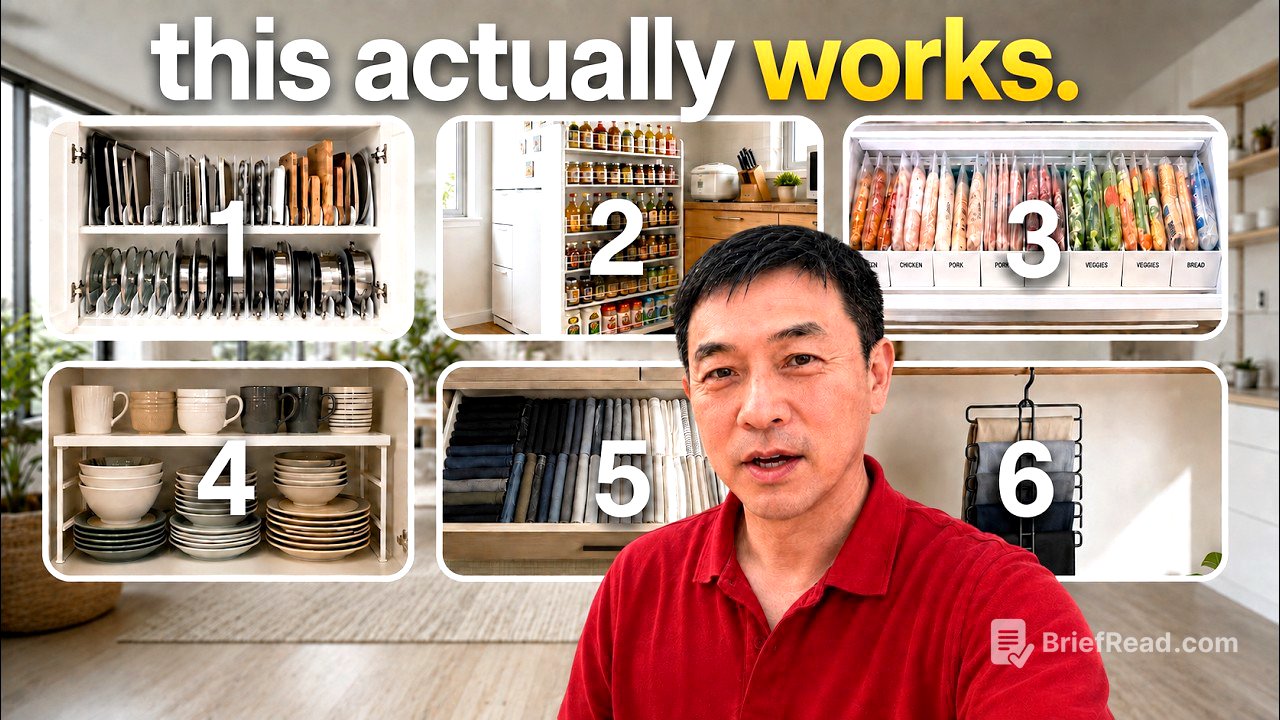
This video explores 11 Japanese organization rules that Americans often overlook, resulting in messy and cluttered homes. By implementing these rules, individuals can enhance the efficiency of their living spaces and minimize clutter.
- Japanese homes utilize vertical space for storage.
- The way items are organized promotes visibility and accessibility.
- Specific solutions such as clear bins, dividers, and gap furniture improve organization.
Japanese Home Rules [0:00]
The video begins by outlining how 11 Japanese organization rules are often broken by Americans, contributing to cluttered homes. The presenter highlights that Japanese organization systems keep homes tidy by preventing messiness from building up.
Rule 1: Folding Clothes [0:43]
The first rule involves folding clothes into small rectangles and storing them upright in drawers. This method allows for visibility of each item, reducing the likelihood of forgetting garments hidden at the bottom of a stack. In contrast, Americans tend to stack clothes flat, which makes it harder to see them all at once.
Rule 2: Cabinet Organization [1:57]
The second rule addresses kitchen cabinet organization. In Japan, flat items like baking sheets and cutting boards are stored upright in their own slots, while American cabinets often have items stacked in a cluttered pile. Using file holders can effectively organize these cabinets and make access easier.
Rule 3: Counter Space Management [3:13]
The third rule discusses keeping kitchen counters clear. Japanese kitchens utilize wall-mounted storage for utensils and tools, while American counters are cluttered with appliances and miscellaneous items, limiting usable space. By moving items to the wall, Americans can reclaim their counter space.
Rule 4: Shelf Clearance [4:53]
The fourth rule focuses on shelf height in cabinets. Japanese homes set shelves based on the height of the items they hold, ensuring no unnecessary space is wasted above. Americans typically have standardized shelf heights, leading to wasted vertical space. Implementing shelf risers can solve this issue.
Rule 5: Freezer Visibility [6:10]
The fifth rule emphasizes the importance of visibility in freezer organization. In Japanese freezers, items are stored upright and labeled, making it easy to see what is inside. Conversely, American freezers often contain items stacked flat, leading to duplicate purchases of items already owned.
Rule 6: Junk Drawer Management [7:34]
The sixth rule pertains to the infamous junk drawer. Japanese homes use compartmentalized drawers for organization, while American homes often use undivided drawers that become disorganized over time. Adding dividers can help ensure every object has its designated space.
Rule 7: Furniture Design [8:58]
The seventh rule deals with furniture choices. Japanese furniture tends to be tall and slim, maximizing vertical space, while American furniture is often wide and low. Using tall, slim storage units allows better use of cubic space in a room, decreasing clutter.
Rule 8: Closet Organization [10:48]
The eighth rule highlights closet efficiency. Japanese closets utilize multi-layer hangers to maximize rail space, while American closets often have empty air above the hangers. Utilizing multi-layer hangers and shoe racks can increase storage capacity significantly.
Rule 9: Clear Containers [12:01]
The ninth rule focuses on pantry organization. Japanese pantries use clear containers with visible labels for easy navigation, whereas American pantries often contain opaque containers that hinder visibility. Switching to clear containers can help everyone in the household locate items easily.
Rule 10: Consistent Storage Solutions [13:22]
The tenth rule discusses the purchasing approach to storage. In Japan, storage solutions are bought systematically based on measurements, whereas Americans often buy containers reactively during organization spurts. Consistent storage solutions lead to better organization overall.
Rule 11: Utilizing Gaps [14:53]
The eleventh rule encourages the use of gap spaces in homes. These small spaces between furniture can be used for storage, like gap furniture, which is designed to fit into these nooks. Utilizing these spaces can help reduce financial waste by making use of areas typically neglected.
Bonus: The Genkan Entryway [16:08]
Lastly, the video discusses the Japanese entryway, known as the genkan, which serves to organize items immediately upon entering the home. This zone allows for the effective management of coats, bags, and keys, preventing clutter from spreading into the rest of the house. The implementation of this concept leads to a more orderly home environment.