TLDR;
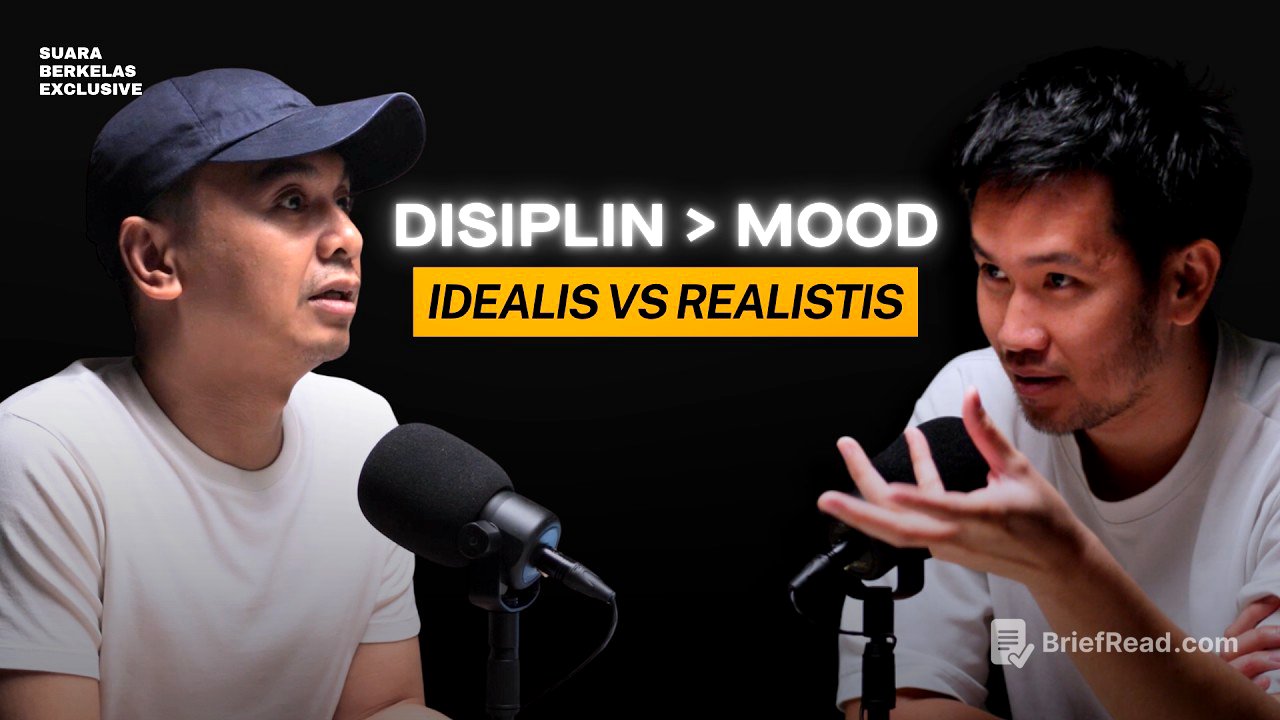
This podcast episode features Raditya Dika discussing the creator economy, offering advice for creative individuals, and sharing personal experiences. Key points include overcoming the myth of needing "mood" to create, the importance of development and criticism in creative processes, understanding compounding returns in finance for personal wealth, and managing expectations when selling digital products. Raditya emphasizes the significance of creating valuable content and not being afraid of negative feedback.
- Overcoming creative blocks by dismissing the need for perfect mood.
- The crucial role of development and accepting criticism in refining creative work.
- Applying financial concepts like compounding returns to personal wealth.
- Managing audience expectations to avoid buyer's remorse in digital product sales.
- Focusing on the value provided to customers to confidently sell creative work.
Overcoming the Myth of "Mood" in Creative Work [0:11]
Raditya Dika challenges the notion that creative work depends on being in the right "mood." He recounts advice from his writing mentor, who told him not to be "whiny" and to overcome the need for specific conditions to create. Raditya emphasizes that blaming a lack of mood is just an excuse and that consistent productivity comes from dismissing this dependency. He stresses that producing something imperfect is better than creating nothing at all, as even flawed work can be improved over time.
Dealing with Rejection and Maintaining Motivation [4:11]
Raditya discusses how to handle rejection, especially for younger creatives who are often driven by ego. He suggests that instead of letting ego dictate their reactions, they should challenge themselves not to be defeated by their own limitations. He shares his personal experience of having his early work critiqued and how it motivated him to improve rather than give up.
The Importance of Development in the Creative Process [5:34]
Raditya identifies development as the most crucial aspect of any creative process. He explains that development involves sharing ideas and being open to criticism from others. He uses examples from his book writing, YouTube content creation, and stand-up comedy to illustrate how collaboration and feedback enhance the final product. He underscores that even solo performances benefit from a development process involving trusted advisors.
The Role of Criticism in Development [7:37]
Raditya emphasizes that the ability to accept criticism is essential during the development phase. He mentions that writing classes often start with peer reviews to teach students how to handle feedback. He warns against creatives becoming too attached to their work, viewing it as something that cannot be altered or criticized, which ultimately hinders growth and fresh perspectives.
Applying Financial Concepts to Creative Careers [8:58]
Raditya, with his finance background, suggests that understanding the concept of compounding returns can significantly benefit creative professionals. He explains that compounding applies not only to financial investments but also to relationships and skills. He advises focusing on activities that yield compounding returns over time, such as building trust with partners or consistently improving one's craft.
Patience and Compounding Returns [11:12]
Raditya addresses the challenge of waiting for compounding returns to materialize, acknowledging that it requires patience and discipline. He argues that the world doesn't revolve around individual desires and that some things, like the benefits of compounding, take time. He shares his personal experience of saving and investing from a young age, emphasizing that delayed gratification is necessary to reap the rewards of compounding.
The Value of Education and Classes in the Age of Free Information [12:31]
Raditya explains why he invests in classes despite the abundance of free information available online. He argues that paying for a class ensures a higher level of professionalism and dedication from the instructor. The money invested allows instructors to conduct thorough research, hire assistants, and create a structured learning environment. He also points out that paying for expertise provides access to unique insights and experiences that are not available for free.
Balancing Budget and Value in Education [16:02]
Raditya acknowledges that not everyone can afford expensive classes and that free resources are valuable. He shares his personal experience of deciding against a $2,000 course because he felt it was beyond his budget, opting instead for a more affordable book by the same author. He emphasizes that the decision to invest in education depends on individual circumstances and perceived value.
The Creator's Perspective on Selling Digital Products [21:21]
Raditya explains that he doesn't concern himself with negative comments or criticisms when selling digital products. He emphasizes that he focuses on creating valuable content and doesn't worry about pleasing everyone. He shares that he manages negative feedback by briefly acknowledging it and moving on, rather than dwelling on it.
Managing Expectations to Avoid Buyer's Remorse [23:37]
Raditya stresses the importance of managing customer expectations to minimize buyer's remorse. He shares strategies he uses, such as offering free chapters of his books or providing sample content from his classes. He recounts how he used free YouTube videos of his short stories as a funnel to promote his writing classes, ensuring that potential students knew what to expect.
Authenticity in Selling and Providing Value [27:58]
Raditya discusses the challenge of selling without feeling "cringy." He emphasizes the importance of understanding the value that a product provides to the customer. He explains that he confidently sells his stand-up comedy tickets because he knows that the audience will experience two hours of laughter and escape from their problems. He suggests that feeling confident in the value of one's product makes selling feel more authentic and less like a sales pitch.
Reevaluating Advice: Intrinsic Motivation and Personal Fulfillment [31:58]
Raditya reflects on the advice to seek intrinsic validation rather than external praise. He admits that while this advice was helpful in his 20s, he now finds that external achievements don't bring him much satisfaction. He emphasizes that his primary motivation is to create things that bring him joy and pride, regardless of external recognition.
Reevaluating Advice: The Pitfalls of Over-Rewarding Yourself [35:07]
Raditya reevaluates the advice to "reward yourself," suggesting that it may be more suitable for those in their 40s rather than their 20s. He shares that he has friends who prioritized immediate gratification and are now struggling to plan for retirement. He emphasizes the importance of saving and financial planning from a young age, rather than overspending on rewards.