TLDR;
Namaste everyone! This video gives a brief overview of wind power generation systems. It covers the different types of wind turbines (HAWTs and VAWTs), their components (turbine blades, rotor, generator, tower, and electrical system), and how these systems operate. The video also discusses the advantages (clean, renewable, cost-effective) and challenges (intermittency, noise, visual impact) associated with wind power. Finally, it concludes with the importance of wind power in achieving sustainable energy goals.
- Introduction to wind power generation systems and their role in sustainability.
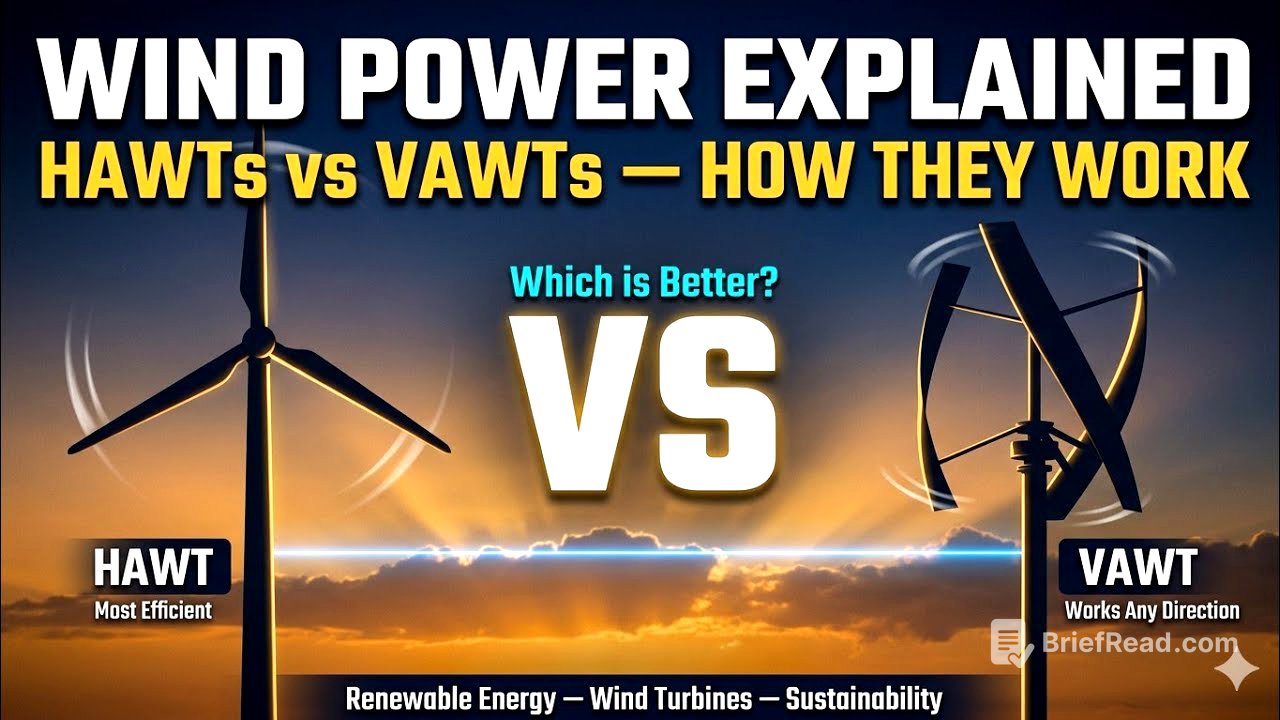
- Explanation of Horizontal Axis Wind Turbines (HAWTs) and Vertical Axis Wind Turbines (VAWTs).
- Discussion of the components of wind power generation systems and their functions.
- Overview of how wind power generation systems operate, including wind direction, speed, and blade rotation.
- Examination of the advantages and challenges of using wind power as a renewable energy source.
Introduction [1:20]
Renewable energy is super important for achieving sustainability goals. This video will give you an overview of wind power generation systems, which are a key part of the renewable energy landscape. We'll be looking at how these systems are set up and how they work.
Types of Wind Power Generation Systems [1:35]
There are mainly two types of wind turbines: Horizontal Axis Wind Turbines (HAWTs) and Vertical Axis Wind Turbines (VAWTs). HAWTs are the most common type, with blades that rotate around a horizontal axis. VAWTs have blades that rotate around a vertical axis, which means they can catch wind from any direction and are easier to maintain.
Comparison of HAWTs and VAWTs [2:24]
HAWTs and VAWTs both have their pros and cons. HAWTs are generally more efficient, but VAWTs can be better in certain environments because they don't need to be pointed into the wind. Understanding these differences is important for choosing the right turbine for a specific location.
Components of Wind Power Generation Systems [2:42]
Wind power generation systems have several key components. The turbine blades are designed to capture the wind's energy efficiently. The rotor connects the blades to the generator, converting the wind's kinetic energy into mechanical energy. The generator then transforms this mechanical energy into electrical energy. The tower is important for placing the turbine at a height where it can catch stronger winds. Finally, the electrical system regulates the power and sends it to the grid.
Operation of Wind Power Generation Systems [3:55]
The operation of a wind power system depends on the wind's direction and speed. The turbine needs to be positioned to optimally catch the wind. As the wind blows, the turbine blades rotate, generating mechanical energy. This mechanical energy is then converted into electrical power, which can be used or stored.
Advantages and Challenges of Wind Power Generation [4:31]
Wind power has many advantages. It's a clean and renewable energy source that doesn't produce harmful emissions. It's also becoming increasingly cost-effective, which can reduce our reliance on fossil fuels. However, there are challenges too. Wind resources can be intermittent and variable, which makes it hard to generate a consistent power supply. Also, wind turbines can create noise and have a visual impact on the surrounding areas.
Conclusion [5:39]
Wind power is super important for achieving our sustainable energy goals. There's a lot of potential for future advancements in wind power technology. Thank you!