TLDR;
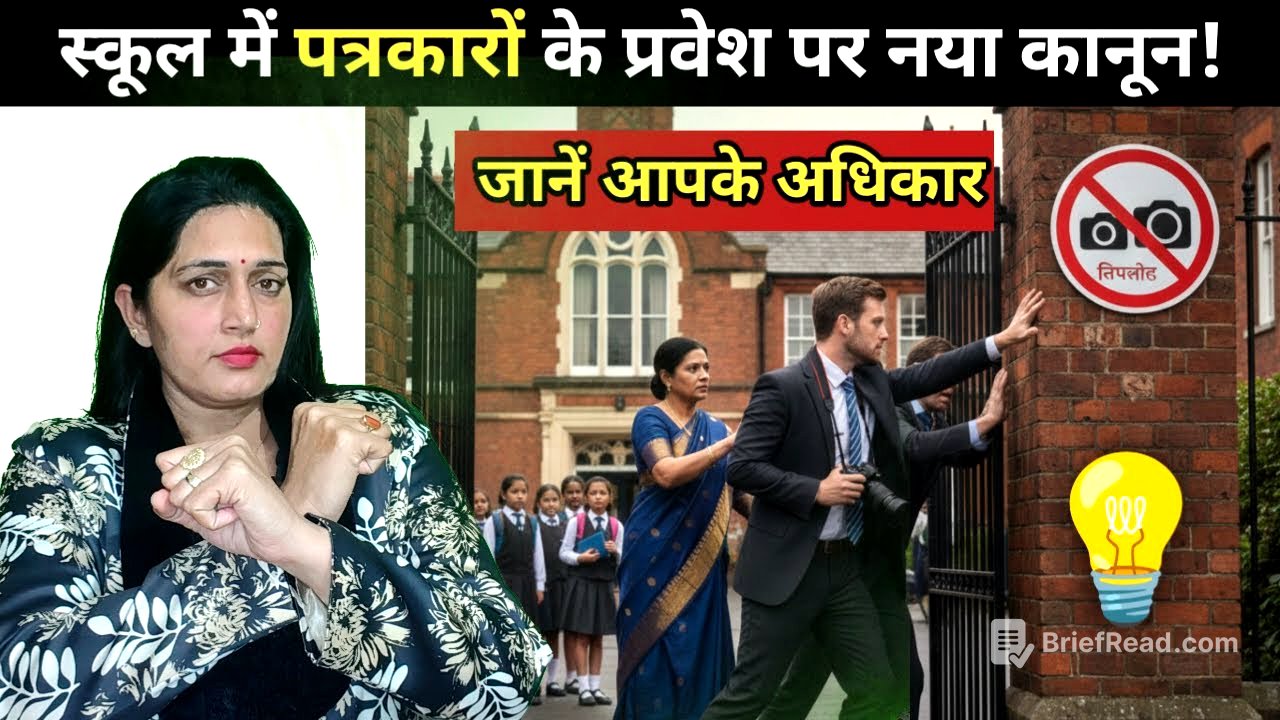
This video addresses the legal aspects concerning journalists recording within schools, particularly the rights of teachers and students. It emphasizes the necessity of obtaining permission from school authorities and teachers before any recording can take place, along with defining the legal repercussions for violations.
- Journalists cannot enter schools and film without proper authorization.
- Taking videos or photos of teachers or students without consent is a violation of privacy rights.
- Specific laws, like the Juvenile Justice Act and the Digital Personal Data Protection Act, protect students, especially minors, from unauthorized filming.
Can Journalists Enter Schools Without Permission? [0:00]
The video begins with a common question among educators about whether journalists can enter schools and film without prior permission. It explains that schools are not public spaces; they are sensitive areas that require consent from school management or the education department for anyone, including reporters, to gain access.
Rights of Teachers and Students Regarding Filming [1:00]
It further clarifies that journalists cannot record videos or take photos of teachers without their consent. Doing so infringes upon the teachers’ right to privacy, outlined in Article 21 of the Constitution of India, which grants every citizen the right to privacy.
Filming Students: Legal Restrictions [2:00]
When it comes to students, particularly minors, the video states that journalists are prohibited from recording them without prior written consent from both the teacher and the parents. Violating this rule can lead to legal consequences under the Juvenile Justice Act and the Digital Personal Data Protection Act.
Questioning Students: Prohibited Actions [3:00]
The video states that journalists are not allowed to ask questions to students on camera. Such actions can humiliate children and are considered both illegal and unethical. Maintaining the privacy and dignity of students is vital, and journalists should refrain from engaging with them in such a manner.
Interviewing Teachers: Legal Boundaries [4:00]
Similarly, teachers cannot be questioned or tested on video without their consent, as this can damage their reputation and can be classified as defamation. The process of scrutinizing a teacher's knowledge should only happen through appropriate and respectful means.
What Can Journalists Do? [5:00]
The video emphasizes that journalists must obtain written consent from school management, parents, and teachers before conducting any reporting involving children. They can report in the public interest but must avoid unethical practices or pressure tactics. Legal actions can be taken against journalists who violate these rules, including filing FIRs and lawsuits for defamation and privacy intrusion.
Conclusion: Stay Informed and Cautious [6:00]
Finally, viewers are advised to stay aware of their rights to prevent exploitation and ensure the safety of themselves and others within the educational environment. The video concludes by encouraging sharing and engaging with the content for greater awareness.




![[Eng Sub] Renegade Immortal EP119](https://wm-img.halpindev.com/p-briefread_c-10_b-10/urlb/aHR0cDovL2ltZy55b3V0dWJlLmNvbS92aS9vLURqQXgySURKUS9ocWRlZmF1bHQuanBn.jpg)