TLDR;
The video discusses the causes, management, and implications of fluid and electrolyte imbalances in the body, focusing primarily on sodium and potassium. Key points include the importance of identifying underlying conditions leading to fluid overload or depletion, the critical roles of water and electrolytes in bodily functions, and the management strategies for various electrolyte disturbances, including hyponatraemia and hypernatraemia.
- Fluid overload can be caused by heart failure, renal failure, liver cirrhosis, and excessive fluid administration.
- Electrolytes play a crucial role in physiological processes, with sodium and potassium being vital for fluid balance, nerve function, and muscle contraction.
Fluid Overload and Its Management [0:16]
Fluid overload stems from various conditions, particularly heart failure, liver cirrhosis, renal failure, nephrotic syndrome, and excessive fluid administration. Management focuses on treating the underlying cause, incorporating sodium and fluid restrictions, and utilising diuretics like furosemide to promote sodium and water excretion. Recognising signs of overhydration and adjusting treatment accordingly is crucial for effective management.
Water Intoxication and Dilutional Hyponatraemia [1:54]
Water intoxication, or dilutional hyponatraemia, is a severe condition resulting from excessive water intake that dilutes blood sodium levels, potentially leading to brain swelling and organ failure. It can occur due to psychiatric polydipsia, endurance sports, or forced water intake. Clinically, symptoms range from nausea and headaches at mild levels of hyponatraemia to coma and respiratory arrest when sodium levels drop below 120 mEq/L. Management involves fluid restriction and careful correction of sodium levels.
Electrolyte Characters and Sodium Balance [5:22]
Electrolytes are essential for fluid balance and nerve function, with sodium and potassium being the most significant. Normal sodium levels range from 135 to 145 mEq/L, with recommended daily intake between 2,000 to 5,000 mg. The renin-angiotensin-aldosterone system mediates sodium regulation primarily via kidney absorption and excretion, making it vital to monitor sodium levels for maintaining homeostasis.
Potassium Balance and Its Importance [6:37]
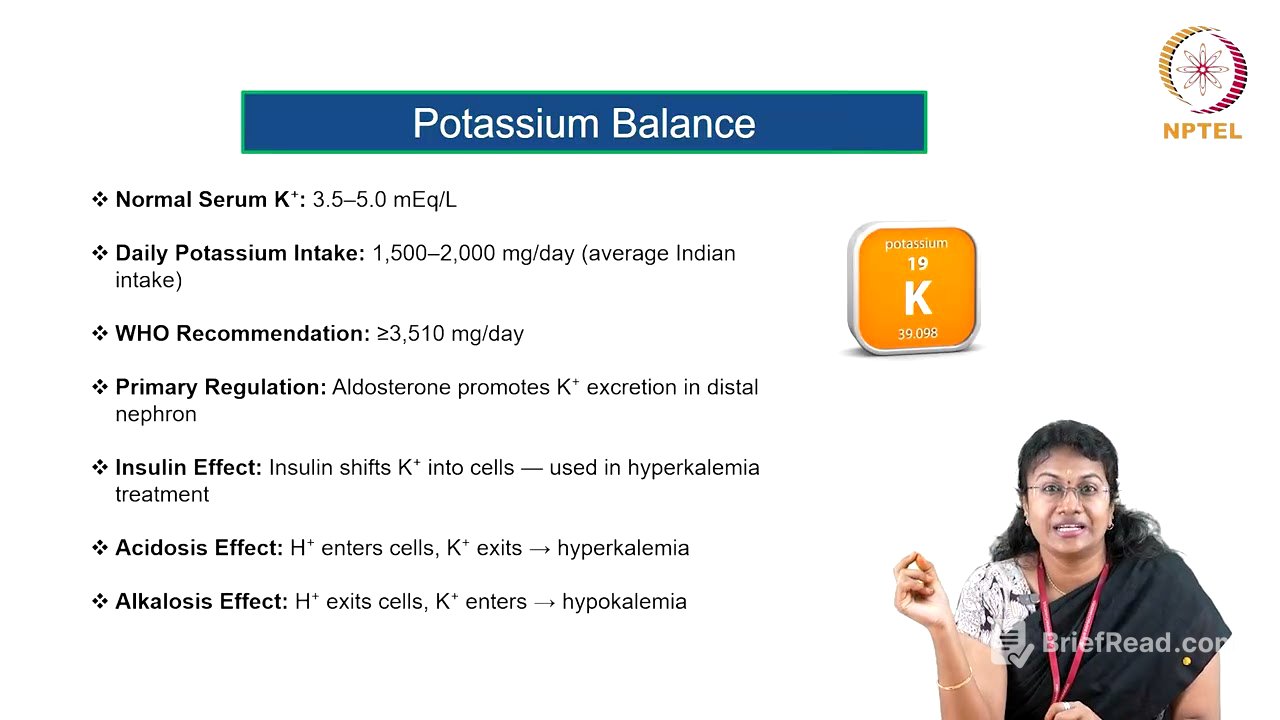
Potassium balance is equally critical, with normal levels of 3.5 to 5.0 mEq/L. Daily intake is advised at 500 to 2,000 mg. Regulation occurs through aldosterone and insulin, whereas deficiency can result in serious clinical manifestations like cardiac arrhythmias and muscle weakness. Recognising conditions leading to both hypo- and hyperkalaemia is essential for treatment.
Clinical Management of Hyponatraemia and Hypernatraemia [9:21]
Hyponatraemia occurs when serum sodium drops below 135 mEq/L, with causes including dilutional and depletional factors. Mild symptoms include nausea and headache, with severe cases leading to seizures and coma. Management focuses on fluid restrictions or sodium replacement. Hypernatraemia, defined as sodium levels exceeding 145 mEq/L, necessitates a comprehensive evaluation to understand the underlying cause, such as dehydration or excessive sodium intake, accompanied by relevant symptoms and urgent treatment.
Additional Electrolyte Abnormalities [15:03]
The discussion also highlights other electrolyte disorders, including hypocalcaemia, hypercalcaemia, hypomagnesaemia, and hypermagnesaemia. These conditions are caused by various factors, including dietary deficiencies and metabolic disorders, affecting muscle function and cardiac stability. Identifying these imbalances early is crucial for timely and appropriate interventions.
Fluid Assessment and Daily Requirements [16:53]
In clinical settings, fluid assessment involves measuring urine output, specific gravity, and serum osmolality. Normal fluid requirements for adults range from 30 to 35 ml per kg daily, increasing with fever, burns, or renal failure. Accurate assessment and tailored fluid management are vital in varying clinical scenarios to maintain homeostasis.
Conclusion on Fluid and Electrolyte Balance [19:16]
Overall, maintaining water and electrolyte balance is critical for bodily functions. Early detection and management of imbalances are essential to prevent severe complications and ensure patient stability. Recommendations for daily water intake should be adapted to individual health conditions, taking care to restrict sodium in cases of heart failure or edema.