TLDR;
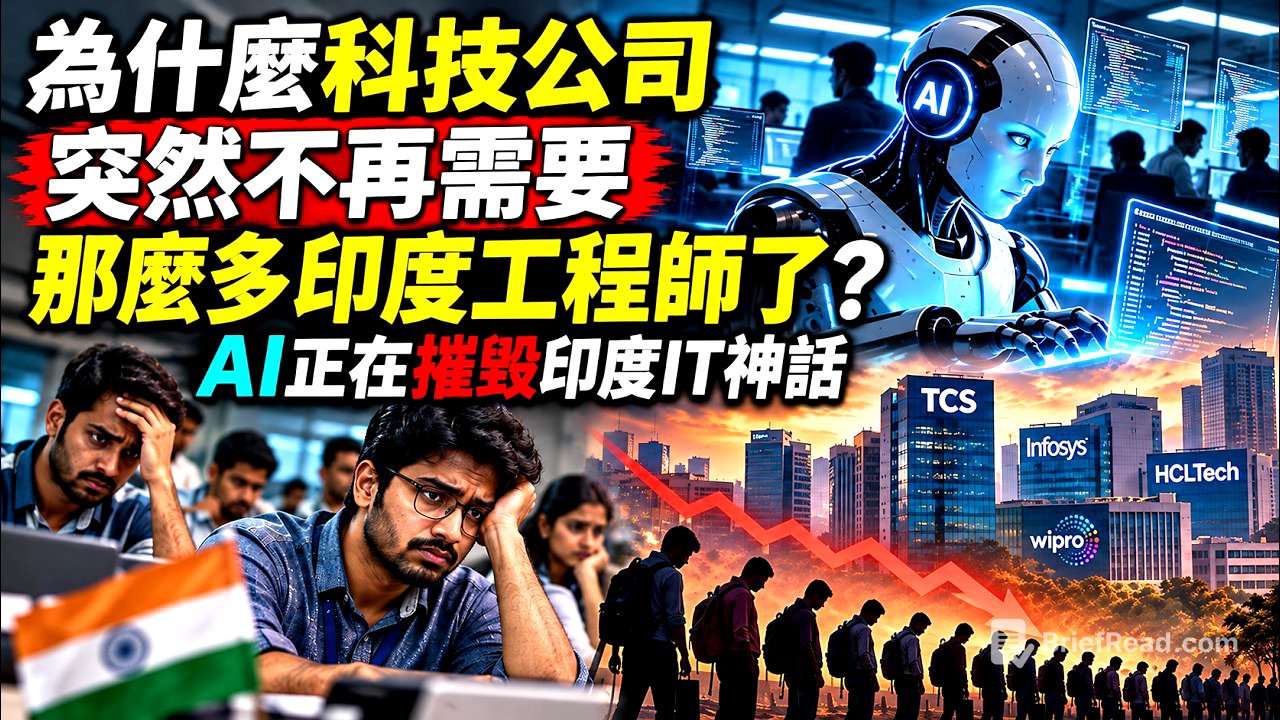
The video examines the significant changes occurring in India's IT industry, spotlighting how advances in artificial intelligence (AI) are shifting the landscape of employment and outsourcing. It discusses the historical success of the Indian IT sector, the impact of AI on job roles, and how companies are modifying their hiring practices in response to new technological demands.
- The traditional model of employing large numbers of engineers is being challenged.
- Companies are now focusing on hiring talent with advanced skills in AI and related fields.
- The relationship between revenue and employee headcount is undergoing a transformation.
Introduction [0:00]
The video discusses the reasoning behind tech companies' decreasing need for Indian engineers, specifically attributing this trend to advances in AI. India has historically been a leading provider of IT services due to its skilled, English-speaking workforce and cost-effective labour. However, by 2026, AI innovations threaten the traditional employment models of Indian IT firms, as companies find they can achieve similar—or even better—results with fewer employees.
India's Successful Weapon Becomes a Weakness [2:39]
AI, which initially helped propel the Indian IT sector to success, is now posing challenges as it reduces the need for large teams. Historically, companies relied on a hierarchical structure of project managers and engineers, with a focus on hiring more staff to increase project capacity. Unfortunately, as AI offers productivity boosts, firms are reconsidering the necessity of maintaining large workforces, which may disrupt the entire Indian IT employment model.
Post-Pandemic Hiring Trends [4:55]
The pandemic accelerated the demand for digital transformation, leading to mass hiring in Indian IT. However, as companies normalised operations, they have realised that the unbridled growth of hiring was unsustainable. With economic pressures and evolving project scopes, firms are now reassessing their staffing needs, leading to reduced job growth and hiring freezes.
AI's Impact on Standardised Jobs [7:07]
AI is significantly affecting standardised jobs, which form the core of many outsourced roles in India. Tasks such as coding, testing, and technical documentation are becoming automated, leading to fewer hours needed on projects. Companies are now facing scrutiny from clients about the number of staff required, thus intensifying the need to adapt to technological efficiencies rather than traditional staffing methods.
Entry-Level Jobs at Risk [9:32]
The initial stages of engineering careers are under threat as automation begins to replace entry-level positions. Companies have relied on junior employees to fill gaps and train new talent, but as AI streamlines basic tasks, the demand for these positions may wane. This could hinder career progression for new graduates who typically start in these roles.
Recruitment Focus Shifts [12:00]
Despite the reduction in traditional roles, companies are still hiring but are now looking for candidates with specialised skills in AI and data science. As firms demand higher levels of competency, there is an increasing disconnection between available talent and job requirements. This shift signals a transition from traditional IT roles to a focus on advanced technological skills.
US Companies' New Approach [14:08]
US companies are not abandoning India; instead, they are shifting their strategies by establishing their own Global Capability Centers. This approach allows companies to directly manage their operations in India without relying heavily on traditional outsourcing firms. As multinationals deepen their presence in India, the nature of the work performed is shifting towards core business functions and R&D, reducing the need for external service providers.
Reduction in Workforce for Higher Efficiency [16:28]
As companies look to reduce costs and improve efficiency, the number of people required to complete projects is decreasing. This trend puts pressure on IT firms to revise their business models, as client expectations shift towards outcome-based pricing. Companies must adapt to delivering value without relying on headcount, sparking a transformative phase in the Indian IT landscape.